President Ferdinand Marcos Jr. said Wednesday that the Philippines is not yet requiring the mandatory repatriation of Filipinos in Israel and Iran, despite the continuing exchange of airstrikes between the two nations.
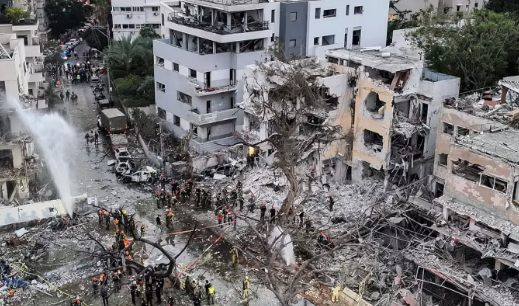
This comes as several areas in Israel — home to around 30,000 Filipinos — have been hit by Iranian missiles, some of which managed to breach the country’s Iron Dome defense system.
“No, not yet. We generally leave it to each individual or to each family to decide for themselves whether or not they feel generally safe or whether or not they want to be evacuated,” Marcos told reporters in a chance interview.
“Ang naging problema natin sa kanila ay dahil sa gera maraming sarado na airport kaya naghahanap tayo ng ruta saan sila mailaabas,” he said.
The Philippine government is “watching our nationals both in Israel and in Iran,” with Migrant Workers secretary Hans Leo Cacdac already on his way to Jordan to oversee ongoing voluntary evacuation operations.
“We have already contacted all our nationals and asked them if they want to be evacuated,” Marcos said.
“Some have asked to be evacuated out of Israel, some now sa Iran ayaw muna nila umalis pero ngayon natatakot na sila kaya nagpapatulong na makalabas,” he said.
Tensions between Israel and Iran flared up again last week after Israeli forces launched strikes on Iran’s nuclear facilities and missile factories, labeling the move a “preemptive strike.”
Israeli Prime Minister Benjamin Netanyahu alleged that Iran has been amassing nuclear weapons in recent years with the intent to target Israel.
Iranian Supreme Leader Ali Khameini vowed to avenge his slain countrymen.
Around 30,000 Filipinos are currently in Israel, while approximately 1,200 reside in Iran.
According to executive secretary Lucas Bersamin, the Philippine government has implemented a “contingency plan” for Filipinos in Israel who have expressed a desire to return home. He added that the government is “paying attention to the need to take out” those who are “already ready to leave and come back to the Philippines.”
“Meron nang contingency plan na dadalhin muna sila sa Jordan kasi air travel is wala na, it stopped from that area. And from Jordan, maybe there will be other ways of bringing them out…directly return to the Philippines. May mga nakahanda nang mga pamilya,” Bersamin said.
Bersamin noted that some Filipinos have chosen to remain in Israel despite the escalating conflict.
“Hindi mo maalis ‘yan dahil alam mo mga kababayan natin doon napapamahal na sa kanila ‘yung mga pinagsisilbihan nilang Israelis. Ang incidence ng ganun hindi naman masabi kung ilan dahil hindi pa na-reach out ‘yung mga ibang kababayan natin. Pero ‘yung mga nakausap na, most of them have expressed the readiness and willingness to return,” he said.
So far, the Philippine government has not received any requests for repatriation from Filipinos in Iran, according to Bersamin.
“Wala pa tayong feedback pa sa Iran kasi ang DMW seems to be concentrated doon sa areas ng Israel, Jordan and Lebanon because of that Gaza war. Pero we are hoping na hindi naman malayo na meron ding kababayan natin sa Iran who will need our support, our assistance,” he said.
Bersamin also assured that the Marcos administration is prepared to address any potential impact of the conflict on local fuel prices.