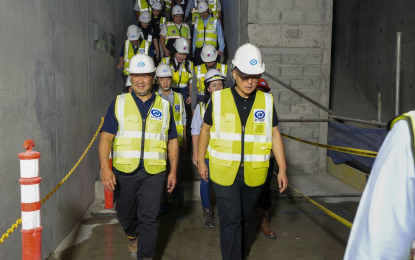
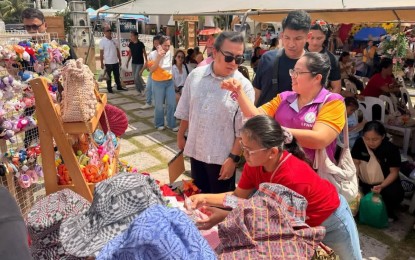
President Ferdinand R. Marcos Jr. leads the rollout of the Biyayang Bigas para sa Maynila program at SM Manila on Thursday (April 16, 2026). Marcos led a series of government actions this week, including fuel tax relief measures, food price interventions, reintegration programs for overseas Filipino workers, and the rollout of rice subsidies. (PNA photo by Ruth Abbey Gita-Carlos)
Amid swirling rumors about his health, Ferdinand R. Marcos Jr. pressed ahead with a packed week of decisive actions, rolling out measures aimed at cushioning Filipinos from rising fuel costs, stabilizing food prices, and tightening the government’s stance against corruption and online disinformation.
At the core of the administration’s response is Executive Order No. 114, signed on April 16, which temporarily suspends excise taxes on liquefied petroleum gas (LPG) and kerosene for three months. The move, triggered by sustained high global oil prices, is expected to bring immediate relief to households—cutting LPG costs by around ₱3.36 per kilogram, or nearly ₱37 per tank, and reducing kerosene prices by ₱5.60 per liter.
The President, however, drew a clear line on maintaining the value-added tax (VAT) on petroleum products, emphasizing its role in funding broader social support programs. Scrapping VAT, he argued, would disproportionately benefit the fuel sector while weakening the government’s capacity to provide subsidies across vulnerable sectors.
To complement fuel relief, the government has activated a ₱10-per-liter fuel subsidy program for affected sectors, alongside transport service contracting and commuter fare discounts—forming a layered approach to soften the blow of global price volatility.
On the food front, Marcos ordered calibrated tariff reductions on selected imports while ensuring safeguards for local producers. The administration is also targeting logistics bottlenecks by lowering port-related fees and improving supply chain efficiency—moves designed to ease food inflation and reduce wastage, particularly during peak harvest seasons.
The President personally led rice subsidy distribution in Manila, signaling plans to expand the initiative nationwide in partnership with local governments. He also visited Benguet’s key trading hub to assess disruptions in vegetable supply caused by rising fuel costs, assuring stakeholders of ongoing interventions, including transport cost reductions and toll fee suspensions for produce-hauling trucks.
Beyond economic measures, the administration ramped up support for returning overseas Filipino workers, launching a nationwide reintegration program that consolidates employment, livelihood, and social services. More than 5,400 OFWs have returned amid tensions in the Middle East, underscoring the urgency of the initiative.
In parallel, Marcos highlighted progress in governance and accountability, announcing the arrest of fugitive former lawmaker Zaldy Co in connection with alleged anomalies in flood control projects. Coordination with foreign authorities is ongoing to facilitate his return and face graft and malversation charges.
Diplomatically, the President strengthened ties with key partners, including Oman, while receiving credentials from several non-resident ambassadors—moves aimed at expanding cooperation across economic and geopolitical fronts.
Addressing persistent speculation about his health, Marcos dismissed concerns with a mix of candor and theatrics—performing jumping jacks before reporters and lifting a sack of rice during a public event. “I am in very, very good health,” he declared, reinforcing his message through both words and action.
Meanwhile, the government intensified its anti-disinformation campaign, with the Presidential Communications Office initiating legal action against social media accounts accused of spreading false claims about the President’s condition—part of a broader push to safeguard public trust in official information.
Taken together, the week’s developments paint a picture of an administration navigating economic pressures and political noise with a mix of targeted relief, structural reforms, and assertive governance—signaling a continued focus on stability amid global uncertainty.