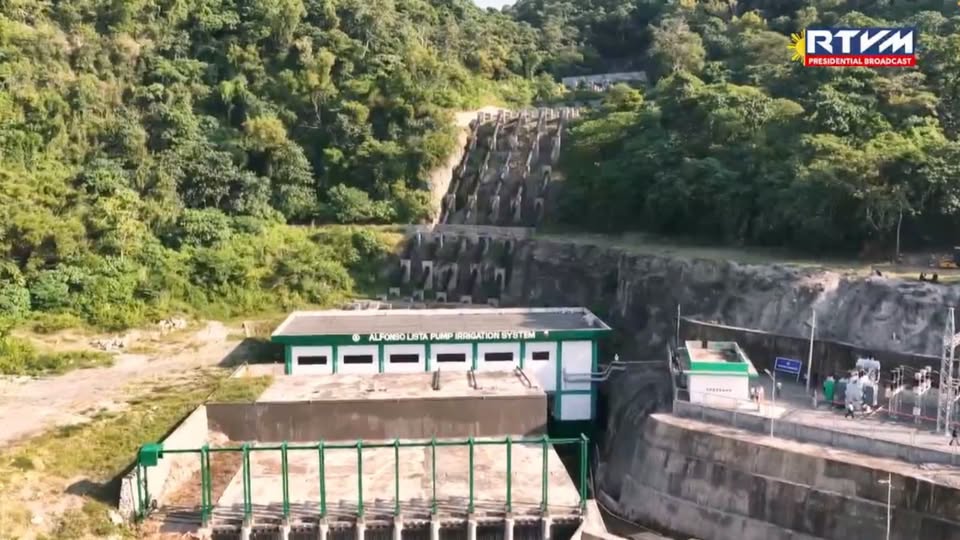

(Photo courtesy of RTVM)
IFUGAO — President Ferdinand Marcos Jr. said Monday, October 26, that the newly inaugurated Alfonso Lista Pump Irrigation System (ALPIS) is expected to increase rice production in the province from 900 metric tons to 26,000 metric tons once fully operational.
Marcos said the project, which draws water from the Magat Dam Reservoir, would expand irrigated farmland from 275 hectares to 2,300 hectares, providing farmers with a more reliable water supply amid the anticipated effects of a strong El Niño.
“Ang produksyon ng palay noon ay 900 metric tons… ‘Pag nagamit na ito, pagka fully utilized na itong ating ALPIS, itong ating pumping station, ang projection natin na ang magiging ani ay 26,000 tons,” Marcos said.
The President added that the expanded irrigation coverage could increase farmers’ projected earnings from Php 16 million to Php 159 million.
However, he did not specify the period covered by the estimates or whether the figures represented gross or net earnings.
Marcos emphasized the importance of irrigation infrastructure in sustaining agricultural production, particularly as the country prepares for possible drought conditions associated with El Niño.
“Naging mas mahalaga pa ito dahil nararamdaman na natin ang ‘super’ El Niño na tinatawag,” he said.
The President said the government was assessing irrigation facilities nationwide to ensure their continued operation and maintain water availability for agricultural, household and industrial needs during prolonged dry conditions.
Marcos also highlighted the Pamplona Solar Pump Irrigation Project in Barangay Gattu, Pamplona, Cagayan, which aims to reduce farmers’ dependence on diesel-powered pumps and electricity from the national grid.
He said approximately 3,000 solar-powered irrigation systems have been established nationwide as part of the government’s efforts to improve agricultural productivity and reduce irrigation costs.
The administration plans to expand similar projects to provide more farming communities with dependable and cost-efficient irrigation.
Marcos also acknowledged the contributions of the National Irrigation Administration, Department of Agriculture, local government units and farmers’ cooperatives in implementing and maintaining irrigation facilities.
He stressed that cooperation among government agencies and agricultural communities is essential to sustaining irrigation projects and improving farmers’ livelihoods.