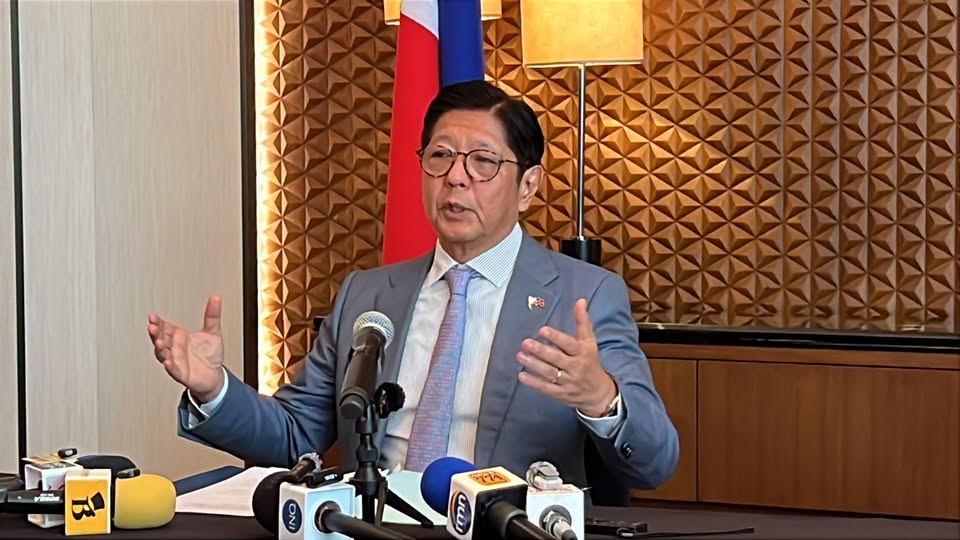

The feud between President Ferdinand Marcos Jr. and Vice President Sara Duterte has reached new intensity, with Malacañang brushing off Duterte’s latest allegations as part of a larger bid to undermine the administration ahead of the 2025 midterm elections.
Palace Press Officer Claire Castro on Thursday said Duterte’s claim that Marcos smelled of alcohol during her June 2024 resignation as Education Secretary was nothing more than “fabricated propaganda” designed to discredit the president.
“These stories are being made up to weaken the president’s leadership,” Castro said. “Her real goal is clear: to position herself for power.”
The statement underscores the collapse of the once-powerful Marcos-Duterte alliance that swept the 2022 elections. What was once a partnership of convenience has now spiraled into an open rivalry, with both camps hurling accusations that cut deep into credibility and governance.
From cabinet rift to campaign battlefield
Duterte, speaking in a recent interview in the Netherlands, revisited her resignation from the Department of Education, claiming Marcos tried to persuade her to remain in his Cabinet and even asked for her help in the 2025 elections. But she said she was firm in stepping down—pointing to the president’s alleged behavior as her breaking point.
“By 10:30 in the morning, he already smelled of alcohol,” Duterte said. “That convinced me I was not the failure—maybe the failure was someone who comes to work like that.”
The remarks appear to be part of a broader strategy by the vice president to draw contrasts between her leadership and Marcos’ governance style, as she tries to solidify her political base before next year’s polls.
Palace pushes back
Malacañang quickly hit back, painting Duterte’s tenure at DepEd as “a complete failure.” Castro cited the delayed distribution of 1.5 million laptops and learning devices from as far back as 2020, her lack of education-sector expertise, and the P100-million “ghost student” voucher scam as proof of mismanagement.
“She admitted herself she could not even review the Matatag curriculum,” Castro said. “And while millions of students could have benefitted from resources, they were neglected under her watch.”
2025 as a litmus test
While the exchanges may seem personal, political analysts view the timing as significant. With the midterms only months away, the Marcos and Duterte blocs are expected to field competing slates, potentially fracturing the once-dominant “Uniteam” coalition.
The vice president, backed by her father’s still-potent political machinery, is seen as a looming rival to the president’s influence in Congress and beyond. For Marcos, neutralizing Duterte’s criticisms is critical to ensuring stability in his administration and protecting his allies in next year’s elections.
As the battle escalates, one thing has become clear: what began as a resignation spat has now evolved into a full-blown political war, one that could reshape the balance of power heading into 2025—and possibly 2028.