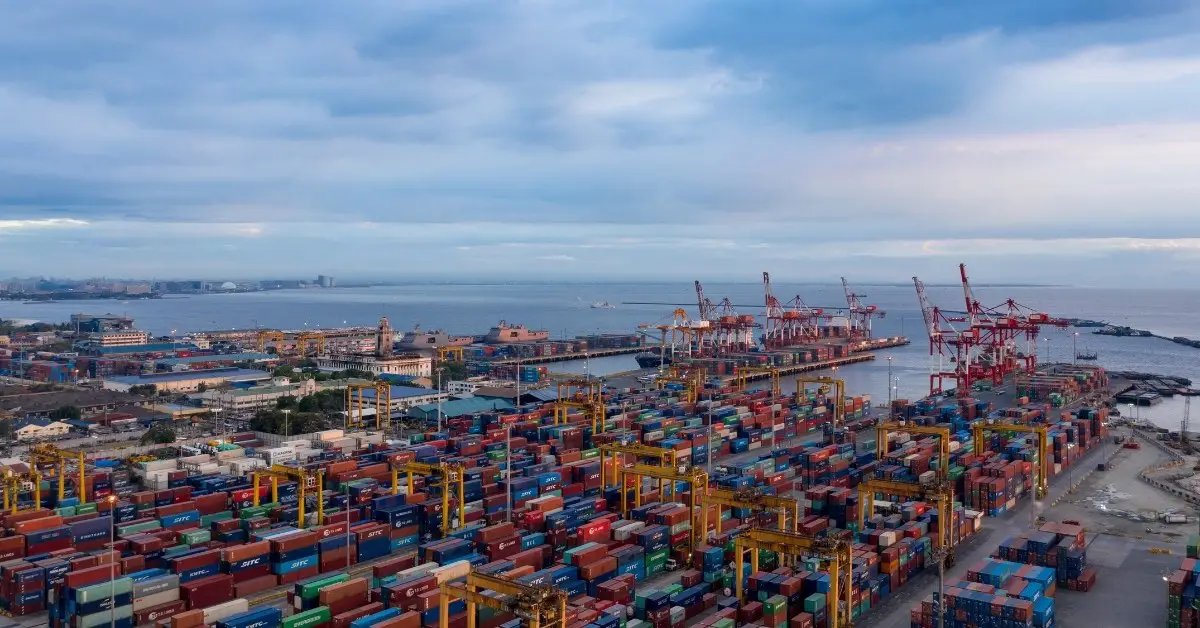

The Philippine Ports Authority (PPA) has firmly denied claims of congestion at Manila’s key gateways, saying cargo operations remain steady and efficient despite yard utilization levels exceeding optimal thresholds.
As of February 12, 2026, port situation data showed yard utilization at Manila South Harbor at 72.97 percent and Manila International Container Terminal at 84.16 percent. While both figures are above the 70 percent optimum benchmark, PPA officials emphasized that higher utilization does not automatically translate to congestion.
“There is no port congestion. Let’s not create a scenario that will cause undue concern to the public or spark fears of price hikes,” PPA General Manager Jay Santiago said, stressing that cargo processing remains “consistent and free-flowing.”
According to Santiago, port charges remain fixed and cannot be arbitrarily increased, pushing back against concerns that alleged bottlenecks could trigger higher logistics costs and, eventually, rising consumer prices.
The clarification came after the Philippine Chamber of Customs Brokers Inc. (PCCBI), which represents over 15,000 licensed customs brokers, flagged what it described as a “severe truck deadlock.” The group said limited capacity at empty container yards has prevented the timely return of empty boxes, tying up trucks and delaying the withdrawal of loaded containers from terminals.
PCCBI warned that trucks remain immobilized because ports and shipping lines have limited space to accept empty containers, creating a ripple effect across the logistics chain.
Santiago, however, echoed part of the brokers’ concerns while drawing a clear distinction: the issue, he said, lies primarily between shipping lines and truckers over the handling and return of empty containers—not with terminal congestion itself.
“The main issue is the lack of yard facilities which should be provided by shipping lines for the return of empty containers,” he explained.
To ease the pressure, the Philippine Chamber of Commerce and Industry (PCCI) has proposed shortening the current 90-day allowance for empty container storage to a maximum of 60 days. The group believes a tighter timeline would compel international carriers to evacuate overstaying containers more quickly, freeing up valuable terminal space and normalizing trade flows.
Meanwhile, PCCBI is pushing for the strict implementation of PPA Administrative Order No. 02-2019, which mandates the accelerated transfer of cleared import cargoes that remain inside ports for more than 30 days. The brokers argue that enforcing the 30-day dwell time limit could help break the current logjam—provided that transfer costs are not unfairly passed on to customs brokers and importers when delays stem from shipping lines’ nominated depots.
For now, the PPA maintains that Manila’s ports are operating within manageable levels, with yard utilization considered healthy and cargo movement uninterrupted. The focus, officials say, should be on resolving empty container handling inefficiencies without fueling public anxiety over potential supply disruptions.