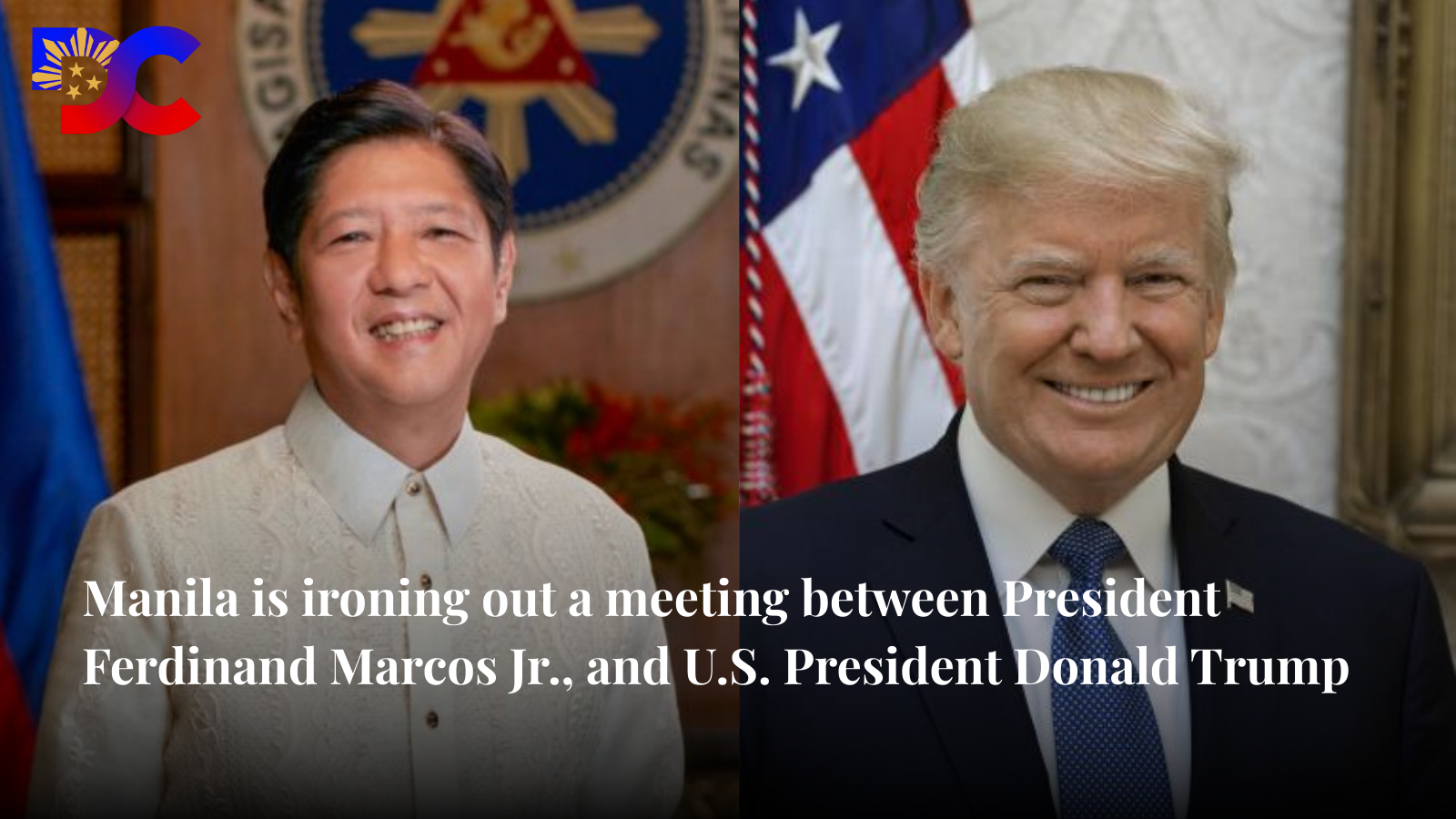

President Ferdinand Marcos Jr. is eager to meet U.S. President Donald Trump in Washington as soon as scheduling permits, according to Manila’s ambassador to the United States, Jose Manuel Romualdez.
The meeting, which could occur this spring, underscores the Philippines’ strategic push to reinforce its alliance with the U.S. amid growing security concerns in the Indo-Pacific region.
Speaking at a forum hosted by the Foreign Correspondents Association of the Philippines (FOCAP), Romualdez emphasized Manila’s intent to deepen ties with Washington. He noted that while the White House has acknowledged the Philippines’ request for a bilateral meeting, formal scheduling details are still being worked out.
“They have signaled openness to a discussion, but we need to align key points of interest before finalizing the meeting,” Romualdez stated. He added that a spring timeframe appears likely, pending confirmation from the U.S. administration.
Trade and defense cooperation
Beyond diplomatic engagement, Marcos’ administration is also eyeing increased trade collaboration with the U.S., particularly in energy imports. Romualdez highlighted the Philippines’ interest in securing liquefied natural gas (LNG) from the U.S. as part of a broader economic partnership.
On defense, the Philippines remains committed to existing security agreements with the U.S. Amid escalating tensions in the South China Sea, Manila continues to bolster military cooperation with its treaty ally.
The U.S. has reaffirmed its support, with Romualdez confirming that the Philippines will receive $336 million from a $500 million foreign military financing (FMF) package approved last year.
U.S. commitment in the Indo-Pacific
Since Trump’s return to office, several U.S. allies, including the Philippines, have moved quickly to engage with his administration.
Washington has reiterated its commitment to regional security. Newly appointed U.S. Secretary of State Marco Rubio spoke with Philippine Foreign Secretary Enrique Manalo to address shared concerns over China’s actions in the South China Sea.
In addition, Philippine defense secretary Gilberto Teodoro and Romualdez recently held discussions with U.S. national security adviser Mike Waltz at the White House. The talks reaffirmed a joint pledge to strengthen defense cooperation in response to increasing geopolitical challenges in the Indo-Pacific.
Marcos’ willingness to meet Trump at the earliest opportunity highlights Manila’s proactive stance in reinforcing its alliance with Washington. With China’s assertiveness in the region escalating, the Philippines views U.S. engagement as a critical factor in maintaining regional stability.
As both countries work to finalize the details of a high-level meeting, the outcome could shape the trajectory of U.S.-Philippines relations in the coming years, particularly in trade, defense, and diplomatic cooperation.