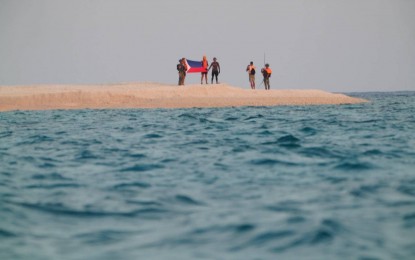
Malacañang has instructed all government agencies to promote the Philippines as a “maritime and archipelagic nation” to enhance public understanding of maritime issues and concerns.
According to Memorandum Circular (MC) 87, signed by Executive Secretary Lucas Bersamin on July 11, it is essential to strengthen public awareness and national consciousness regarding the Philippine national territory and maritime zones. The National Maritime Council (NMC), through the Presidential Office for Maritime Concerns (POMC), will lead the development and implementation of year-round programs to raise awareness.
The POMC is also tasked with organizing activities for the annual Maritime and Archipelagic Nation Awareness Month (MANA Mo), celebrated every September as per Proclamation 316 issued in 2017. The Presidential Communications Office (PCO) is directed to implement communication strategies to inform and engage the public in supporting these initiatives.
All national government agencies, including government-owned or -controlled corporations, are mandated to support and promote programs that raise awareness of the Philippines as a maritime nation. Local government units and the private sector are encouraged to provide additional support.
The memorandum emphasizes the need for inter-agency cooperation to advance maritime awareness, sustainable development, and the protection of the country’s maritime domain. Funding for the initial implementation of MC 87 will come from the current appropriations of the concerned agencies, adhering to relevant budgeting and auditing regulations.
MC 87, made public on Wednesday, takes effect immediately. The 1987 Constitution mandates the State to protect the nation’s marine wealth in its archipelagic waters and territorial sea, reserving its use exclusively for Filipino citizens.
In November 2024, President Ferdinand R. Marcos Jr. signed Republic Act (RA) 12064, defining the country’s maritime zones, and RA 12065, which designates sea lanes and air routes for foreign ships and aircraft, aiming to regulate international passage through the Philippine archipelago.