
(Photo courtesy of PNA)
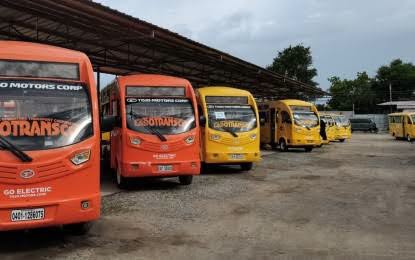
MANILA – Abra lone district Rep. JB Bernos has urged local government units (LGUs) to collaborate with state universities and colleges (SUCs) in developing and producing electric vehicles (EVs) for public transportation as the country faces persistently high fuel prices.
In a statement Thursday, Bernos said transitioning to electric vehicles could help reduce the Philippines’ dependence on imported oil while protecting commuters and transport operators from unpredictable fuel price increases.
“Shifting to EVs is a long-term solution that will decrease our dependency on oil and protect our transport sector and the riding public from volatilities that are outside our control,” Bernos said.
The lawmaker expressed confidence in the ability of state universities and colleges to develop commercially viable electric vehicles, emphasizing that partnerships with LGUs could provide opportunities to demonstrate locally developed technologies.
“I believe our state universities and colleges (SUCs) are perfectly capable of producing market-ready EVs,” he said.
Bernos noted that such partnerships could also help LGUs comply with Republic Act 11697, or the Electric Vehicle Industry Development Act (EVIDA), which requires government agencies and LGUs to transition at least 5 percent of their vehicle fleets to electric vehicles.
The law also provides for the establishment of dedicated EV lanes and streamlined permitting procedures for electric vehicle charging stations.
According to Bernos, supporting local EV manufacturers and developers could stimulate economic activity, strengthen domestic manufacturing and generate employment opportunities in the green technology sector.
He added that wider EV adoption could reduce transportation fuel expenses, lower greenhouse gas emissions and improve air quality.
Aside from promoting electric vehicles, Bernos has been advocating the use of renewable energy in government facilities to reduce operating expenses.
He filed House Bill 3126, or the proposed On-Grid Solar Energy Systems Act, which seeks to require the installation of grid-connected solar power systems in national and local government-owned buildings and offices.
The measure aims to lower government electricity expenditures while encouraging greater use of renewable energy.