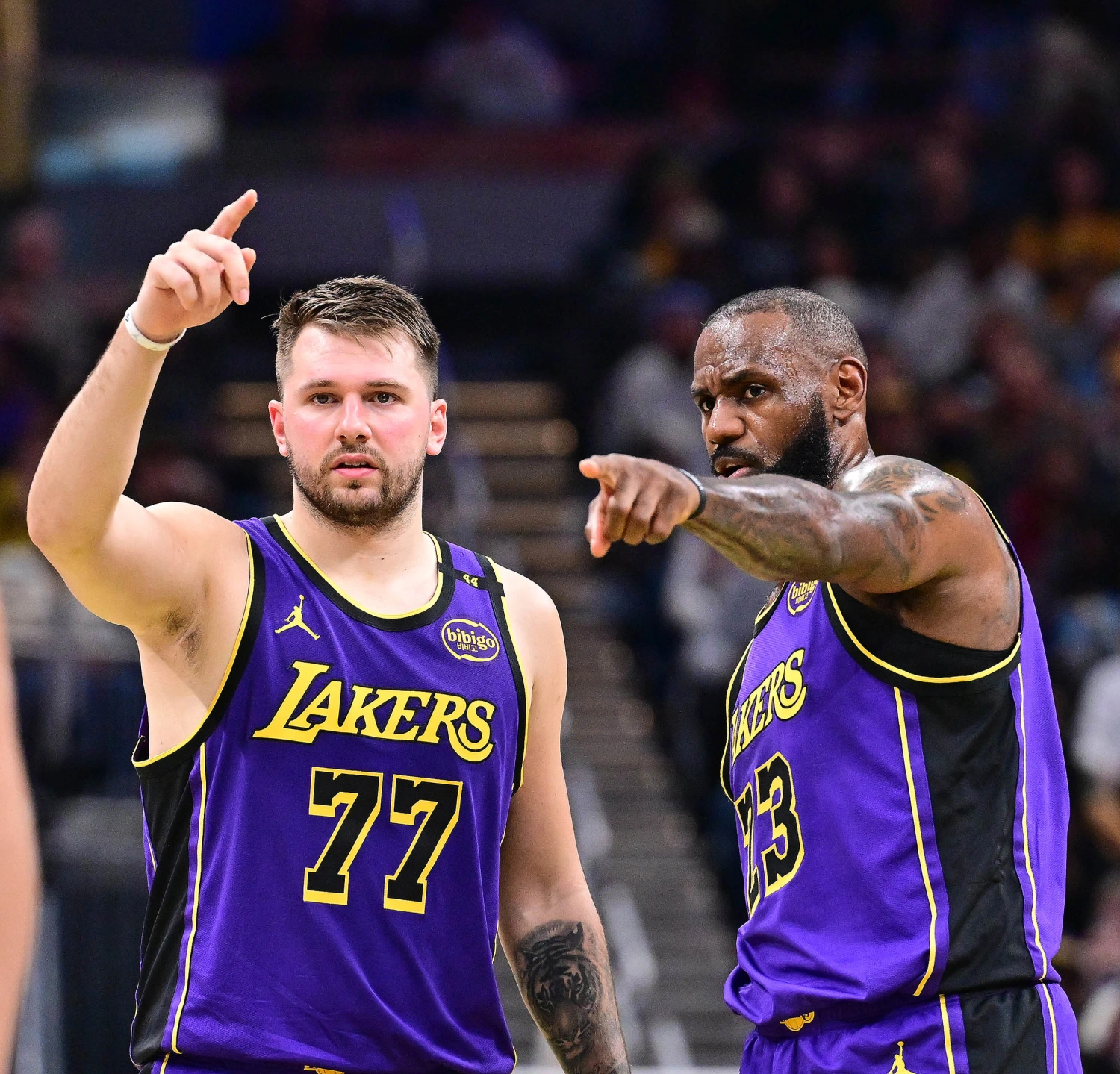

The Los Angeles Lakers’ decision to anchor their long-term future around Luka Dončić was not a sentimental break from LeBron James, but a cold-eyed assessment of where the franchise can realistically go next.
Nearly a year after the shock trade that brought Dončić to the Lakers, the move is beginning to look less like a gamble and more like an inevitability. While the pairing of Dončić and James delivered instant star power and headline value, ESPN insider Brian Windhorst argues the arrangement was never designed to last indefinitely.
According to Windhorst, the core issue is financial gravity. With Dončić and James combining for roughly $98 million—close to two-thirds of the salary cap—the Lakers have little flexibility to meaningfully improve the roster. That reality, he explains, drove the organization’s decision to prioritize Dončić’s extension while leaving James’ future more uncertain.
For the Lakers, this was not a referendum on James’ greatness. It was an acknowledgment that roster-building around two ball-dominant superstars in their mid-to-late primes is no longer viable in a league increasingly defined by depth, versatility, and defensive consistency.
The on-court results underline the concern. Despite sitting near the top of the Western Conference standings, the Lakers’ underlying numbers paint a far less flattering picture. Their net rating hovers around neutral, buoyed almost entirely by a pristine record in clutch games. In contrast, every loss has come by double digits—a warning sign that the margin for error is razor-thin.
That disconnect has fueled skepticism around the league. Former Laker Nick Young recently summed up the prevailing view, suggesting the team looks competitive against lesser opponents but struggles to match the elite level set by contenders like the Oklahoma City Thunder and the Houston Rockets.
At the heart of the debate is a larger question: can James fully cede the franchise to Dončić? On paper, the Slovenian star is the obvious successor—26 years old, squarely in his prime, and capable of sustaining MVP-level play for years. The Lakers’ front office has already signaled as much by positioning him as the organization’s long-term cornerstone.
James’ presence, however, complicates the transition. His no-trade clause limits flexibility, and his salary constrains roster upgrades. Windhorst suggests the options are narrowing: a significant pay cut to help build a contender around Dončić, a late-career move elsewhere, or the possibility that retirement enters the conversation sooner than expected.
For now, the Lakers remain competitive, relevant, and dangerous on any given night. But beneath the surface, the franchise has already made its choice. This is Dončić’s team—financially, strategically, and increasingly, on the floor. The challenge ahead is determining how gracefully, and how quickly, the rest of the organization can align with that reality.