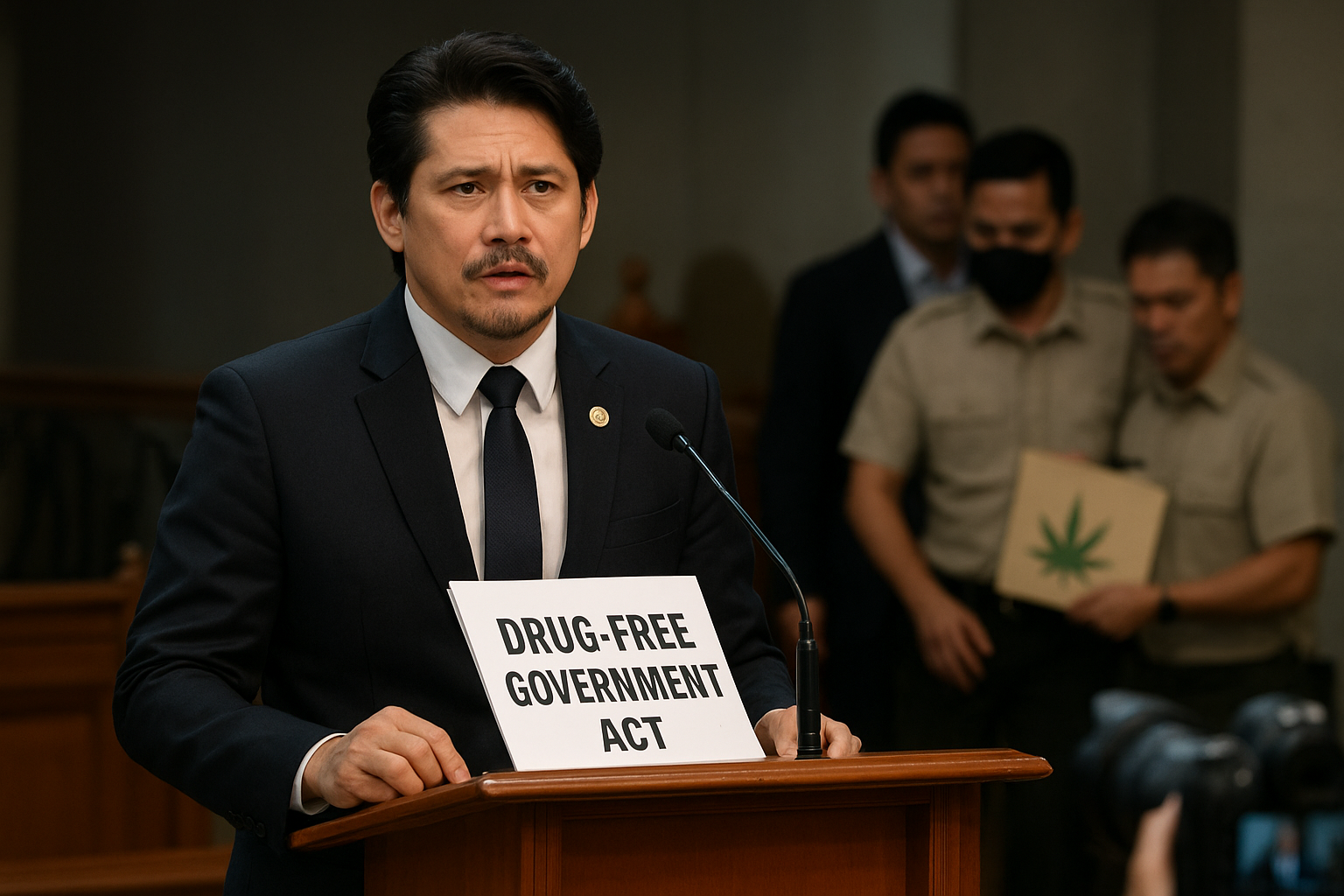

Senator Robin Padilla is pushing for all government officials—including the President—to undergo annual mandatory drug tests. But the timing of his proposal has raised eyebrows: it came just days after one of his own staffers was caught in a Senate controversy over alleged marijuana use inside a restroom.
Padilla filed Senate Bill No. 1200, the Drug-Free Government Act, which would require hair follicle and urine drug testing for elected and appointed officials each year. The measure also proposes voluntary random testing for candidates running for office before Election Day.
According to Padilla, those in government must be held to the same—or even stricter—standards imposed on ordinary workers. “Public officials should lead by example,” he said, stressing accountability in curbing the nation’s drug problem.
Under the bill, anyone who tests positive for illegal drug use could face suspension or dismissal from public service. The rule would also extend to applicants for driver’s licenses, who would need to submit drug-free certification before issuance or renewal.
Yet the senator’s move is not without controversy. Critics were quick to point out the irony: Padilla’s call for stricter drug testing came immediately after his chief of staff confirmed that actress Nadia Montenegro—employed under Padilla’s office—was linked to an incident report on alleged marijuana use inside the Senate. Montenegro later resigned.
For some, the bill looks like a knee-jerk reaction aimed at damage control rather than a carefully crafted policy. “It’s hard to preach drug accountability when the problem is literally within your own staff,” one political analyst noted.
Others, however, argue that the scandal makes Padilla’s bill all the more urgent. “If it can happen inside the Senate itself, then clearly no office is immune. Mandatory testing could serve as a wake-up call,” said another observer.
The controversy has sparked a wider debate: Should annual drug testing be seen as a genuine move toward transparency, or is it simply a way for Padilla to deflect criticism amid his own office’s embarrassment?
As the proposal heads to committee deliberations, the public is left to wonder—will this measure truly cleanse the ranks of government, or will it just be remembered as the law Padilla filed after his own office got dragged into a drug scandal?