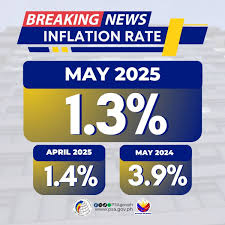

Inflation continued its downward trend in May, slipping to 1.3% year-on-year from 1.4% in April. This figure falls comfortably within the government’s forecast range of 0.9% to 1.7% and keeps the year-to-date average at just 1.9%—well below the official 2-4% target.
Month-on-month, prices nudged up slightly by 0.2% in May, a shift from the 0.1% decline in April. Core inflation, which excludes volatile food and energy items, held steady at 2.2%.
The main driver behind the continued cooling of inflation was the slower increase in non-food prices. Consumers benefited from lower electricity rates and a series of price rollbacks for domestic fuel, helping ease pressure on household budgets.
Food prices, on the other hand, stayed flat overall. A dip in rice prices—thanks to ample supply, the dry-season harvest, and government efforts to keep prices stable—helped balance out rising costs for fish, fruits and nuts, vegetables, and meat.
The latest figures reinforce the Bangko Sentral ng Pilipinas’ (BSP) view that inflation remains under control, with commodity price pressures continuing to ease. All eyes are now on the BSP’s next policy meeting on June 19, where it will revisit its monetary stance in light of the latest data.