
By Hilda Austria
LAOAG CITY – The province of Ilocos Norte has achieved 100 percent drug-cleared status, marking a significant milestone in its campaign against illegal drugs and efforts to promote safer and healthier communities.
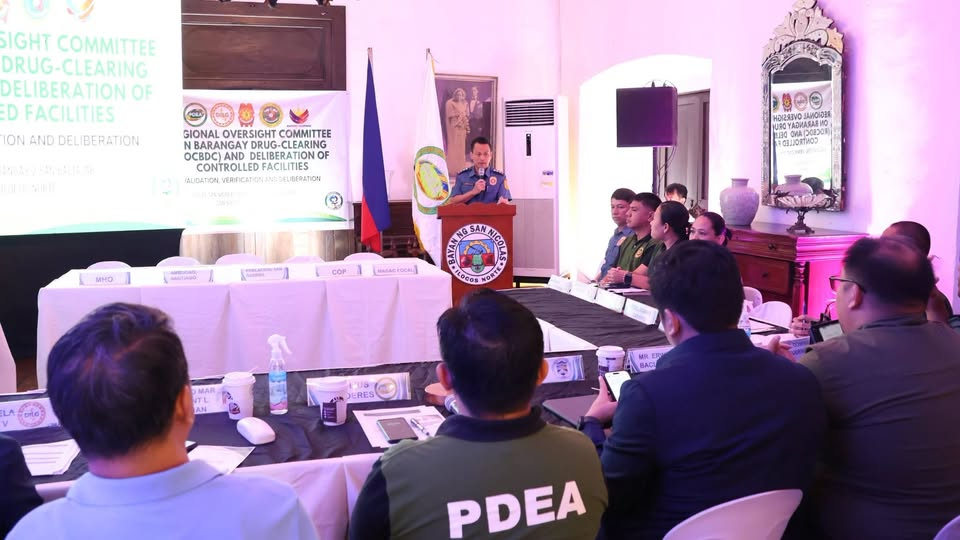
Col. Joemar Labiano, provincial director of the Ilocos Norte Police Provincial Office, confirmed this Thursday after the Regional Oversight Committee on Barangay Drug Clearing’s official Nov. 17 declaration that the remaining municipalities of Badoc, Bangui, Pasuquin, Piddig, San Nicolas and Sarrat, and Laoag City, were rid of illegal drugs.
“This accomplishment reflects the collective commitment and sustained collaboration of the Philippine National Police, Philippine Drug Enforcement Agency, Department of the Interior and Local Government, Department of Health, local government units, and community stakeholders in strengthening anti-illegal drug initiatives,” he said in a statement.
The campaign focuses not only on suppressing illegal drug activities but also on promoting preventive education, community awareness, rehabilitation and the reintegration of recovering persons who use drugs (PWUDs).
Local authorities continue to emphasize the importance of sustaining community participation, strengthening barangay anti-drug abuse councils and ensuring that drug-clearing efforts are complemented by livelihood, health and social development programs.
The milestone also underscores the importance of maintaining vigilance to prevent the resurgence of illegal drug activities and protect vulnerable sectors, particularly the youth.
Beyond achieving drug-cleared status, Ilocos Norte faces the continuing challenge of sustaining a drug-resilient environment through community cooperation, effective law enforcement, prevention and rehabilitation programs.
On Nov. 10, the provincial government of Ilocos Norte and the Treatment and Rehabilitation Center in San Fernando City, La Union signed a memorandum of agreement to strengthen recovery and reintegration programs for PWUDs, providing them opportunities to rebuild their lives and become productive members of society.
Through the partnership, both institutions seek to promote a more compassionate and holistic approach to drug recovery, recognizing that treatment and rehabilitation are essential components of addressing the drug problem. (PNA)