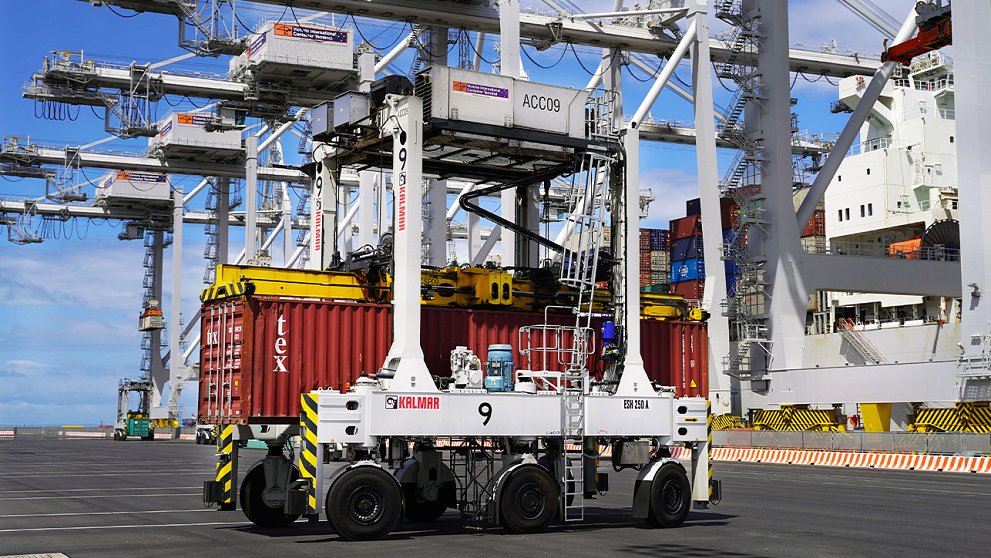
Victoria International Container Terminal (VICT) at Australia’s Port of Melbourne is enhancing its capacity and sustainability with the purchase of four new hybrid automatic container carriers (ACCs).
The move is part of the terminal’s ongoing expansion strategy to handle growing demand while reducing its environmental footprint.
The new ACCs, set to arrive soon, will each offer a twin-box lifting capacity of up to 60 tonnes and feature the latest hybrid technology, which includes lithium-ion batteries for energy recovery. This cutting-edge innovation by cargo handling solutions provider Kalmar is expected to increase energy efficiency by 40% and reduce carbon dioxide emissions by 50 tonnes per carrier annually.
“We value our partnership with Kalmar and their technical support,” VICT CEO Bruno Porchietto said. “These new hybrid carriers are part of our expansion plan, which will increase our capacity to 1.5-M TEUs annually, he continued.
“This investment demonstrates our commitment to customer focus, innovation, and sustainability, ensuring we can meet the growing demand for our services while minimising our environmental impact,” Porchietto added.
The terminal, operated by by Filipino firm International Container Terminal Services Inc. (ICTSI), is the Southern Hemisphere’s only fully automated container facility.
In addition to the new ACCs, VICT’s operations include seven remotely controlled ship-to-shore cranes, 17 existing ACCs, and 26 automated stacking cranes, all of which are equipped with energy recovery systems to further reduce energy consumption and carbon dioxide emissions.
VICT’s commitment to sustainability has already earned recognition, with the terminal achieving a significant milestone in 2024 by handling its 5-millionth TEU since opening in 2017. The same year also marked the terminal’s approval to perform biosecurity inspections, enhancing its role in mitigating risks for rural-area container shipments.
Additionally, VICT celebrated the expansion of Mediterranean Shipping Company’s Wallaby service, further bolstering its position in the region’s logistics network.
With these investments, VICT continues to set the standard for operational efficiency and environmental responsibility in the global container terminal industry.