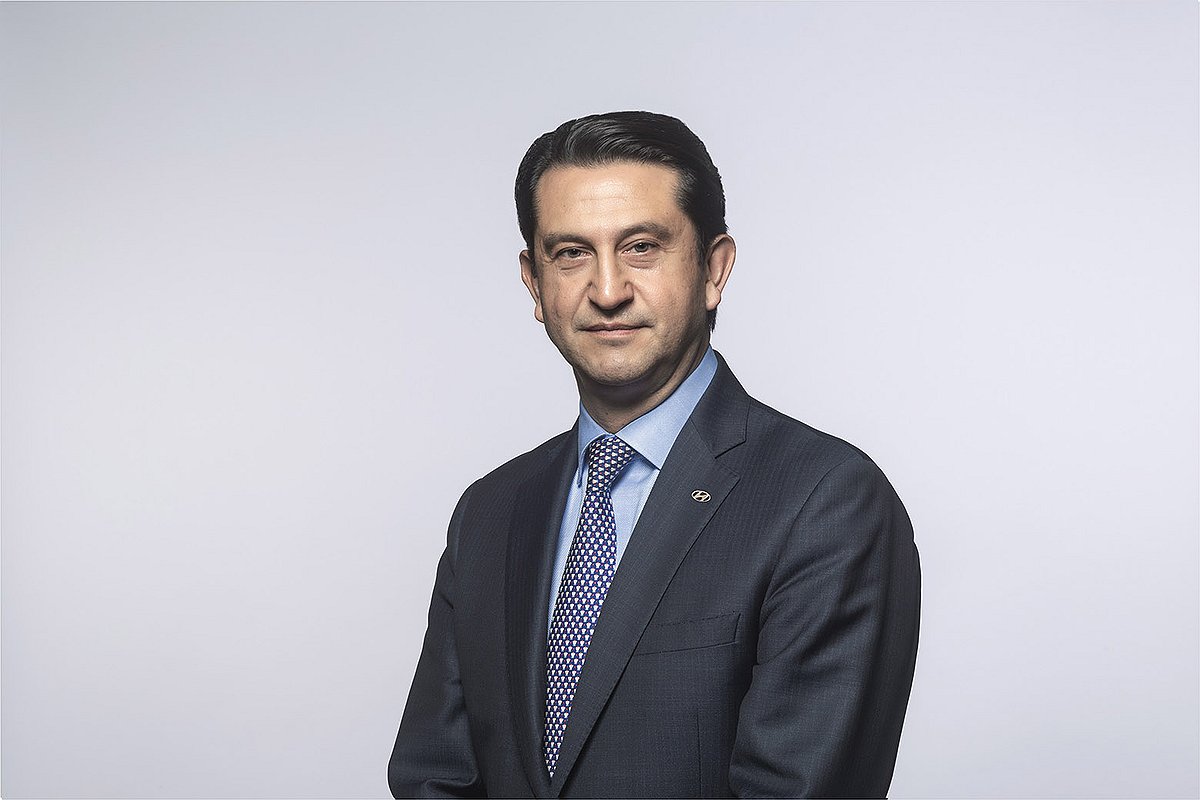
Jose Munoz, chief executive officer (CEO) of Hyundai Motor Co., has welcomed a recent tariff deal between South Korea and the United States, saying it provides predictability for the company’s long-term business strategy.
“This framework reinforces our localization strategy while maintaining the seamless collaboration between our Korean design, engineering and manufacturing teams, and our American manufacturing operations,” Munoz said in a social media post shared late Thursday.
“It’s exactly the kind of predictable environment that allows us to execute our long-term plans,” he added.
His comments came after the U.S. government agreed to impose a 15 percent reciprocal tariff on South Korean goods, down from the initially proposed 25 percent, as part of a trade deal tied to large-scale Korean investments in the American economy.
As part of the deal, Washington also agreed to lower the tariff rate for South Korean-manufactured vehicles to 15 percent from the current 25 percent.
While U.S. President Donald Trump’s tariff scheme still puts a heavy burden on most South Korean exporters, including automakers, who had previously enjoyed a near-zero tariff under a bilateral free trade agreement (FTA) between the countries, Munoz said the latest trade deal offers much-needed “clarity” that reinforces the company’s earlier plan to boost its investment and production in the U.S.
Hyundai Motor Group previously announced a US$21 billion investment plan in the U.S. that it said would create more than 100,000 direct and indirect jobs across the country.
Munoz highlighted multiple U.S.-based operations that form the group’s growing manufacturing network, including the Hyundai Motor Group Metaplant America (HMGMA) in Georgia, the expanded production capacity in Alabama and a planned Hyundai Steel Co. facility in Louisiana.
“This framework also secures a bright future for our Korean employees who drive our global innovation,” he said, emphasizing the role of Hyundai’s Namyang research and development (R&D) center in South Korea in developing technologies that power its U.S. operations.