
Once known globally for its enthusiastic embrace of play-to-earn (P2E) games like Axie Infinity, the Philippines is now emerging as a rising force in global crypto wealth, marking a significant pivot from grassroots adoption to genuine financial participation.
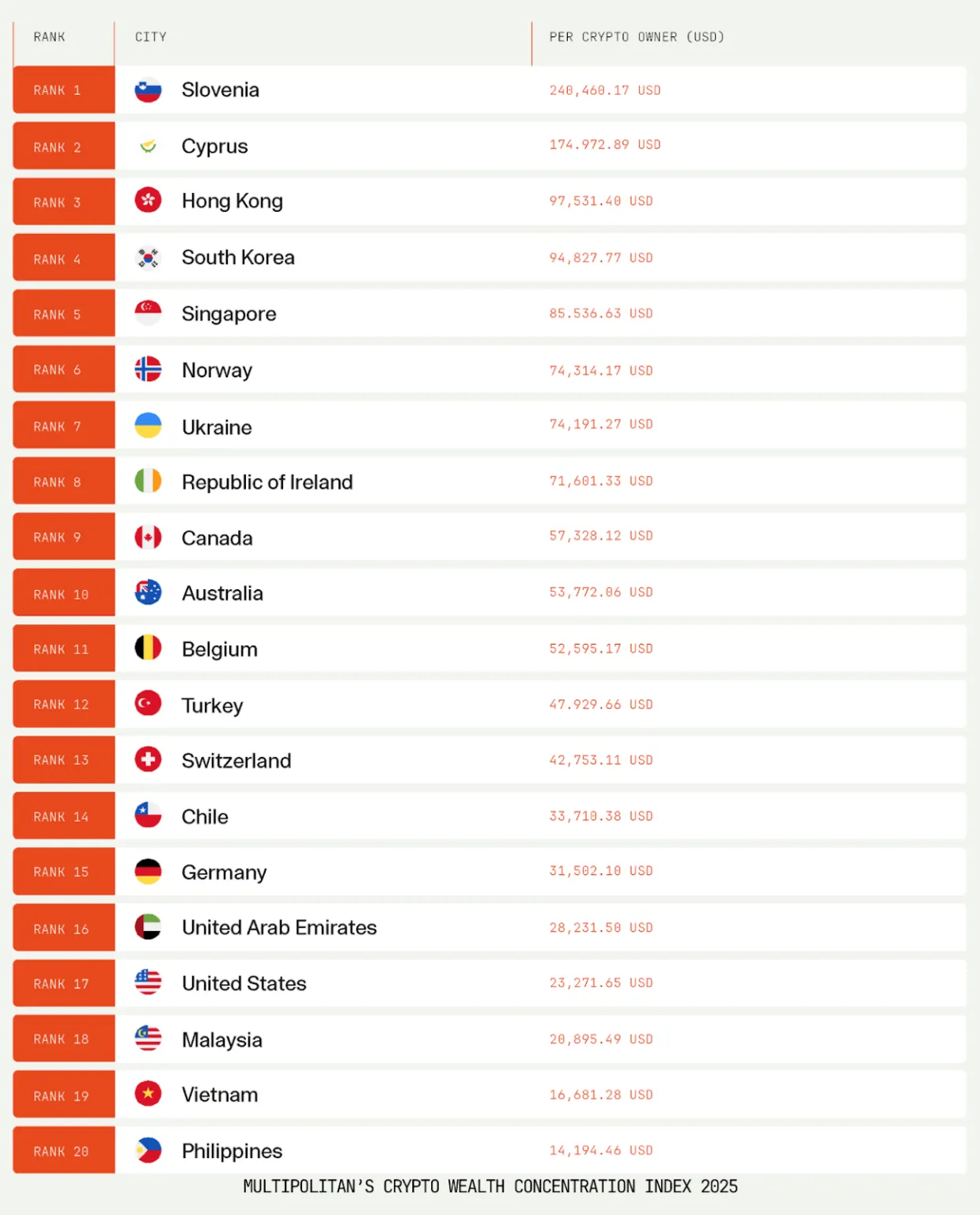
According to the latest Crypto Friendly Cities Index 2025 from international finance migration platform Multipolitan, Filipino crypto holders now average $14,194.46 (about PHP790,000) in digital assets.
This places the Philippines 20th globally for crypto wealth concentration, a notable achievement for a country whose crypto journey began in informal gaming circles.
The rise of financially minded crypto ownership
What began as a workaround for economic hardship—using blockchain-based games to earn income during the pandemic—has since matured into a broader financial inclusion movement. In the early 2020s, the Philippines garnered attention when 40% of Axie Infinity players hailed from the archipelago, earning real-world income from digital monsters and tokens.
While the value of gaming tokens has cooled, crypto adoption in the country has only deepened. Filipinos are moving beyond speculative trading and gaming-based earnings. Instead, they’re increasingly turning to cryptocurrency as an alternative investment tool, a hedge against inflation, and even a gateway to global finance.
Southeast Asia’s crypto awakening—and the Philippines’ role
Across Southeast Asia, the crypto landscape is becoming more stratified. Singapore remains the regional titan, ranking 5th worldwide, with average crypto holdings exceeding $85,000 per user. Malaysia and Vietnam also feature in the global top 20, but the Philippines’ ascent is particularly remarkable given its lower per capita income and nascent regulatory framework.
Globally, countries like Slovenia and Cyprus lead the pack, not because of widespread adoption but because of high average holdings among smaller groups of crypto-savvy citizens. These nations reflect wealth concentration, while the Philippines symbolizes grassroots growth evolving into middle-class wealth participation.
A significant factor shaping crypto wealth is regulation, or the lack thereof. Multipolitan emphasizes that cities attracting crypto capital offer clear, consistent, and business-friendly rules. The Philippines is making slow but meaningful progress. In 2024, the Securities and Exchange Commission (SEC) introduced new draft guidelines for Crypto Asset Service Providers (CASPs) to boost investor confidence and address growing concerns over fraud and scams.
While countries like the U.S. face regulatory gridlock and crypto crackdowns, the Philippines is willing to engage rather than alienate the sector. This approach could pay off in long-term economic dividends.
Crypto capital: Cities competing for tomorrow’s wealth
Multipolitan’s report paints a picture of a rapidly shifting financial map, where cities, not just countries, compete for digital capital. Hubs like Dubai, Zug (Switzerland), and Singapore are not just tax havens; they’re crypto ecosystems, designed to attract startups, digital nomads, and institutional investors alike.
These hubs outperform across five key categories: regulation, tax regimes, quality of life, digital infrastructure, and crypto infrastructure. The top-ranked cities are becoming magnets for crypto entrepreneurs and capital, while laggards risk falling behind in the race for fintech supremacy.
The report introduces a Crypto Wealth Concentration Index, measuring not just ownership, but equality of ownership. While countries like the UAE lead in adoption (with 25% of the population owning crypto), wealth remains heavily skewed in others, where small groups dominate the digital purse strings.
In this light, the Philippines offers a compelling narrative: a country moving from concentrated P2E gains to more distributed financial inclusion. Crypto is no longer just a survival tool—it’s becoming a vehicle for building long-term wealth among everyday Filipinos
Philippines as a future crypto powerhouse?
Multipolitan concludes that the global financial map is being redrawn, and the next financial capitals may not be in New York or London, but in cities that embrace digital transformation with agility.
For the Philippines, this evolution is already underway. What began in mobile games and crypto side hustles is maturing into a decentralized financial awakening. The country may not be a crypto superpower yet, but it’s no longer a mere spectator.
The next chapter? One in which blockchain becomes not just a tool for earning but a foundation for financial sovereignty.