
Philippine sports did not merely collect medals in 2025—it rewrote expectations. Across disciplines as varied as tennis, gymnastics, billiards, winter sports, volleyball, and football, Filipino athletes asserted themselves on stages that once felt distant, even improbable. What stood out was not just the volume of victories, but the breadth of belief they inspired.

At the center of the year’s sporting consciousness was Alex Eala, whose rise on the professional tennis circuit signaled a generational shift. Entering the season far from the elite tier, she played with a freedom that unsettled established stars and drew global attention.
Her deep runs in marquee tournaments and her historic breakthrough title were more than personal milestones—they reframed how the Philippines is viewed in a sport long dominated by traditional powers.
By year’s end, Eala was no longer a curiosity but a fixture, carrying expectations with poise rather than pressure.
Gymnastics, long anchored by individual brilliance, evolved into a family and system story. Carlos Yulo continued to validate his status as one of the world’s best, adding to a medal collection that spans continents and championships.

Yet the year felt richer because the spotlight widened. With his younger brother making noise on the junior stage, Philippine gymnastics offered a glimpse of continuity—proof that excellence is being cultivated, not improvised.
If consistency defines greatness, billiards once again delivered it in abundance. Carlo Biado reinforced the country’s reputation as a cue-sport powerhouse, achieving a rare feat that placed him among the discipline’s legends.
On the women’s side, Filipino dominance remained unmistakable, with finals that felt less like international clashes and more like national showcases. The message was clear: in billiards, the Philippines is not chasing relevance—it is setting standards.
Perhaps the most symbolic breakthrough came on ice. The Philippine men’s curling team shattered perceptions by claiming the country’s first Asian Winter Games medal, a moment that resonated far beyond the scoreboard. In a tropical nation, winter sports have often existed on the margins of imagination.
That changed when Filipino athletes stood on a podium carved from ice, turning novelty into legitimacy and ambition into momentum toward Olympic dreams.
Golf and volleyball added their own chapters to the year’s narrative. Miguel Tabuena defended home soil against a world-class field, transforming a local stop into a statement event. On the hard court, the national men’s volleyball team embraced the challenge of global competition, securing a landmark win and emerging as Asia’s next credible presence in a sport hungry for new contenders.
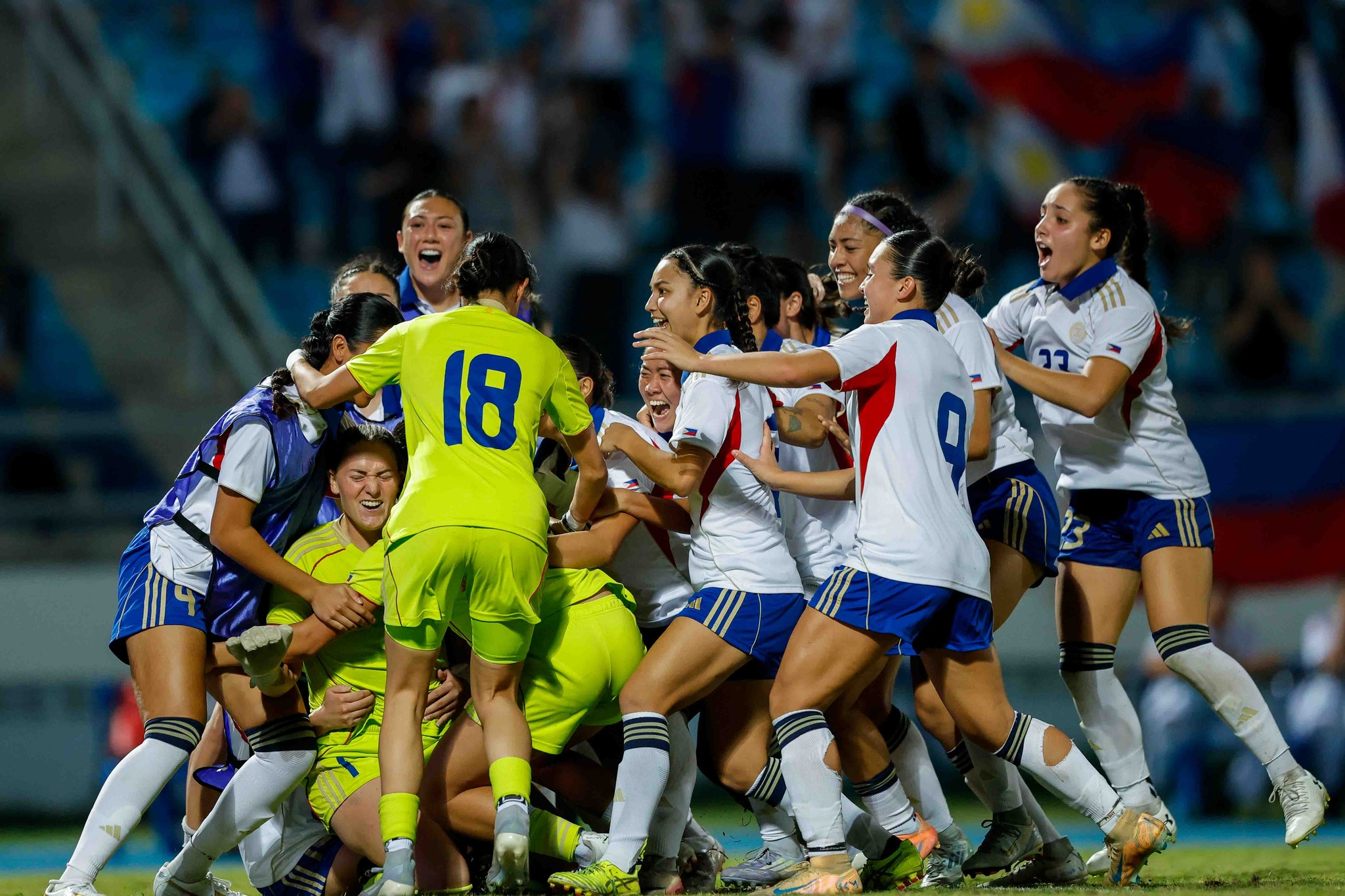
Regionally, the Southeast Asian Games underscored a maturing sports program. While the overall gold count dipped slightly, the significance of the victories deepened. The women’s football team finally climbed the top step after years of near-misses, while beach volleyball dethroned a regional dynasty. In the pool, a new standard-bearer emerged, leading a relay that symbolized teamwork over individual acclaim.
Basketball, baseball, and softball remained reliable pillars, anchoring the medal haul with authority.
Even off the field, developments favored long-term growth. A landmark Supreme Court ruling ensured stronger financial support for national sports programs, reinforcing grassroots pipelines and athlete welfare. It was a reminder that success is sustained not only by talent, but by governance and institutional resolve.
At the collegiate level, redemption defined the season. Traditional powers reclaimed championships after heartbreak, proving that resilience remains a cornerstone of Philippine basketball culture. These victories mattered not just for trophies, but for the ecosystems they nourish—where future national athletes are shaped.
Taken together, 2025 felt less like an isolated peak and more like a confirmation. Philippine sports is no longer content with moments of brilliance; it is building habits of excellence. From global arenas to regional battlegrounds, from icy rinks to sunlit courts, Filipino athletes did more than win—they expanded what the country dares to expect from itself.