
(Photo courtesy of PCO)
CLARK FREEPORT ZONE, Pampanga – President Ferdinand Marcos Jr. underscored the importance of early childhood nutrition, directing government agencies and local government units (LGUs) to strengthen coordinated interventions addressing malnutrition during a child’s first 1,000 days of life.
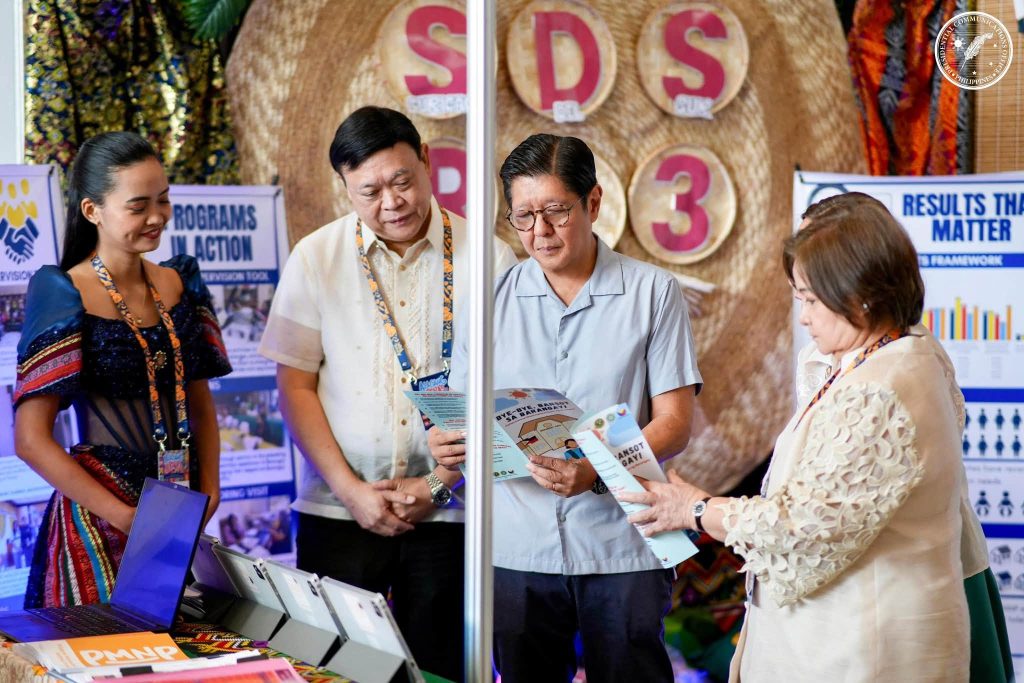
Speaking at the Philippine Multisectoral Nutrition Project (PMNP) Alagang Pinas Summit 2026 on Wednesday, Marcos emphasized the need to ensure that families have access to essential healthcare and nutrition services from pregnancy until a child’s second birthday.
“Kapag napansin ng magulang na may problema sa paglaki ng kanyang anak, dapat alam nila kung saan pupunta, kung anong suporta ang makukuha, at kung anong proseso ang gagawin,” Marcos said.
“Ito po ang nais nating tiyakin sa okasyong ito. Sa pamamagitan ng Alagang Pinas Summit, ang mga serbisyong nasimulan sa ilalim ng PMNP ay magpapatuloy upang ang bawat batang nangangailangan ng tulong sa nutrisyon ay makakatanggap ng angkop at sapat na pangangalaga.”
The President stressed that addressing malnutrition goes beyond providing adequate food, noting that families also require access to healthcare, clean water, sanitation and other essential services.
He emphasized the importance of ensuring consistent and responsive delivery of these services, particularly in underserved and vulnerable communities.
Through the Philippine Plan of Action for Nutrition 2023–2028, the government has adopted an integrated approach involving national agencies, local governments and development partners to address service delivery gaps and maximize available resources.
Marcos said the PMNP has helped bring together healthcare, nutrition, sanitation and early childhood development interventions at the community level.
However, he acknowledged that malnutrition remains a national challenge, particularly in areas where local governments face financial and technical limitations.
“We must further strengthen local implementation capacity, address financing constraints, and make better use of nutrition data to guide decisions and measure results,” Marcos said.
“National agencies must continue providing policy and technical support, while local governments take greater ownership of nutrition interventions by incorporating them into their regular programs and development priorities.”
Nutrition program reaches 6.17 million beneficiaries
Marcos reported that as of September 30, 2026, the PMNP had reached 6.17 million beneficiaries across 235 participating municipalities nationwide.
More than 500,000 children below five years old had been monitored and provided with essential services, while 134 participating municipalities recorded significant reductions in stunting following two years of coordinated interventions.
The President reiterated his administration’s commitment to protecting children’s health and welfare, a priority he highlighted during his fifth State of the Nation Address (SONA) in July.
“Kapag may nagkasakit sa pamilya, tila krisis ang tumama. Sa mahal ng pagpapagamot, kaya nitong simutin ang kita o ipon ng isang pamilya,” Marcos said.
“Kaya malusog na pamumuhay ang ating pangunahing isinusulong: kumpletong bakuna; maayos na nutrisyon; regular na ehersisyo; at pag-iwas sa masamang bisyo at mapanganib na gawain.”
Sustaining nutrition services beyond 2026
Led by the Department of Health (DOH) and the Department of Social Welfare and Development (DSWD), the PMNP seeks to strengthen local nutrition governance, improve public service delivery and enhance interagency collaboration in addressing malnutrition.
Launched in March 2023 with support from the World Bank, the initiative provides prenatal care, micronutrient supplementation for pregnant women, breastfeeding support, complementary feeding, improved dietary practices for children and access to sanitation facilities.
The program also supports local governments and frontline healthcare workers while utilizing nutrition data to monitor outcomes and improve interventions.
With the PMNP scheduled to conclude operations on December 31, 2026, Marcos called on national agencies and local governments to sustain its gains by integrating nutrition interventions into their regular programs and long-term development plans.