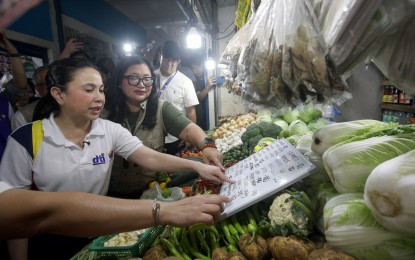
The government is stepping up efforts to maintain sufficient supply and stabilize prices of key commodities following a rise in inflation due to recent weather disturbances, the Department of Economy, Planning, and Development (DEPDev) said.
Headline inflation in August reached 1.5 percent, up from 0.9 percent in July, according to the Philippine Statistics Authority (PSA). National Statistician Dennis Mapa said this brought the year-to-date average to 1.7 percent, still below the government’s 2–4 percent target range.
Weather-related disruptions were behind the increase in food prices, with fish inflation rising to 9.5 percent from 6.3 percent and vegetable inflation climbing to 10 percent from a 4.7 percent deflation. Rice prices, however, continued to post a 17 percent deflation, while meat inflation eased slightly to 7.1 percent.
“While inflation remains broadly manageable, the recent figures highlight how adverse weather conditions directly impact prices,” said DEPDev Secretary Arsenio Balisacan. He emphasized the importance of monitoring the weather, noting forecasts of seven to 15 tropical cyclones between September 2025 and February 2026 and potential La Niña conditions.
To ensure sufficient supply, the Department of Agriculture (DA) allocated agricultural inputs including seeds, livestock and poultry drugs, fish stocks, and aquaculture equipment. Farmers affected by extreme weather can access financial aid through programs like the Survival and Recovery Loan Program, crop insurance, and the Quick Response Fund.
Balisacan also cited the upcoming DA command center, launching in November, which will improve data-driven management of food supply chains, starting with rice and later expanding to high-value crops, livestock, poultry, and fisheries.
The Food and Drug Administration approved the commercial use of the country’s first avian influenza vaccine, Volvac BEST AI plus ND, which protects poultry against H5N1 and Newcastle disease.
“We remain committed to implementing strategic policies that ease supply constraints and improve market efficiency,” Balisacan said.
The Bangko Sentral ng Pilipinas (BSP) projected inflation to remain below the low end of the target range in 2025, while 2026 and 2027 are expected to stay within the 3 percent ± 1 percentage point range. BSP noted that possible electricity rate adjustments and higher rice tariffs could increase inflationary pressures, and said it will monitor risks closely to safeguard price stability.