
Across the international sports landscape, a decisive wave of regulation is reshaping the future of competition—one focused squarely on limiting or banning transgender athletes, particularly trans women, from participating in female categories. While defenders of inclusion argue for fairness and dignity, a rising chorus of critics is voicing concern that biological advantages may tip the balance against cisgender women.
Now, with mounting political pressure and a string of policy shifts, sports organizations are moving to redefine eligibility—triggering a polarizing global debate over what fairness in sports truly means.
US Olympic Committee aligns with Trump-era directive
In a high-profile shift, the U.S. Olympic and Paralympic Committee announced that transgender women will effectively be barred from competing in women’s events. The policy came in response to an executive order by former President Donald Trump, which ties continued funding to compliance with restrictions on trans athlete participation.
With authority over nearly 50 national governing bodies, the USOPC’s new direction could trickle down to youth leagues and college sports—potentially impacting thousands of athletes and sparking conflict at every level of the sporting ladder.
Cycling says no to post-puberty trans women
The International Cycling Union has joined the growing number of federations drawing a hard line. In response to controversy following the victory of trans cyclist Austin Killips, the organization now bans trans women who transitioned after male puberty from women’s events. The move, which critics see as overdue, marks one of the clearest stances yet on hormone advantages linked to puberty.
Lia Thomas’ legacy reversed at Penn
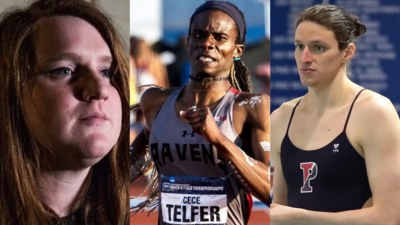
University of Pennsylvania, once a symbol of inclusion after swimmer Lia Thomas made history in 2022, has walked back her accomplishments. Amid a federal civil rights investigation, the school recently erased three of Thomas’ records and restored them to the runners-up—an apology to the women who had lost to her. The decision reflects a growing movement to reconsider trans athletes’ victories as unjust.
Swimming and boxing take stricter turns
World Aquatics (formerly FINA) has reinforced its rulebook, stating only athletes who transitioned before age 12 may compete in women’s swimming events. While rare at the elite level, the new rule sets a precedent for how governing bodies might address perceived physical advantages. A proposed “open category” for trans and nonbinary athletes is still under review.
In boxing, the World Boxing Organization went further, announcing mandatory sex verification for all athletes. This dramatic step follows the disqualification of Olympic champion Imane Khelif and another trans-inclusive controversy in the now-defunct International Boxing Association. Though Khelif maintains she is biologically female, the ruling revealed how blurred—and high-stakes—the lines have become.
British sports move to protect women’s leagues
Following a U.K. Supreme Court ruling, major British sports bodies, including football and cricket, have implemented sweeping bans on trans women in women’s competitions. The new policies override previous standards based on testosterone thresholds, arguing that biological sex, not hormone levels, is the more reliable determinant of fairness.
Track and field tightens gender eligibility
The World Athletics Council took one of the boldest steps yet by banning all transgender women who transitioned after male puberty from international competition. The policy was introduced alongside controversial regulations affecting athletes with differences in sex development (DSD), such as Olympic champion Caster Semenya. Though not transgender, Semenya’s eligibility has long been challenged, and she now must undergo hormone-suppressing treatment to compete in some events.
NCAA follows suit in sweeping ruling
The National Collegiate Athletic Association, which governs college sports in the U.S., quickly followed the federal lead. In February, it ruled that only athletes assigned female at birth may compete in women’s sports. The timing—just a day after Trump’s executive order—sent a clear message: the battle over gender and fairness in college athletics is entering a new phase.
A global reckoning over fairness and identity
As more governing bodies adopt stricter regulations, the conversation is shifting from inclusion to protection—particularly for female athletes who argue they are being left behind in the name of equality. Proponents of trans participation maintain that sport should be accessible to all, regardless of gender identity. But with rising concerns over physiological advantages, fairness is no longer a philosophical debate—it’s becoming a policy reality.
From grassroots leagues to Olympic stages, the line is being redrawn. And with every policy reversal, the sports world inches closer to a reckoning over who gets to compete, and under what terms.