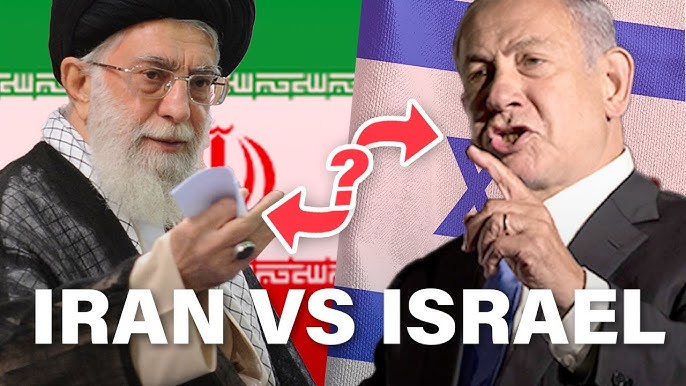

Once unlikely allies in the Middle East, Iran and Israel now find themselves locked in a hostile standoff that spans decades and borders.
What began as a strategic friendship in the 20th century has transformed into one of the region’s most bitter and dangerous rivalries — culminating in recent years with cyberattacks, proxy wars, and the looming threat of open war.
A strategic alliance born of necessity
In the decades following Israel’s founding in 1948, Iran under Shah Mohammad Reza Pahlavi stood among the few Muslim-majority nations willing to work openly with the Jewish state. Although Iran never established formal diplomatic ties, both countries quietly nurtured strong trade, intelligence, and military relations throughout the 1950s to the 1970s.
Oil formed the foundation of the alliance. Iran was a vital supplier to Israel, especially after Arab oil producers cut off ties. In turn, Israel assisted Iran with defense technology and infrastructure. The two countries even collaborated to build the Eilat-Ashkelon oil pipeline to bypass Arab-controlled routes.
This cooperation extended to the intelligence realm. Israel’s Mossad worked closely with Iran’s SAVAK, the Shah’s secret police, to counter shared threats—especially the rise of pan-Arab nationalism and Soviet influence during the Cold War.
The Islamic Revolution: A diplomatic earthquake
The relationship unraveled in 1979 with Iran’s Islamic Revolution. The overthrow of the Shah and the rise of Ayatollah Ruhollah Khomeini brought a fundamental shift in Iran’s worldview. The new regime branded Israel the “Little Satan,” a symbol of Western imperialism and oppression of Muslims, particularly Palestinians.
Tehran swiftly cut off all ties, and the hostility moved beyond words. Iran began supporting anti-Israel militant groups, such as Hezbollah in Lebanon and later Hamas in Gaza. These proxy groups became Tehran’s long arm in its campaign against Israel, launching rockets and attacks while Iran denied direct involvement.
Khomeini’s rhetoric and Iran’s support for anti-Israel militants reframed the Palestinian cause as a central Islamic issue, rather than a localized Arab one — galvanizing ideological opposition throughout the Muslim world.
Cold War shadows, modern flashpoints
Even after the revolution, the two countries remained entangled — albeit secretly. During the Iran–Iraq War (1980–1988), Israel is reported to have sold arms to Iran as part of the U.S.-backed Iran-Contra affair. But this temporary overlap did little to rebuild trust.
Tensions escalated dramatically in the 2000s as Iran accelerated its nuclear program. Israel, viewing a nuclear-armed Iran as an existential threat, launched covert operations to sabotage Iranian nuclear facilities. The 2010 Stuxnet cyberattack, widely attributed to Israel and the United States, marked a turning point in modern cyber warfare.
Since then, the shadow conflict has spilled into the open. Israeli airstrikes have targeted Iranian weapons shipments in Syria. Iranian drones and cyberattacks have hit Israeli and international targets. Each move is met with retaliation — often indirect, sometimes not.
2025: An open flashpoint
In April and May 2025, the rivalry reached new heights. After Iran’s key military facilities were hit in what was believed to be an Israeli-led operation, Tehran responded with drone and missile attacks on Israeli territory. The exchanges marked the most direct confrontation between the two nations to date.
Global powers, particularly the United States and the European Union, have expressed concern that continued escalation could spark a regional war. But neither side appears ready to back down.
Israel maintains that it will do whatever is necessary to prevent Iran from acquiring a nuclear weapon. Iran insists its nuclear program is peaceful — and continues to call for the end of what it calls Israeli “occupation” of Palestine.
No end in sight
The roots of the Iran-Israel rivalry are deeply ideological, but also shaped by shifting regional power balances. Iran sees itself as the vanguard of resistance against Western and Israeli influence in the Middle East. Israel, meanwhile, positions itself as the first line of defense against Iranian expansionism.
Once bound by mutual interests, the two now appear irreversibly divided by mutual enmity.
As missiles fly and rhetoric intensifies, one thing is clear: what began as a covert cold war has now morphed into a dangerous and public confrontation — one that threatens not just two nations, but the stability of the entire region.