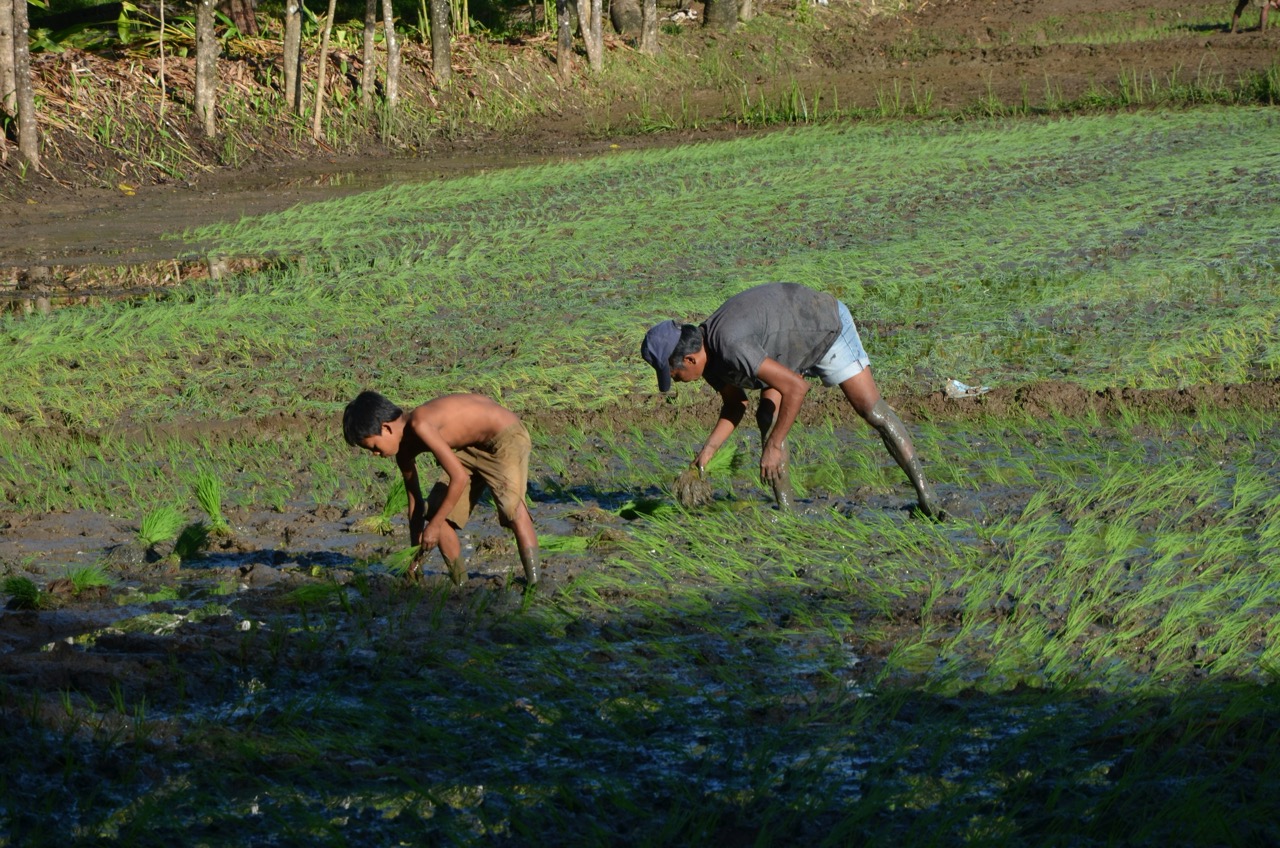

Filipino farmers are left vulnerable to financial losses from extreme climate events, yet only one-third are insured.
After months of sweltering heat and cracked soil, the Philippines is now being drenched by intense monsoon rains. While the downpour offers a welcome reprieve and hope for better harvests, it also signals the start of typhoon season—and with it, a renewed threat to the country’s most vulnerable: its farmers.
In 2024 alone, over ₱57.8 billion in agricultural losses were recorded by the Department of Agriculture, with more than 1.4 million farmers and fisherfolk affected. The devastation came not just from one source, but a deadly mix—El Niño-fueled droughts, destructive typhoons, pest infestations, and even volcanic eruptions. El Niño alone wiped out ₱15.7 billion worth of crops, devastating key staples like rice and corn.
Despite their crucial role in food security, most farmers remain dangerously underprotected. The World Bank estimates that only one in three Filipino farmers is covered by insurance, even though the government subsidizes premiums. This massive protection gap leaves millions at the mercy of extreme weather—year after year.
But a new player in the insurance space is hoping to change that.
Enter Igloo, a regional insurtech company, which is working to bring climate-smart insurance solutions directly to farmers through a groundbreaking system called Weather Index Insurance (WII). Instead of relying on traditional damage assessments that are slow and prone to dispute, WII uses real-time weather data—such as rainfall levels or temperature—to automatically trigger payouts once certain thresholds are met.
“It’s a faster, fairer way to get farmers the help they need,” said John Chen, Igloo’s Country Manager for the Philippines and Thailand. “This kind of technology doesn’t just improve claims processing—it helps farmers recover quicker, make better decisions, and keep farming even after disasters.”
This parametric insurance model is already proving successful in Vietnam, where it has been integrated into MobiAgri, an agriculture-focused app from telco giant MobiFone. The platform combines Big Data, AI, blockchain, AR, and VR to support digital farming, while Igloo’s rainfall insurance ensures farmers are covered during climate shocks. The program now operates across 18 provinces, supported by thousands of rain and weather monitoring stations.
Chen believes the Philippines is ripe for a similar transformation. Igloo is currently in talks with local stakeholders—including government bodies, agri-cooperatives, and agritech platforms—to bring WII to Filipino farmers. “We’re ready,” he said. “With the right partners, we can bring insurance where it’s needed most and give farmers a fighting chance against the growing threat of climate change.”
To learn more about Igloo’s climate-resilient insurance offerings, visit iglooinsure.com.