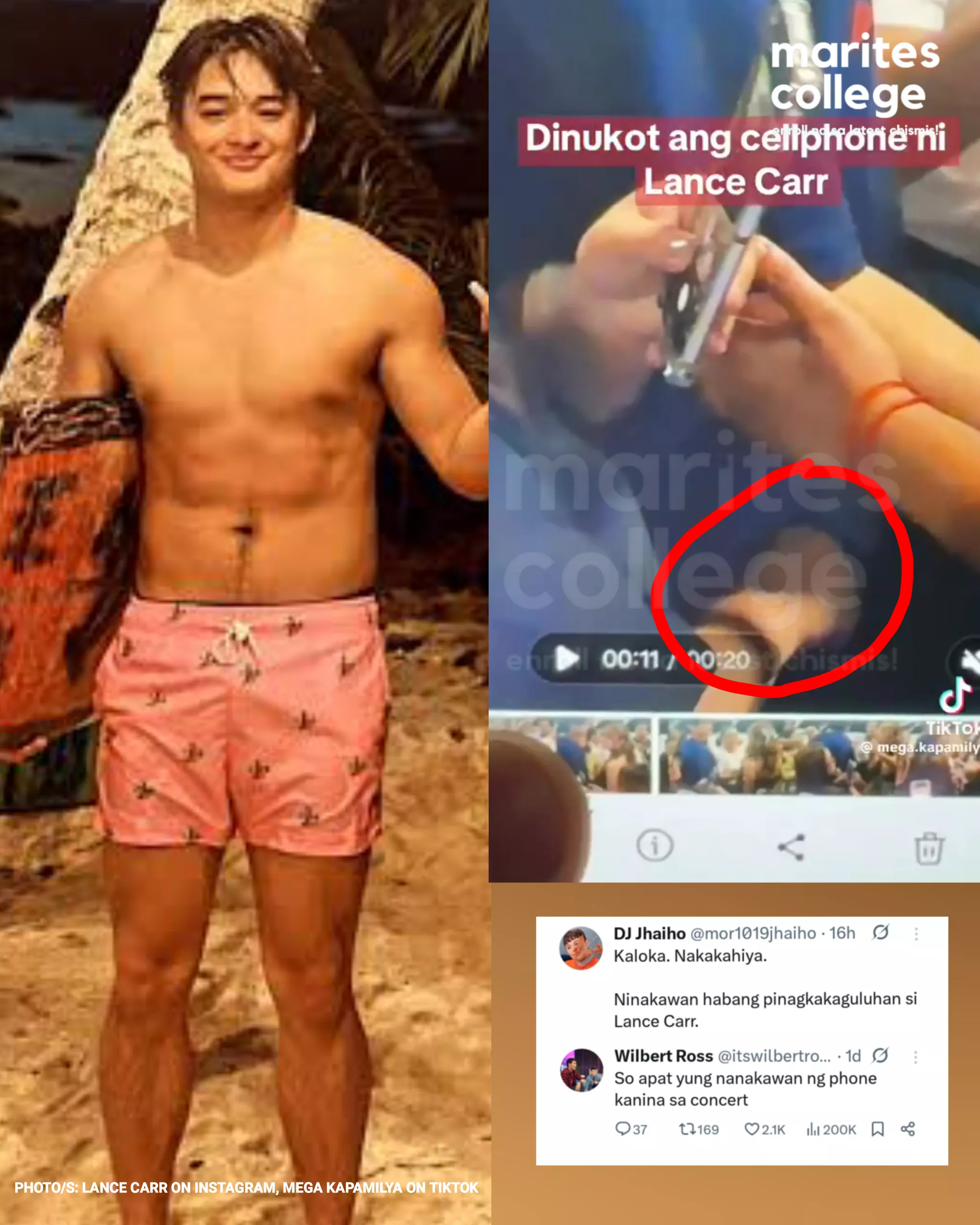

What began as a chaotic fan encounter in Cubao has spiraled into an unsettling case study on theft, celebrity culture, and the underground economy of stolen gadgets—one that now stretches beyond Philippine borders.
Actor Lance Carr, a rising talent under Viva, lost his mobile phone following the Vivarkada concert at Araneta Coliseum on August 15, 2025. At the time, the incident seemed like another cautionary tale of fan frenzy gone too far. Surveillance footage later showed a woman discreetly lifting the phone from Carr’s pocket while he was surrounded by supporters—her face clearly visible, yet her identity never established.
Months later, the story has taken a sharper, more controversial turn.
At a media conference for his upcoming series Hell University on January 21, 2026, Carr confirmed what many found disturbing rather than amusing: his stolen phone has effectively completed an international itinerary.
Using a tracking application, the actor traced its movement from Cubao to Greenhills—a district long whispered about in tech circles for its gray-market electronics trade—before finally landing in Shenzhen, the global hub of electronics manufacturing and resale.
Carr recounted the updates with a mix of disbelief and resignation. The phone, he said, “made a mall stop” in Greenhills before leaving the country. He added that expecting any shop to admit involvement felt futile, especially once the device reappeared overseas.
What makes the episode more polarizing is not just the journey of the phone, but what it suggests. A stolen gadget belonging to a public figure was allegedly flipped locally, exported, and absorbed into a massive international supply chain—without consequence.
The case highlights how quickly stolen property can be laundered through informal markets, raising uncomfortable questions about enforcement, accountability, and consumer complicity.
The controversy intensified when a video resurfaced showing fellow actor Marco Gallo offering a ₱20,000 reward to anyone who could return the phone. Online, the clip sparked debate: was it desperation, performative concern, or a reckless promise?
Carr clarified the confusion with humor, saying he never authorized Gallo to volunteer that amount and joking that he didn’t even have ₱20,000 to spare. The reward, he stressed, would come from him—if at all.
Despite the international trail, Carr insists he never panicked. He was confident the phone contained nothing compromising, a statement that subtly underscores a harsher reality of celebrity life: public figures now assume that theft is not just about hardware, but about potential exposure.
What lingers after the laughter fades is a more troubling implication. If a celebrity’s stolen phone can quietly exit the country and resurface in one of the world’s largest tech markets, what chance do ordinary victims have? Carr’s experience, stripped of its showbiz gloss, points to a system where theft is no longer a dead end—but a well-oiled pipeline.
In the end, the phone may be gone for good. The story, however, has already done its damage—casting a harsh light on how easily personal property, privacy, and accountability can disappear, one crowded fan moment at a time.