
(Photo courtesy of PNA)
TOKYO – A decade after Japan introduced its Free and Open Indo-Pacific (FOIP) strategy, the initiative continues to evolve, with greater emphasis on technological cooperation, semiconductor development and workforce training to promote economic growth across Southeast Asia.
First proposed by then Japanese Prime Minister Shinzo Abe during the sixth Tokyo International Conference on African Development (TICAD VI) in Nairobi, Kenya, in August 2016, FOIP has since gained support in the United States and Europe.
The strategy was built on the principles of freedom, openness, diversity, inclusiveness and respect for the rule of law.
Ten years later, Japan is expanding its cooperation with regional partners, particularly the Association of Southeast Asian Nations (ASEAN), to strengthen economic resilience, diversify supply chains and develop skilled workers in emerging industries.
Southeast Asia emerges as AI, semiconductor hub
Southeast Asia, traditionally recognized as a manufacturing center because of its relatively low labor costs, is increasingly attracting investments in artificial intelligence (AI), semiconductors and digital infrastructure.
The shift comes as multinational companies seek to reduce their dependence on China by diversifying production facilities and supply chains amid continuing tensions between Washington and Beijing.
Malaysia’s southernmost state of Johor has emerged as a major beneficiary of this trend, attracting investments from global technology companies, including Microsoft Corp., Nvidia Corp. and Japan’s NTT Data.
Johor has become one of Southeast Asia’s leading data center destinations, benefiting from its proximity to Singapore, a major regional financial and technology hub.
Singapore previously dominated the region’s data center industry because of its extensive submarine cable connections, established digital infrastructure and concentration of multinational businesses.
However, limited land availability, high electricity consumption and environmental concerns prompted Singapore to effectively suspend approvals for new data centers in 2019.
As demand for data processing and AI infrastructure continued to increase, companies began looking to neighboring Johor as an alternative investment destination.
Located just across the water from Singapore, Johor offers larger land areas, lower property costs and more affordable electricity.
Malaysia’s relatively stable political environment, predictable legal framework and government incentives for digital investments have further strengthened the state’s appeal to international technology companies.
These advantages have helped transform Johor into one of the world’s major emerging data center hubs.
Japanese firms expand digital infrastructure investments
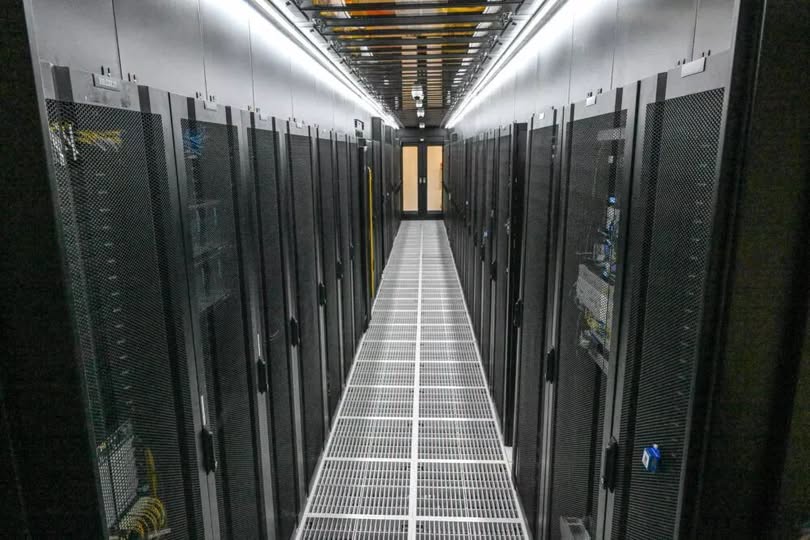
Among the companies expanding their presence in Johor is NTT Data, which is developing a large-scale data center campus with a planned power capacity of 290 megawatts.
The project is designed to accommodate rising demand for AI-related computing services and is expected to become one of the largest data center developments in the Asia-Pacific region.
Its first building is scheduled to begin operations in April 2027.
Doug Adams, CEO and President of Global Data Centers at NTT Data, said the investment reflects the company’s commitment to expanding its digital infrastructure operations in the region.
“With the APAC (Asia-Pacific) region emerging as one of the fastest growing and most influential markets for IT and data centers, our strategic land acquisition and development in Malaysia underscores our commitment to further expansion in the region,” Adams said.
He also emphasized Johor’s growing importance as a cross-border economic hub.
“Johor Bahru is an increasingly important cross-border economic zone due to its proximity to Singapore,” he added.
As data center investments expand, managing electricity consumption and cooling requirements has become a major challenge.
AI-focused facilities generate substantial heat and require significant energy resources, making traditional air-conditioning systems increasingly inadequate for large-scale operations.
To address these challenges, NTT Data plans to introduce direct liquid cooling technology, which circulates coolant directly to servers to improve heat management and energy efficiency.
The investment demonstrates how Japanese technological expertise is supporting Southeast Asia’s transition toward more advanced industries while creating employment and business opportunities.
Vietnam strengthens semiconductor industry
Vietnam is also emerging as an important destination for semiconductor investments as its government prioritizes high-technology industries in its national development strategy.
Major international companies have expanded their operations in the country, strengthening Vietnam’s position in global electronics and semiconductor supply chains.
US technology company Intel operates its largest semiconductor assembly and testing facility at Saigon Hi-Tech Park in Ho Chi Minh City.
The company announced plans earlier this year to transfer some operations from its Costa Rica facility to Vietnam, a move expected to strengthen the country’s role in producing chips used in advanced data centers.
South Korea’s Samsung Electronics has likewise been shifting its investment priorities in Vietnam from smartphone manufacturing toward semiconductor production.
According to local media reports, Samsung is developing its first Vietnamese facility for testing and packaging DRAM and NAND flash memory chips in northern Thai Nguyen Province.
The project, reportedly involving an initial investment of $1.5 billion, is intended to address increasing demand for memory chips used in AI applications.
Operations are targeted to begin in November 2027.
Japan supports semiconductor workforce development
Alongside growing private-sector investments, Japan is helping Vietnam strengthen its semiconductor workforce through education and technical cooperation.
The Vietnamese government aims to train 50,000 semiconductor professionals by 2030 as part of its efforts to establish a more competitive domestic chip industry.
Vietnam Japan University, established in 2014 through cooperation between the Japanese and Vietnamese governments, is among the institutions supporting this objective.
In October 2025, the university introduced a semiconductor talent development program designed to prepare students for careers in the rapidly expanding industry.
Tsuyoshi Usagawa, Special Advisor to the Rector of Vietnam Japan University and Senior Advisor at the Japan International Cooperation Agency (JICA), has been involved in the program since its establishment.
“Semiconductors are attracting a great deal of attention,” Usagawa said.
“We had 106 students in the first cohort and 107 in the second, all of them exceptionally talented.”
Semiconductor manufacturing generally involves two major stages: front-end processing, where electronic circuits are formed on silicon wafers, and back-end processing, where wafers are separated into individual chips and packaged into finished products.
Vietnam currently lacks companies engaged in front-end semiconductor processing, making workforce development essential to expanding its capabilities.
Usagawa said developing expertise in this area could eventually help Vietnam establish a more complete semiconductor manufacturing ecosystem.
Students enrolled in the university’s semiconductor program will undergo four-and-a-half years of training before entering the workforce.
Graduates are expected to pursue careers with international semiconductor companies operating in Vietnam and other countries, including Japan.
Building long-term partnerships through education
Beyond technical training, Japan views educational cooperation as an important means of strengthening long-term relationships with Southeast Asian countries.
Usagawa emphasized that sharing Japanese expertise and educational programs could help establish lasting professional and institutional networks across the region.
“By sharing Japan’s educational programs and accumulated experience with countries across Southeast Asia, including Vietnam, we can expand people-to-people networks,” he said.
He added that “these networks cannot be built overnight, but once established, they are extremely strong.”
Usagawa expressed hope that cooperation in education, workforce development and mutual understanding would reinforce Japan’s partnerships with countries across Southeast Asia.
As FOIP enters its second decade, Japan’s growing involvement in digital infrastructure, semiconductor development and technical education reflects an expanding approach to regional cooperation.
While maintaining its original commitment to freedom, openness and the rule of law, the strategy increasingly emphasizes shared economic opportunities, technological innovation and human resource development as foundations for long-term prosperity in the Indo-Pacific.