
Women have made remarkable strides over the past century, from securing voting rights to leading nations and heading global corporations. Their contributions span various fields, including the once male-dominated domain of nuclear science.
While pioneers like Marie Curie, who revolutionized research on radioactivity, and Lise Meitner, who played a key role in discovering nuclear fission, are well-known, Filipino women have also made significant advancements in nuclear research, policy, and education. Their efforts highlight that gender is no barrier to excellence in the field.
The Philippine Nuclear Research Institute (PNRI) has promoted gender inclusivity in the sciences. Women hold key research and leadership positions within the organization, showcasing their integral role in driving innovation. PNRI’s 2022 report shows that women constitute 46 percent of the workforce, with 35 percent occupying technical positions and nine percent in administrative roles.
This strong representation underscores the institute’s commitment to fostering a more inclusive environment where women actively contribute to scientific progress.
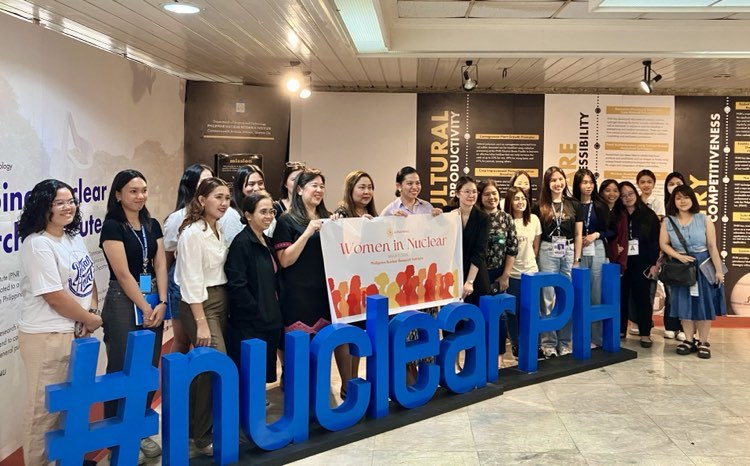
Recognizing these contributions, Alpas Pinas, a non-profit organization advocating for clean, affordable, and reliable energy, marked Women’s Month with a media briefing focused on the vital role of women in nuclear science and technology. This event aligned with the organization’s broader mission to promote gender diversity in Science, Technology, Engineering, and Mathematics (STEM) and to accelerate discussions on nuclear energy as a sustainable solution for the Philippines’ energy needs.
Alpas Pinas Convenor Gayle Certeza led the event, which featured Deputy Director of PNRI Vallerie Ann Samson. Samson provided insights into PNRI’s ongoing research in nuclear applications for food and agriculture, healthcare, environmental protection, and education. She emphasized the invaluable contributions of women scientists in driving these projects forward.
“At PNRI, we celebrate the women and young girls in this field who are not only shaping the future of nuclear science but also inspiring the next generation of researchers, leaders, and innovators,” Samson stated.
PNRI Director Dr. Carlo Arcilla also participated in the event, reaffirming the institute’s commitment to gender equality in nuclear science. Through its Gender and Development (GAD) initiatives, PNRI fosters a gender-fair environment in research, learning, and specialized nuclear services. The institute also promotes gender-fair language and has launched an online GAD Help Desk to support these efforts.
Arcilla has been a vocal advocate for gender representation at the International Atomic Energy Agency (IAEA). During the 61st Regular Session of the IAEA General Conference, he stressed the need for balanced representation, particularly at senior and policymaking levels.
“We acknowledge the progress made, but more must be done. Ensuring balanced representation is crucial, and I am glad we practice this at PNRI,” Arcilla stated.
Pangasinan 2nd District Representative Mark Cojuangco, a strong proponent of nuclear energy in the Philippines, was also in attendance. During a recent forum at the UP School of Economics Alumni Association (UPSEAA), alongside esteemed economist Prof. Winnie Monsod, Cojuangco highlighted how experts like Monsod have been championing nuclear energy to solve the country’s energy security.
He emphasized the importance of policies that support nuclear advancements and ensure continued dialogue on integrating nuclear power into the Philippines’ energy mix.
“Women are leading the charge in nuclear science in the Philippines, and we must back their work with policies that will drive the country forward,” Cojuangco affirmed.
Certeza concluded the media briefing with a powerful message that resonated with attendees, “Nuclear science is about breaking barriers in representation. The Philippines has demonstrated that women can lead in this field, and it is our responsibility to continue supporting their journey toward a future powered by clean, affordable, and reliable energy—one that will result in lower electricity rates for all Filipinos.”
Through the dedication and leadership of women in nuclear science, the Philippines continues to make significant strides in the field. This proves that inclusivity and innovation go hand in hand in shaping the future of energy and scientific discovery.