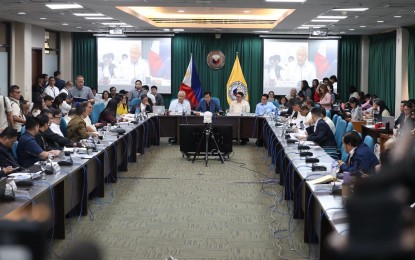
Lawmakers have warned of a coordinated disinformation network using fake social media accounts to attack President Ferdinand R. Marcos Jr. while promoting Vice President Sara Duterte. The campaign is allegedly backed by pro-China influencers and foreign interests.
House Assistant Majority Leader and Zambales 1st District Rep. Jay Khonghun said these operations push content that is both pro-Duterte and pro-China, suggesting a common foreign source.
“Kung parehong pro-Duterte at pro-China ang content nila, hindi na tayo dapat magtaka—iisa lang ang amo nila. At hindi Pilipino ’yon,” Khonghun said.
He cited a report by PressOne.PH exposing a network of fake accounts on X (formerly Twitter) that attack Marcos, promote Duterte, and share content aligned with Chinese propaganda. These accounts also circulated a fake “polvoron” video implying drug use by Marcos and reposted anti-U.S. posts concerning the West Philippine Sea.
“Kapag tahimik sa West Philippine Sea pero maingay sa paninira sa presidente, alam na natin kung sino ang pinoprotektahan,” Khonghun added.
The same network reportedly shields Duterte from criticism over her silence on Chinese actions in the West Philippine Sea.
At a House Tri-Committee hearing, Philippine Coast Guard spokesperson Commodore Jay Tarriela named bloggers Anna Malindog-Uy and Ado Paglinawan as promoters of Chinese disinformation. Malindog-Uy allegedly blamed the Coast Guard for a collision with Chinese vessels, while Paglinawan called the country’s defense efforts “lunacy.”
“Ito po ang mga halimbawa ng disinformation na direktang sumasalungat sa interes ng ating bansa,” said Tarriela.
A Reuters report supported these claims, revealing that nearly a third of online discussions about Duterte’s ICC case were driven by fake accounts. Research by cybersecurity firm Cyabra found that the accounts acted in a “deliberate, organized” way to shape online narratives.
“These fake networks didn’t just show up—they shaped the conversation,” Cyabra CEO Dan Brahmy told Reuters, calling it “digital warfare.”
With the May 12 midterm elections nearing, Surigao del Sur Rep. Johnny Pimentel warned that fake news has reached a crisis level.
“Lalong-lalo na po sa panahong ito na kung saan ay naglipana ang mga fake news laban sa mga tumatakbo ngayong eleksyon,” Pimentel said.
He stressed that while digital platforms expand access to information, they have also become fertile ground for disinformation.
“Disinformation campaigns and the proliferation of fake news not only mislead citizens, but they also undermine trust in our institutions, weaponize public opinion, and threaten the very foundations of our democratic processes,” he said.
Pimentel and Khonghun urged voters to be more discerning and critical of candidates who benefit from such propaganda.
“Hindi sapat na bumoto—dapat alam mo kung sino ang binoboto mo,” said Khonghun. “Hindi porke’t kilala sa YouTube o may ‘tapang at malasakit’ e para na sa bayan. Tanungin natin: sa tapang nila, kaninong interes ang pinoprotektahan?”
Meanwhile, House Assistant Majority Leader and Lanao del Sur 1st District Rep. Zia Alonto Adiong pushed for tighter regulation of social media platforms and content creators.
“Kailangan din natin magkaroon ng regulation sa pag-operate nitong mga social media platforms, itong mga creators, itong mga operators na ito,” Adiong said.
He said that internal policies by companies like Meta fall short and proposed using Singapore’s Protection from Online Falsehoods and Manipulation Act as a model.
“In fact, in Singapore, the government has already adopted and approved the Protection from Online Falsehoods and Manipulation Act,” he said. “Singapore is one of the most progressive countries in Southeast Asia. So if they can do it, why can’t we?”
Adiong also pushed for legislation that regulates how content is uploaded and spread, while allowing the government to collect taxes from online platforms and creators.
“Dapat kung nais nating magkaroon talaga ng mas magandang panukalang batas… hindi lang natin ire-regulate kung ano ang nababasa, naririnig ng ating publiko, but ‘yung paraan kung paano nila ito ma-upload,” he said.
He emphasized that while freedom of speech is important, it should not come at the cost of public deception.
“I believe the government also needs to see that angle — kung paano magkaroon ng hindi lang ho malayang pamamahayag, but malaya in a sense na hindi ho mabigyan ng maling impormasyon ang ating publiko,” Adiong said.