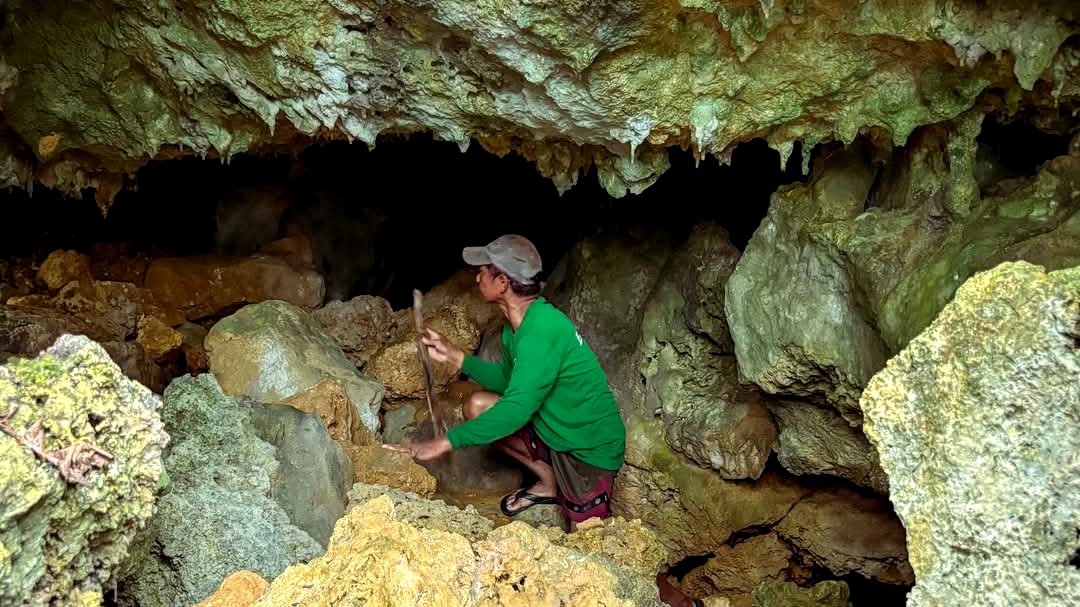
An expert calls for the preservation of the historical sites in Laoang, Northern Samar, as the town offers valuable insights into the town’s pre-colonial history.
Dr. Emil Charles Robles, an archaeologist from the University of the Philippines in Diliman, highlighted in a report the immense archaeological potential of the town which has largely remained underexplored until now.
“Laoang’s archaeological sites are an important part of our history, and we must prioritize their preservation. Without proper protection, we risk losing irreplaceable evidence of our past. It’s essential for both the local community and the government to work together to safeguard these sites,” Robles said in a statement posted by the Northern Samar provincial government on Monday.
He underscored the importance of involving local communities in preservation efforts.
Robles said the people of Laoang can play a crucial role in protecting and promoting their heritage, especially through sustainable tourism and educational programs.
“It’s vital to foster a sense of pride and ownership among the locals. When communities understand the historical value of their surroundings, they are more likely to protect and share these treasures with the world,” he added.
The town, Robles said, was an “important nexus” for maritime trade and settlement dating back centuries.
His team visited Candawid village, four caves in Batag Island, and the Island of Cahayagan last January 23.
Among the most notable findings in the past are ancient pottery shards, stone tools, and some evidence of early settlements that suggest Laoang was not just a quiet settlement but a bustling center of trade and culture long before the arrival of Spaniards in the country in 1521.
Carl Bordeos, the provincial culture and arts coordinator who was with Robles in visiting Laoang, also shared with the team that the artifacts point to Laoang’s involvement in regional trade networks, with items such as Chinese ceramics indicating an exchange of goods and ideas across vast distances.
Bordeos added that Laoang’s strategic location along the northern coast of Samar near the San Bernardino Strait, made it a key point for Laoang communities to be sites of early interaction.
This is the first archaeological investigation in Laoang after so many decades, according to the provincial government.
“Laoang is not just an archaeological site —it’s a window into the deep, complex history of the Philippines. The discoveries here will not only deepen our understanding of the past but also serve as a beacon for future generations to appreciate and protect our rich cultural heritage,” Robles said.
Laoang, a 1st class coastal town in Northern Samar with a population of over 61,000, has been known for its scenic landscapes and cultural significance.
This archaeological project aligns with Governor Edwin Ongchuan’s development agenda of prioritizing cultural and historical preservation.
Through the collective efforts of researchers, local government units, and the community, this project ensures that the province’s rich cultural and archaeological legacy is preserved, studied, and celebrated for generations to come. (PNA)