As artificial intelligence (AI) becomes more common in workplaces, experts are urging professionals and companies to be more aware of its ethical and security risks.
Ken Suarez, a product manager from Nueva Ecija, said AI has helped him accomplish repetitive tasks efficiently. “It is supplementary to my knowledge and skills,” he said. “Since my field is technology-related, we are highly encouraged to use AI because we are trying to leverage and explore the extent to which one could use it.”
He emphasized the importance of reviewing AI output carefully. “You could consider AI as your junior at work, so you are checking whether their work is okay. It’s ethical if we use AI as a tool and we have due diligence to check its output,” Suarez said. He added that being careful with private data is crucial. “Although they would say that they would use [your data] responsibly, mabuti nang sigurado (It’s better to be sure).”
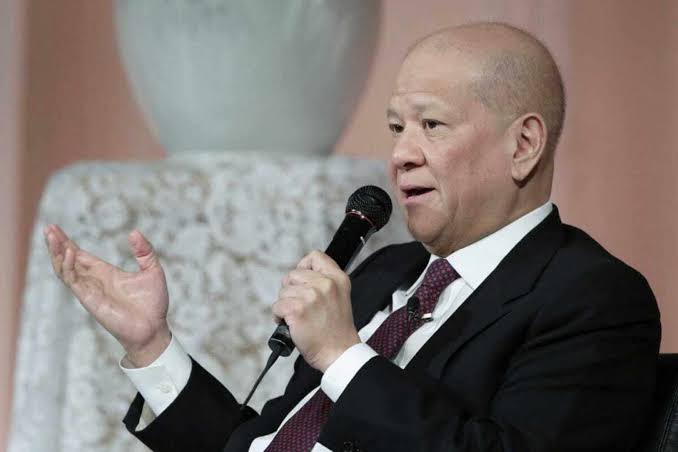
Alvin Toh, cofounder and chief marketing officer of Singapore-based Straits Interactive, explained that many organizations are unaware of the risks linked to AI, especially when AI tools are used unofficially by employees. “Some mistakenly believe they don’t need to worry about AI risks because they haven’t formally implemented generative AI—failing to realize that many of their employees may already be quietly using publicly available AI tools in ways that are noncompliant with corporate policies,” he said.
Toh said companies must check if their systems’ AI-powered features are collecting and using data for training purposes. He pointed out that ethical use means aligning with societal values, while responsible use means preventing harm and managing risks.
He introduced the “3 A’s” of AI ethics: autonomy, agency, and assurance. These look at whether the AI can act on its own, how it is controlled, and how to ensure it’s trustworthy. He also explained the “3 I’s”: indicators (how AI is measured), interfaces (how humans interact with it), and intentionality (what the AI was designed for).
Toh warned that low-cost AI tools, such as China’s DeepSeek, make AI more accessible but may overlook key safety issues. He mentioned risks such as data poisoning, prompt injection, and unauthorized tampering. “DeepSeek represents both the promise of accessible AI and the imperative for corresponding governance structures,” he said.
He recommended companies review privacy policies and AI settings, and create standards for open-source AI. Toh also stressed the importance of training professionals on AI ethics and pushing for proper government regulation.
In the Philippines, House Bill No. 10944, filed by Caloocan Rep. Mary Mitzi Cajayon-Uy, proposes the creation of a Philippine Artificial Intelligence Board, a national database of AI firms, and strict penalties for violations.
“While it might be too early to say whether these measures are sufficient, it is certainly part of the government’s commitment to ensuring that AI is implemented in a responsible and ethical manner,” Toh said.