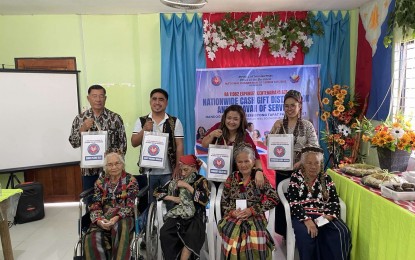
T’boli elder Ganay Mendal Bongon, 86, clasped her PHP10,000 cash gift with gratitude, whispering, “Bong salamat, bong salamat (Big thanks, big thanks).” Bongon was among four octogenarians in Lake Sebu who received financial aid from the national government under Republic Act 11982 or the Expanded Centenarians Act.
The nationwide distribution, dubbed “Handog ng Pangulo,” coincided with President Ferdinand R. Marcos Jr.’s 68th birthday. In General Santos City, 66 senior citizens also received their cash gifts during a caravan of services, bringing the total beneficiaries in Region XII (Soccsksargen) to 70, amounting to PHP700,000.
Dr. Rochelle Gajete-Oco, National Commission of Senior Citizens-Soccsksargen (NCSC-12) Director, said Lake Sebu was chosen as a priority site to highlight the importance of bringing government services closer to Indigenous Peoples communities. “We’re very happy that we chose Lake Sebu and just seeing the smiles of our elders is a great inspiration for us to work harder and do better,” she said.
Beneficiaries in Lake Sebu also received free health checks, dental kits, and health advice. Mayor Antonio Fungan Jr. reaffirmed the town’s commitment to its senior citizens, saying, “We will be working on increasing the share for our senior citizens. We will allocate the full one percent so we can adopt and implement more programs and services for them.”
Oco introduced NCSC’s flagship initiatives, including the Senior Citizens Community Care Center and Senior Citizens Action for Development and Nation-Building. She also cited Lake Sebu’s potential as a pilot site for programs that train seniors as local tour guides, tapping into its industries like T’nalak weaving and bead-making.
Meanwhile, the caravan in General Santos City brought together private groups, schools, and organizations offering free medical, dental, and eye checkups, legal consultations, and health kits.
NCSC Commissioner Edwin Espejo honored the elders, saying, “We are committed to ensuring that our senior citizens receive the services they deserve, and that policies and programs are constantly improved to uphold their dignity and welfare.”