
By Joann Villanueva
MANILA – Opportunities will open up for local businesses after the Philippines hosted this year’s Association of Southeast Asian Nations (ASEAN) Summit, an economist said.
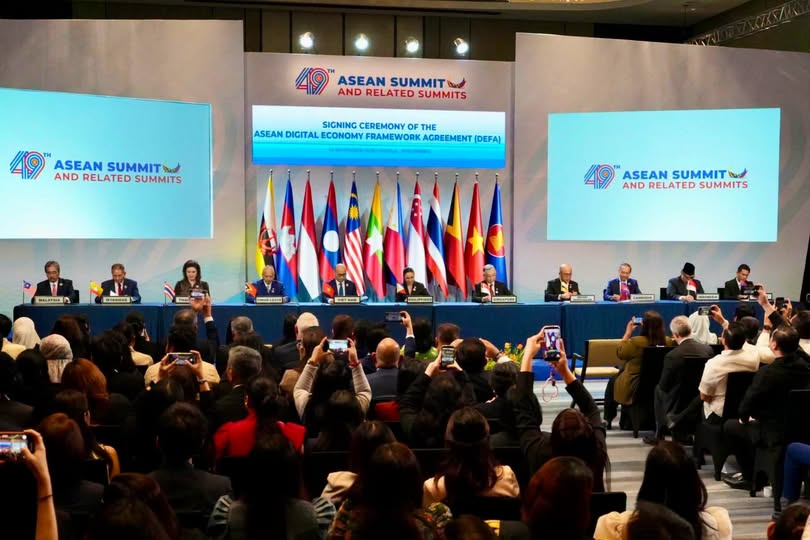
Michael Ricafort, in a reply to questions from the Philippine News Agency, cited the ASEAN Digital Economy Framework Agreement (DEFA), which Malacanang said is one of the major achievements of the Philippine hosting.
DEFA involves the cooperation on digital trade and data protection and aims to protect the regional bloc’s digital consumers.
To date, ASEAN’s digital economy is estimated at around USD1 trillion and to double by 2030.
Ricafort said the agreement “would facilitate a bigger ASEAN online/digital marketplace with harmonized standards/rules/protocols.”
“This could formalize the further expansion of Philippine online businesses/commerce/other transactions with other ASEAN countries, effectively increasing sales/market of Philippine businesses especially MSMEs (micro, small and medium enterprise) and other exporters,” Ricafort said in his reply.
He said the measures also give “more Filipinos greater product choices in terms of greater variety, lower prices, greater competition, also better terms for purchasing goods/products from a bigger roster of sellers from other ASEAN countries.”
“(It) effectively provides diversification and protection for ASEAN buyers and sellers in a much bigger marketplace of more than 700 million people on ASEAN or more than 8 percent of the world population, as a preparation for a bigger world online/digital marketplace in due time,” he said.
On the sidelines of the Summit on Nov. 14, Philippines and Canadian officials also concluded the free trade agreement (FTA), eyed to be signed by 2027.
Canada is the Philippines’ 16th largest trading partner in 2025, with bilateral trade reaching around USD2.15 billion, government data showed.
Ricafort said the Philippines would benefit from the bilateral pact through higher investments from Canadian investors.
He pointed out that it is a good way for the Philippines to access more markets that do not have FTA with the North American country, particularly for export-oriented businesses and industries.”
This also benefits, Canada, he said, since it “needs to diversify its export markets through FTAs to diversify largely reliance on Canadian exports to the US amid tariff issues with Trump in recent months.”
“More trade, both exports and imports. The Philippines could benefit from more imports from Canada as a possible source of oil/petroleum products and other industrial products,” he said.
He added that the higher investments will also result in “more jobs/employment and other business/economic opportunities.” (PNA)