In line with President Ferdinand R. Marcos Jr.’s directive to ensure that all Filipinos affected by disasters will never go hungry, the Department of Social Welfare and Development (DSWD) is strengthening its relief supply chains and logistics capabilities through the “Buong Bansa Handa” (BBH) Program.
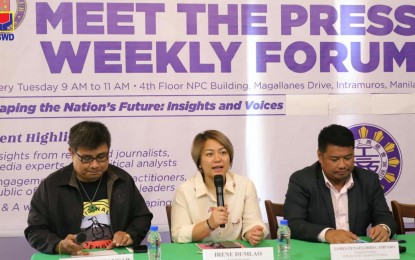
Assistant Secretary Irene Dumlao of the DSWD’s Disaster Response Management Group highlighted the Philippines’ vulnerability to disasters, stating, “Alam naman po natin na ang bansang Pilipinas ay number one in the World Risk Index dahil very prone po ito sa mga iba’t-ibang disasters and calamities. And with the threats of climate change na-exacerbate po o mas pinapalala ‘yung mga disasters na kinakaharap ng ating bansa, kagaya ng mga bagyo … kaya nga po ang DSWD ay mas pinaigting po ang disaster response efforts nito.” (We all know that the Philippines is number one in the World’s Risk Index because it is very prone to various disasters and calamities. The disasters faced by the country have also been exacerbated by the threats of climate change. That’s why the DSWD has intensified its disaster response efforts.)
The BBH Program employs two parallel supply chain mechanisms for disaster preparedness and response. The first mechanism is a national and local government-driven supply chain aimed at enhancing the production capacities and processes of the agency’s National Resource Operations Center in Pasay City, the Visayas Disaster Resource Center in Cebu, and various warehouse and storage facilities across all DSWD Field Offices.
The second mechanism involves partnerships through framework agreements with established large and small grocery stores, supermarkets, manufacturers, and distributors to create a private sector-driven supply chain that leverages their technical expertise and resources.
Dumlao noted the effectiveness of the BBH Program during last year’s series of typhoons, stating, “Last year kung maaalala ninyo, sunod-sunod na typhoons…anim na bagyo po ‘yan. Napakalaking tulong ng Buong Bansa Handa program sapagkat madali natin naipaparating ang kinakailangang tulong sa mga kababayan natin.” (Last year, we were affected by six successive typhoons. Through the Buong Bansa Handa Program, we were able to immediately deliver the needed assistance to our compatriots.)
Currently, the DSWD maintains over three million boxes of family food packs ready for immediate distribution to local government units affected by disasters or emergencies.
An innovative aspect of the program is the prepositioning of ready-to-eat food (RTEF) boxes in port areas before disasters strike. This initiative was made possible through an agreement between the DSWD and the Philippine Ports Authority on June 27, allowing RTEF packs to be available in seaports nationwide.
Dumlao explained, “Hindi mo na iisipin kung ano ang kakainin mo o ano ang gagamitin mo for the day that you are inside the port sapagkat, mayroon na rin po kaming ready-to-eat food packs.” (You won’t be worrying about what you will eat for the day you are inside the port because we now have ready-to-eat food packs.)
Each RTEF box contains five cans of tuna paella, one can of chicken pastil, one can of giniling, two packs of arroz caldo, three packs of champorado, two protein biscuits, and one complementary food for infants, capable of feeding a family of five for an entire day.
So far, the DSWD has produced 120,000 boxes of RTEF, which are being prepositioned not only in seaports but also in other agency warehouses and storage facilities nationwide for distribution to disaster areas as needed.