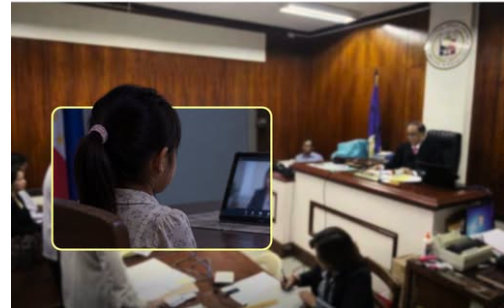

The Department of Social Welfare and Development (DSWD) has welcomed the Supreme Court’s revised rules allowing children to testify through videoconferencing outside courtrooms, a measure aimed at protecting young witnesses from further emotional and psychological trauma during legal proceedings.
DSWD spokesperson Assistant Secretary Irene Dumlao said Friday, November 6, that the Revised Rule on the Examination of Child Witnesses (RRECW) introduces child-sensitive procedures designed to safeguard children who have experienced abuse, exploitation, or other forms of violence.
“The justice system must not become an additional source of trauma for children who have endured abuse, exploitation, or other forms of violence,” Dumlao said.
She emphasized that the revised guidelines would help ensure that judicial proceedings consider the emotional and psychological well-being of children.
Under the new rules, courts may permit child witnesses to testify remotely through videoconferencing when appearing physically in a courtroom is likely to cause trauma.
The guidelines also allow electronically recorded depositions and interviews conducted by teams of professionals to be presented as evidence, subject to specific legal requirements.
According to Dumlao, these measures are intended to reduce repeated questioning and prevent children from reliving traumatic experiences while participating in judicial proceedings.
“The use of technology and child-friendly procedures will help minimize repeated questioning and prevent the re-traumatization of children as they participate in legal proceedings,” she said.
The revised rules also strengthen safeguards for the privacy, safety, and dignity of child witnesses.
Children will not be compelled to testify in court or be present during the presentation of sexually explicit materials.
Records involving child witnesses must remain strictly confidential, while unauthorized disclosure of their identities or social media information may result in contempt of court charges.
The guidelines apply to children who are victims of crimes, children in conflict with the law, and other child witnesses involved in criminal, civil, special, and administrative proceedings.
The RRECW also promotes a child-centered approach to justice by emphasizing restorative practices, protection from harm, and respect for children’s gender, cultural backgrounds, and individual circumstances.
Meanwhile, the DSWD assured that it is prepared to provide psychosocial interventions, counseling, rehabilitation, and other recovery services to children involved in legal proceedings.
Dumlao said the department would continue coordinating with the judiciary to strengthen mechanisms that protect children’s rights and welfare.
“The DSWD remains committed to working with the judiciary to strengthen mechanisms that protect the rights and welfare of children,” she said.
She added that children who have experienced abuse or trauma must receive appropriate therapy and rehabilitation services to support their recovery and help them rebuild their lives with dignity.
The department said the revised Supreme Court rules represent an important step toward making the Philippine justice system more accessible, compassionate, and responsive to the needs of vulnerable children.