
By Wilnard Bacelonia
The Department of Public Works and Highways (DPWH) is proposing changes to budget preparation and fund-release rules to accelerate classroom construction, disaster response, and other infrastructure projects.
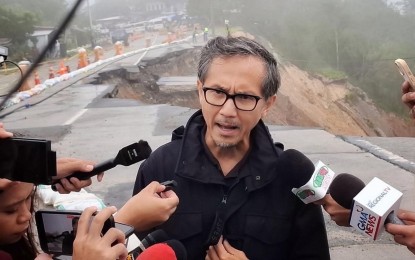
During the Senate hearing on the agency’s proposed 2027 budget on Friday, Public Works Secretary Vince Dizon said some delays could be avoided by identifying project sites and beneficiaries before funds are enacted, while emergency response could improve if rules on replenishing the department’s PHP1-billion Quick Response Fund (QRF) are reviewed.
For classrooms, Dizon proposed that specific schools and sites be identified as early as the National Expenditure Program (NEP) instead of completing the list only after the budget has been passed.
“If naka-line item na po iyan sa NEP pa lang, bibilis po tayo at again, mas magiging transparent din po (If these are already line-itemed in the NEP, we can move faster and, again, it will be more transparent),” he said.
Dizon said classroom implementation in previous years often started only around November because the Department of Education (DepEd) still had to identify schools, validate sites and complete agreements with DPWH after budget enactment.
This year, the DepEd-DPWH memorandum of agreement was signed as early as April, allowing procurement to start in August.
Of the 6,000 classrooms assigned to DPWH for 2026, 1,592 have been awarded, 1,934 advertised for bidding, 1,536 placed under pre-procurement, and 2,338 remain under programming.
DPWH is taking a similar approach to convergence roads, with concerned agencies identifying and prioritizing projects for implementation.
Dizon said tourism roads would originate from the Department of Tourism, roads serving ports and airports from the Department of Transportation, and access roads to economic zones from the Department of Trade and Industry.
The change came after partner agencies complained that some projects previously placed in the DPWH budget did not reflect their priorities.
“Kung gusto po nila ang DPWH ang mag-implement nun, pwede naman po silang makipag-MOA sa DPWH at i-download po yung pondo na yun post-budget enactment sa implementation stage (If they want DPWH to implement the project, they can enter into an agreement with DPWH and transfer the funds after budget enactment during the implementation stage),” Dizon said.
The department has also consolidated remaining local projects under the Basic Infrastructure Program as part of its 2027 budget reforms.
For disaster response, Dizon separately asked the Senate to help review QRF replenishment rules as successive calamities strain the PHP1-billion fund.
“Ang problema, hindi po kami makare-plenish hangga’t hindi either na-award or nagagawa na o nagagamit na o nadidisperse na (The problem is we cannot replenish the fund until the project is either awarded, implemented, utilized or disbursed),” he said.
Dizon said overlapping emergencies could leave the department waiting for funds already committed to one disaster to reach the required stage before replenishment can be made available for another.
“Minsan po, patong-patong na po (Sometimes, these emergencies pile up)… sometimes, the speed at which we can respond is compromised because of this,” he said.
He also cited recurring problems involving damaged local roads and bridges leading to schools and other public facilities that fall outside DPWH’s regular national-road mandate.
In some cases, Dizon said the department had to tap the Office of the President’s contingent fund to replace damaged hanging bridges, including projects in Pangasinan and Oriental Mindoro.
He said relying on the contingent fund for recurring infrastructure needs is not sustainable, prompting DPWH to seek more flexible budget mechanisms while retaining safeguards over public funds.