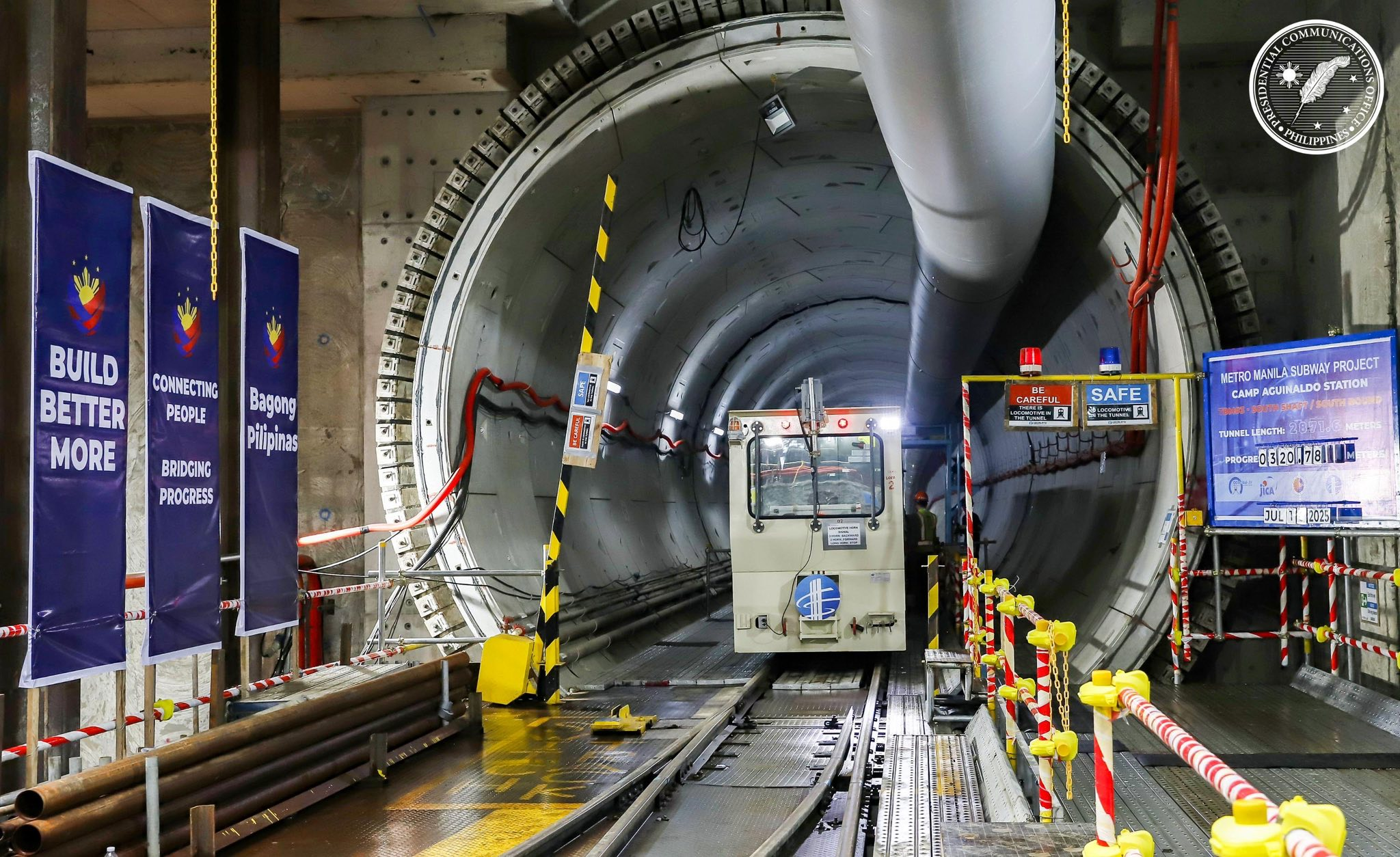

The government’s two biggest urban rail projects are finally gaining momentum on the ground, with the Department of Transportation reporting major progress in land acquisition after years of delays tied to right-of-way issues.
As of December 2025, the Department of Transportation has secured 90.76 percent of the required right-of-way and properties for the Metro Manila Subway Project, a sharp turnaround from early 2025 when barely half of the needed land had been cleared.
The North-South Commuter Railway’s northern segment has also moved off the starting blocks, with 56 percent of its right-of-way now acquired.
Transportation officials described 2025 as a breakthrough year for land acquisition, long considered the most stubborn obstacle to rolling out large-scale infrastructure in densely populated corridors.
In February last year, the subway project’s right-of-way stood at just 51 percent, while the NSCR north segment was effectively stalled, with only about 2 percent secured.
Much of the recent progress came from resolving long-standing problem areas that had held back construction schedules. The agency said it managed to clear major bottlenecks along the subway alignment, including properties in Varilla, White Plains, Corinthian Gardens, and the Metrowalk area, unlocking access to critical construction zones.
The DOTr attributed the faster pace to a more aggressive and centralized approach to right-of-way and site acquisition. Dedicated leadership for the process was put in place, and manpower assigned to land acquisition was expanded more than fourfold, from about 200 personnel to 900.
The department also rolled out training and capacity-building programs to improve technical know-how and coordination across teams working with property owners, local governments, and other stakeholders.
For the NSCR north segment, the impact has been tangible. The number of acquired land parcels climbed to 1,143 by end-2025, a significant jump from early-year levels. With the current trajectory, transport officials said they are confident the remaining right-of-way for the northern stretch can be completed by mid-2026, a timeline that would allow construction activities to move more decisively.
Progress has also been recorded in the southern portion of the NSCR. Right-of-way for four stations is now fully cleared, including EDSA, Cabuyao, Sta. Rosa in Laguna, and the Banlic depot, easing constraints along a section seen as vital for linking Metro Manila to growth centers in the south.
The acceleration in land acquisition signals a shift in how the government is tackling one of infrastructure’s most persistent challenges.
With right-of-way issues easing, attention is expected to turn more squarely toward construction milestones, financing flows, and coordination with local communities—factors that will determine whether these rail megaprojects can finally deliver faster, more reliable transport for millions of commuters.