
The Department of Tourism has called for a review of airline regulations amid mounting public concern over rising domestic ticket prices, warning that persistently high fares could undermine efforts to boost local travel.
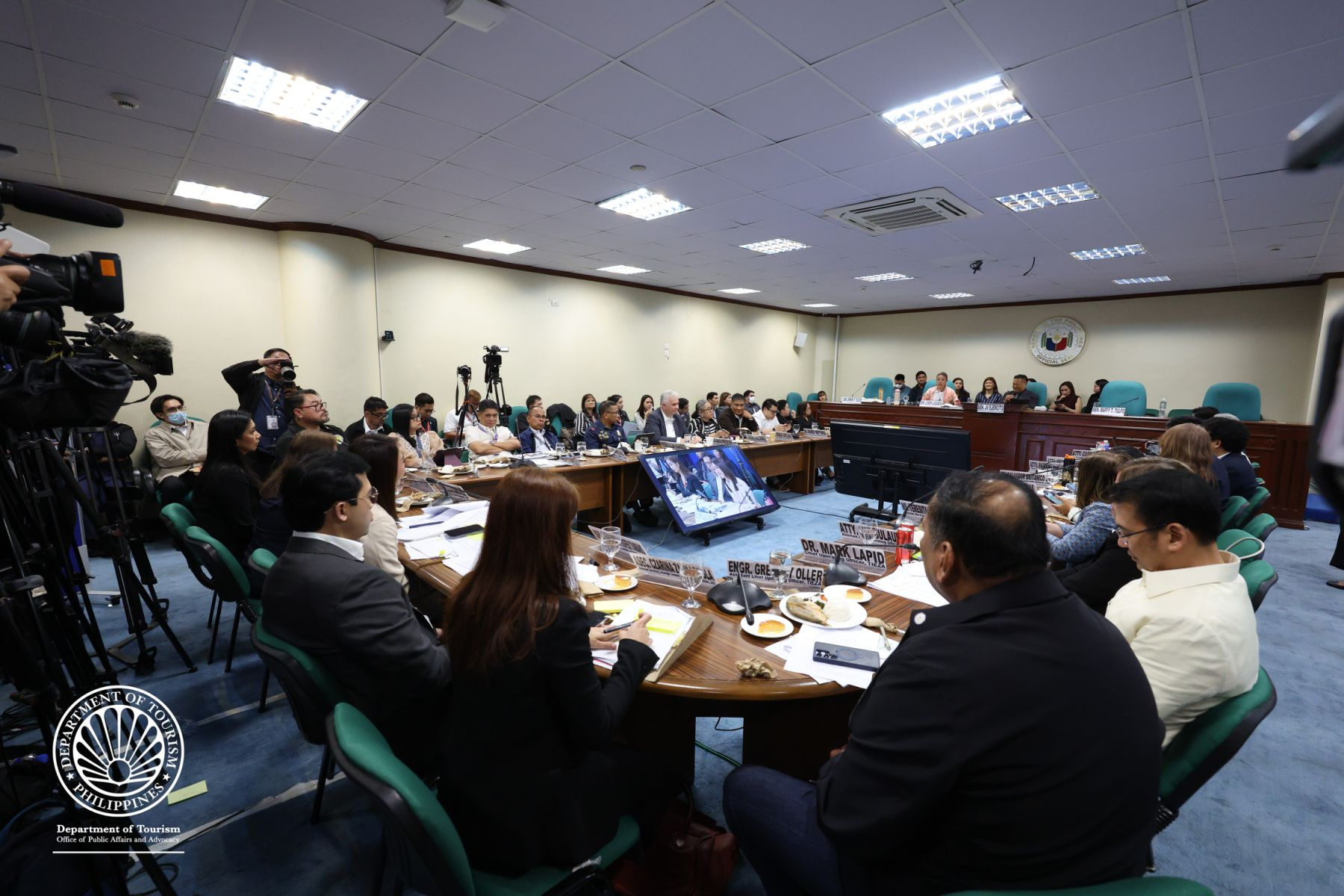
Speaking at a public hearing of the Senate Committee on Tourism on Tuesday, Tourism Secretary Christina Garcia Frasco pressed airlines to be more transparent in how they set and publish fares, and urged stricter regulatory oversight.
The tourism chief said the DOT is proposing the clear and transparent publication of “just and reasonable rates” as required by law, subject to close scrutiny by the Civil Aeronautics Board. Establishing a clear pricing baseline, she said, would help ease public anxiety over soaring travel costs.
Frasco also reminded airlines that, as holders of public franchises, they are bound not only by commercial considerations but also by public interest obligations embedded in their franchises, particularly under Republic Act No. 11682. The law places airfare pricing under government oversight to ensure fairness and transparency.
Domestic tourism at risk
The issue comes as domestic travel remains the backbone of the Philippine tourism industry. In 2024, the country logged more than 134 million local trips—the highest domestic tourism volume in Southeast Asia—valued at over $70 billion, surpassing pre-pandemic levels in 2019.
Despite this strong demand, lawmakers and industry representatives warned that affordability and access could become long-term constraints if infrastructure and regulatory gaps are not addressed.
JV Ejercito, who chairs the Senate tourism panel, said expensive airfares are often a symptom of deeper structural problems, including congested airports, short runways, and limited night-rating capabilities. He stressed the need for a comprehensive infrastructure master plan that goes beyond political cycles and ensures world-class airports, seaports, and transport hubs.
Airline industry representatives echoed these concerns. Jose Enriquez Perez de Tagle of the Air Carriers Association of the Philippines said domestic carriers face high airport fees, taxes, and routing challenges, compounded by infrastructure limitations. He noted that short runways at many provincial airports restrict the use of larger aircraft, capping seat capacity and limiting flight frequency.
Island destinations such as Siargao, Palawan, and Basco, he said, continue to rely heavily on turboprop planes with fewer seats, a factor that contributes to higher fares during peak travel periods.
Whole-of-government push
Frasco emphasized that addressing airfare issues requires a coordinated, whole-of-government approach. The DOT is working with the CAB, the Department of Transportation, the Department of Trade and Industry, and the Philippine Competition Commission to align regulation, infrastructure development, and consumer protection.
She revealed that the DOT has asked the CAB to present a monthly airline ticket pricing index to improve transparency, prevent sudden price spikes, and explore the implementation of price ceilings where appropriate.
Without stricter implementation and a reassessment of airline deregulation, Frasco said, it would be difficult for the DOT to manage fare concerns that fall outside its direct mandate.
In parallel, the department has continued to expand connectivity. In 2025, the DOT supported the launch of 23 new international routes linking Manila, Cebu, Clark, Iloilo, and Kalibo to key overseas markets.
Senators back coordinated response
Loren Legarda underscored that tourism promotion alone cannot compensate for high travel costs, weak infrastructure, or safety concerns. She stressed that the DOT does not control budgets, airport construction, runway upgrades, sanitation, or law enforcement, making inter-agency cooperation essential.
Security issues were also flagged as a factor affecting arrivals, particularly from South Korea, one of the Philippines’ largest source markets.
Erwin Tulfo said peace and order concerns can deter visitors and are beyond the DOT’s scope, falling instead under the responsibility of law enforcement and security agencies. Ensuring tourist safety, he said, would help restore confidence and encourage more arrivals.
As lawmakers continue deliberations, the DOT maintains that fair pricing, better infrastructure, and improved security must move together if domestic tourism growth is to be sustained and made accessible to more Filipinos.
