
By Che Palicte
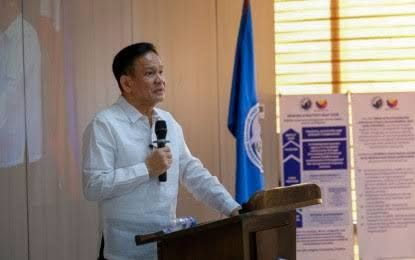
DAVAO CITY – The Department of Science and Technology (DOST) will prioritize technologies aimed at addressing water scarcity in communities with limited access to potable water as part of efforts to mitigate the effects of El Niño, DOST Secretary Renato Solidum Jr. said Thursday.
During a press briefing here, Solidum said the agency is focusing on water filtration technologies while pursuing long-term solutions to improve water security nationwide.
“We need to have more water impounding basins. We need to have water irrigation systems, we need to ensure that there is enough potable water in all areas of the country. That is the long-term plan,” he said.
As part of the government’s El Niño intervention measures, Solidum said 22 units of SAFEWATRS (Safe Water Treatment System), a mobile solar-powered water treatment system developed by the DOST-Industrial Technology Development Institute (DOST-ITDI), have already been deployed across the country.
“We have distributed it in many communities and we want to further increase it,” he said.
The DOST chief also disclosed that 13 desalination plants have been established nationwide.
“We need to increase these as well. In the pipeline are several water desalination machines being developed by DOST and partner universities. That’s our focus,” he added.
To further expand water access technologies, Solidum said the agency has proposed a budget of PHP400 million to PHP500 million for the production of additional water filtration and desalination systems.
“If local governments can afford these technologies, we can share with them the fabricators so they can procure these machines themselves. In that way, we can help more communities that are in need of support,” he said.
For long-term water resource management, Solidum underscored the need for local government units (LGUs) to map both surface and underground water sources.
“Some local governments and the Department of Environment and Natural Resources (DENR) will be conducting resistivity or georesistivity surveys to identify potential water sources,” he said.
Solidum said the El Niño phenomenon, which typically occurs during the country’s summer months, results in reduced rainfall and higher temperatures.
However, he said the government has already implemented interventions through President Ferdinand R. Marcos Jr.’s El Niño Task Force, which focuses on five key areas: water, agriculture, health, energy, and public safety.
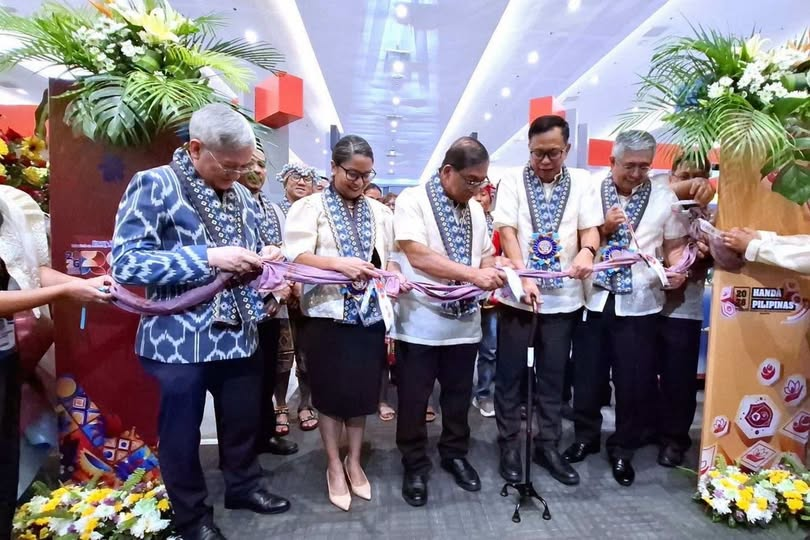
Solidum is in Davao City for the Regional Science, Technology and Innovation Week (RSTW) 2026 and the HANDA Pilipinas Mindanao Leg, which run from Oct. 15 to 17.
RSTW serves as the DOST’s platform for showcasing and promoting science, technology, and innovation (STI) by bringing together government agencies, researchers, innovators, startups, students, industry leaders, and other stakeholders.
The event provides opportunities to showcase technologies and innovations, exchange knowledge, strengthen partnerships, and promote the application of STI for national and regional development.
Meanwhile, HANDA Pilipinas advances disaster preparedness and resilience through science, technology, and innovation-based solutions.
The Mindanao Leg complements RSTW by highlighting initiatives on disaster preparedness, climate innovation, earthquake resilience, and other STI-driven approaches that contribute to safer and more resilient communities. (PNA)