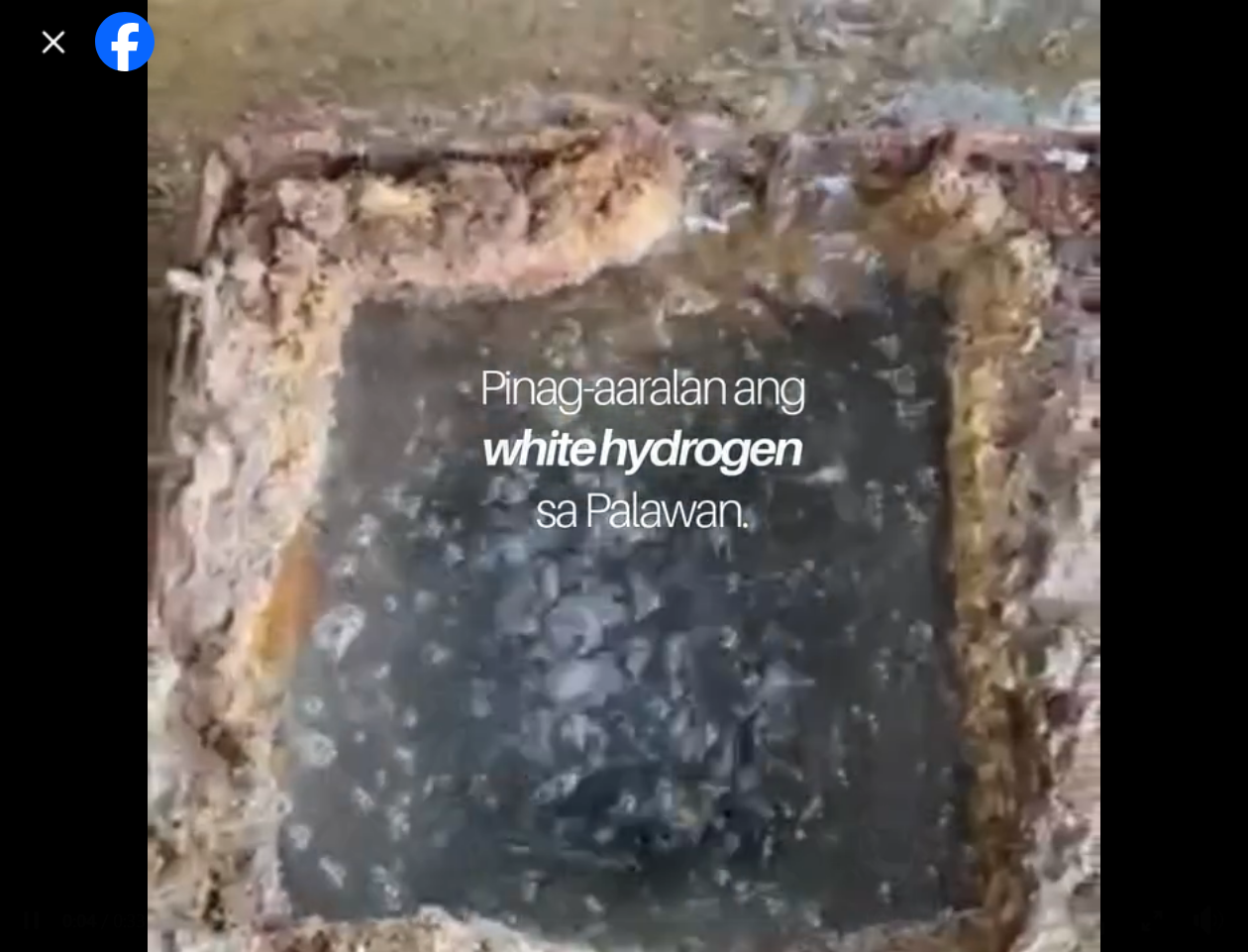

(Image from DOE Facebook page)
The Department of Energy (DOE) is turning its sights on Palawan as a potential hub for white hydrogen—a naturally occurring, low-carbon fuel source that could reshape the Philippines’ energy landscape and open new doors for investment.
From August 12 to 15, DOE survey teams collected native hydrogen samples at geothermal sites such as Kay’s Hot Spring in Puerto Princesa and Bato-Bato Hot Spring in Narra. Early indicators suggest the presence of hydrogen reserves underground, reinforcing Palawan’s reputation as more than just an ecotourism draw but also a possible clean energy asset.
White hydrogen is gaining traction globally as a disruptive technology in the energy sector. Unlike conventional hydrogen, which requires carbon-intensive production methods, white hydrogen forms naturally when water interacts with iron-rich rocks. The result is a renewable, continuous, and potentially low-cost energy source that could rival solar, wind, and even natural gas in long-term scalability.
“Palawan could provide the Philippines with a new layer of energy independence,” the DOE said, noting that hydrogen could complement the Malampaya project and reduce reliance on imported fuel.
The recent Palawan survey follows the DOE’s July reconnaissance mission in Zambales and Pangasinan, part of a broader strategy to map indigenous hydrogen deposits across the archipelago. Both initiatives set the stage for the country’s first specialized training program on hydrogen exploration, which will convene global and local technical experts later this year.
For investors, the implications are significant. If commercial viability is confirmed, white hydrogen could attract capital into upstream exploration, hydrogen storage and distribution networks, and new-generation power plants. The technology’s long-term potential for baseload capacity makes it especially attractive in a market still struggling with volatile energy prices and rising demand.
Globally, hydrogen markets are forecast to exceed $500 billion by 2050, with white hydrogen increasingly viewed as the most cost-competitive pathway. Early adoption could position the Philippines as a Southeast Asian leader in hydrogen innovation, opening avenues for foreign direct investment and public-private partnerships.
Palawan’s exploration is still at a preliminary stage, with laboratory analyses expected to determine commercial feasibility. But with the government signaling strong support, industry players and investors alike are watching closely.
If Palawan’s underground reserves prove viable, the island may soon evolve from a tourist haven into a strategic node in Asia’s clean energy supply chain—an opportunity too big for energy investors to ignore.