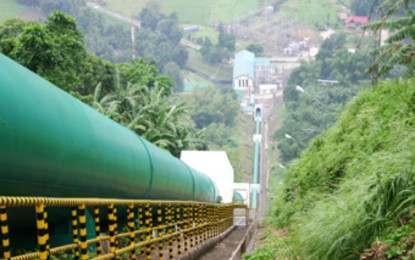

The Caliraya-Botocan-Kalayaan hydroelectric power plants in this undated photo. The Department of Energy on Wednesday (Oct. 22, 2025) said communities hosting energy resources and power-generating facilities will have higher fund allocation under the Energy Regulation (ER) Program No. 1-94 (ER 1-94) effective January 2026, from the current P0.50 per kilowatt hour (kWh) to PHP P2.50/kWh based on a Department Circular signed by Energy Secretary Sharon Garin on Oct. 14, eyed to give more equitable benefit to host communities. (Photo courtesy of Caliraya Hydroelectric Power Plant)
Communities hosting power plants and other energy facilities are set to receive a major funding boost beginning January 2026, as the Department of Energy (DOE) raises benefit allocations under its Energy Regulation (ER) 1-94 Program. The move aims to deliver greater economic impact, expand electrification, and ensure that local residents directly benefit from the nation’s growing energy sector.
Under the revised rules, host communities will receive P2.50 per kilowatt hour (kWh) starting next year—five times higher than the current P0.50/kWh rate. This increase will translate into significantly larger funds for livelihood, health, education, and environmental projects, according to the DOE.
In a circular signed on October 14, 2025, Energy Secretary Sharon Garin also announced that the financial benefit tied to electricity generated and sold will rise from P0.01/kWh to P0.03/kWh.
“We are shifting our approach to empower people and give them a greater stake in our country’s energy growth,” Garin said. “By reinvesting the benefits of power generation back into local areas, we are building shared prosperity and a stronger foundation for a sustainable future.”
Garin emphasized that the expanded funding is part of DOE’s inclusive energy agenda—one that channels the nation’s energy gains toward community progress. “We are investing in the Filipino spirit—in the ingenuity, resilience, and determination of our people. This partnership is built on trust and shared progress, ensuring every community truly benefits from the energy that powers our nation,” she said.
The increased allocation will be distributed through three key funds: the Development and Livelihood Fund (DLF); the Reforestation, Watershed Management, Health, and Environment Enhancement Fund (RWMHEEF); and the Electrification Fund. These will be used to support various community-based projects, from reforestation and public health initiatives to livelihood training and school infrastructure.
The DOE clarified that the P0.50 allocation for electrification projects through distribution utilities will remain, ensuring continued progress in bringing power to unserved households. The new policy also allows local government units (LGUs) to use part of the funds to reduce electricity rates—either voluntarily through local resolutions or mandatorily if funds remain unused for two years.
To illustrate the impact, the DOE said a 100-megawatt (MW) conventional power plant could generate around P21 million annually in ER 1-94 benefits, while a 100-MW solar plant could bring in P5.5 million a year, assuming maximum capacity.
As of December 2024, the ER 1-94 Program had benefited 683 LGUs, including 321 barangays, 286 cities and municipalities, and 76 provinces. With the higher allocation, the DOE expects a threefold surge in local investments—fueling new infrastructure, livelihoods, and greener, more resilient communities.
“This is not just about energy,” the DOE said. “It’s about empowerment—ensuring that every kilowatt generated lights up not only homes but also opportunities for Filipinos nationwide.”