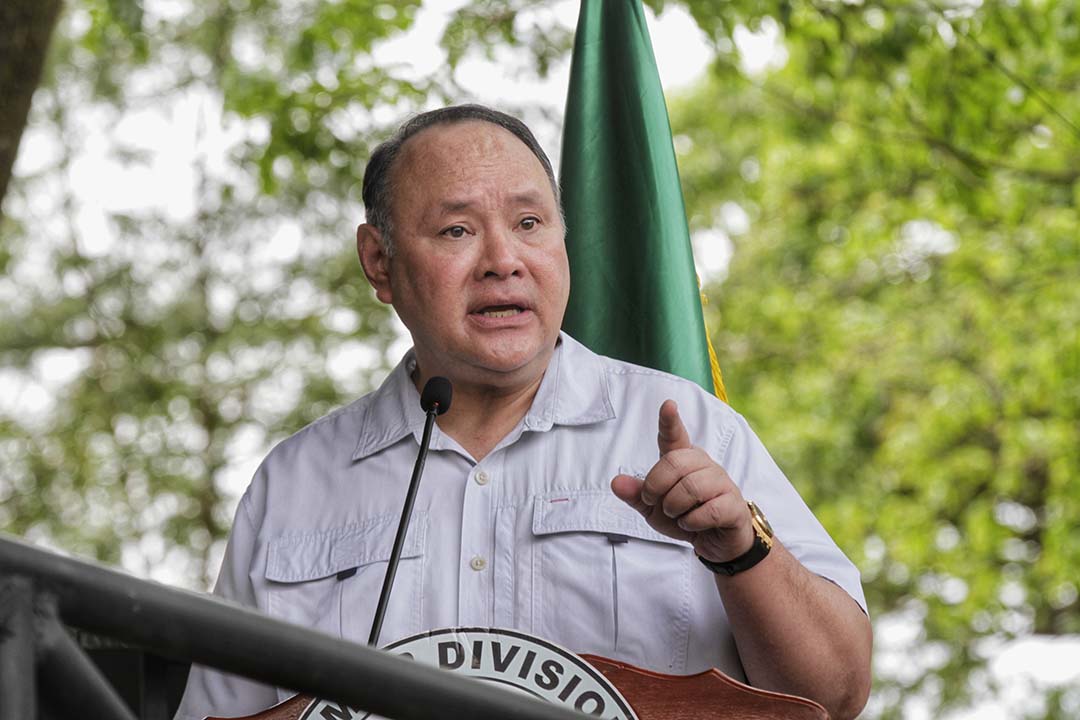

The Philippines’ growing assertiveness on maritime sovereignty is drawing sharp rebukes from Beijing, with the Chinese Embassy in Manila lashing out at Defense Secretary Gilberto Teodoro over his latest remarks on the West Philippine Sea.
As Manila deepens its ties with allies committed to international law, Beijing has responded with fierce rhetoric—this time branding Teodoro a “troublemaker” for standing firm against expansive Chinese claims in the South China Sea.
In a statement released Friday, Chinese Embassy spokesperson Ji Lingpeng accused Teodoro of “escalating tensions” and misleading the international community. Ji maintained that China’s claims over the contested waters have “clear and consistent historical bases,” even as international tribunals and maritime law have ruled otherwise.
“The repeated distortion of China’s position by Philippine officials appears to be a calculated move to provoke tension and manipulate global opinion,” Ji said, dismissing criticism of the so-called nine-dash line—a demarcation line that Beijing uses to assert sweeping territorial control over most of the South China Sea.
Ji also reiterated earlier claims that the Philippines is “a genuine troublemaker” in the region, echoing Beijing’s pattern of shifting blame onto Manila amid growing regional pushback against China’s maritime assertiveness.
The war of words follows a firm declaration by Teodoro, made in a televised interview ahead of President Ferdinand Marcos Jr.’s State of the Nation Address. The defense chief emphasized a clear pivot in Philippine strategy: active engagement with international partners to uphold the United Nations Convention on the Law of the Sea (UNCLOS).
“We’ve taken a more proactive stance,” Teodoro said. “Resisting China’s expansive maritime claims is a central element of our national interest. Their position extends far beyond sovereignty rights—it attempts to assert sovereignty and territorial integrity over virtually the entire nine-dash line, which is incompatible with UNCLOS.”
That same week, the Philippine Coast Guard reported three Chinese research vessels operating inside the Philippines’ exclusive economic zone (EEZ) without clearance—a fresh violation that could further strain already frayed diplomatic ties.
This isn’t Teodoro’s first clash with Beijing. Earlier in March, he warned that the Philippines would not tolerate foreign interference in matters of sovereignty, after Chinese Foreign Minister Wang Yi accused Manila of acting out a “screenplay written by external forces.”
Far from backing down, the Philippines appears to be leaning into its role as a regional bulwark for the rule of law—testing Beijing’s tolerance for international pushback, and potentially reshaping the future of maritime diplomacy in Southeast Asia.