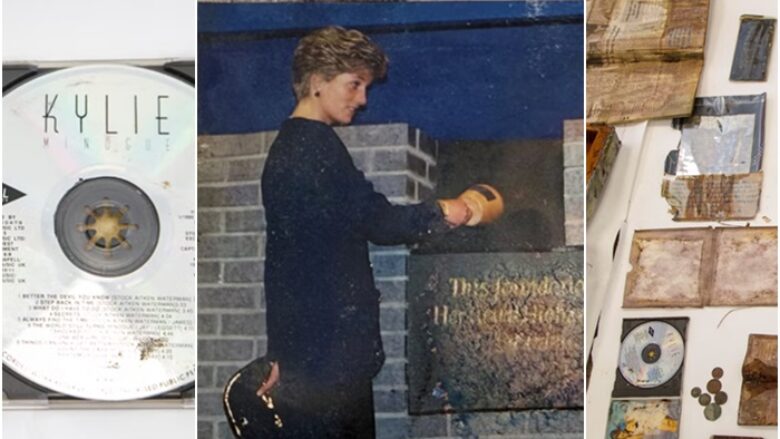

It’s 1991 all over again — at least for a moment. When Great Ormond Street Hospital (GOSH) cracked open a time capsule sealed by Princess Diana 34 years ago, out spilled a collection of artifacts that could only belong to the age of cassette tapes, neon scrunchies, and dial-up dreams.
Inside the capsule, chosen by two schoolchildren in a BBC competition, were everyday essentials of the early ’90s: a Kylie Minogue Rhythm of Love CD (before Spotify playlists ruled the world), a Casio pocket television that seemed futuristic at the time, and a solar-powered calculator that was as “green tech” as it got back then. A set of British coins jingled next to tree seeds from Kew Gardens, while a hologram snowflake glimmered with the kind of sci-fi novelty kids loved to collect.
And then there were Diana’s own contributions — a signed photograph and a copy of The Times with Gulf War headlines — a reminder that even in a playful time capsule, the princess always connected joy with history.
For anyone who lived through the ’90s, the contents hit like a wave of nostalgia. The pocket TV, barely bigger than a wallet, symbolized an era when watching live football on a screen that fit in your palm felt like magic. The Kylie CD captured the soundtrack of youth, long before streaming changed how we consumed music. Even the recycled paper tucked inside feels quaint, recalling the early stirrings of eco-consciousness that defined the decade.

Jason Dawson, GOSH’s executive director, said opening the capsule felt like “unlocking a time machine — you could almost hear the soundtrack of the ’90s playing in the background.”
Yet behind the retro charm lies Diana’s deeper legacy. Known for championing children’s causes, she wasn’t just preserving a slice of pop culture but also anchoring it in her lifelong commitment to young people. At the time, Diana was spearheading GOSH’s Wishing Well Appeal, which went on to raise the equivalent of £200 million for pediatric healthcare — a feat as groundbreaking as any of the gadgets placed inside the capsule.
Today, the hospital is building a new children’s cancer center, set to open in 2028, and officials say the rediscovered capsule feels like Diana’s blessing across the decades.
For fans of both royalty and retro culture, the discovery is a double hit: a sweet reminder of a princess who made history, wrapped in the comforting nostalgia of a decade when a hologram snowflake felt like the future.
As we scroll through our smartphones and binge-watch shows on pocket-sized screens that make that Casio TV look like a relic, Diana’s capsule is a playful whisper from 1991: the world changes fast, but some legacies never age.