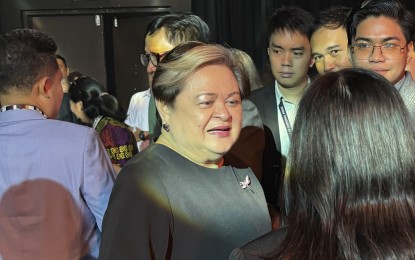
The Department of Foreign Affairs (DFA) expressed tacit support on Wednesday for a cooperation agreement between the Philippine Coast Guard (PCG) and the Chinese Coast Guard (CCG), suggesting it could help deter the CCG’s aggressive actions in the West Philippine Sea (WPS). Foreign Affairs Secretary Ma. Theresa Lazaro shared this view during an interview on the sidelines of the 7th Katipunan Conference in Quezon City, when asked about the potential benefits for Manila.
Lazaro explained that such cooperation might reduce tensions. “Actually, it is that view na nga (even) that by forging cooperation, it just might deter (the actions),” she said. “It is a possibility… but continuous discussions. The whole thing is its diplomacy and continuous dialogue.” She added that this approach goes beyond just lodging protests, highlighting the DFA’s role in proactive diplomacy.
“Of course, the other government agencies, iba naman ang kanilang ginagawa (what they do is different). But, you know, DFA, there’s a question of puro protest, puro protest (it’s always protests). But this is the capability. This is what the foreign affairs can do,” Lazaro noted. She mentioned that the two governments are progressing toward a memorandum of understanding (MOU) between the coast guards. “(M)ay laman na ‘yon (It already has substance). I think it’s just a matter of time that there will be already a signing of the MOU,” she said.
In her keynote address at the conference, Lazaro reaffirmed the Philippines’ firm stance on its rights in the West Philippine Sea, with foreign policy based on key pillars including national security and sovereignty. “And while the image of ‘pillars’ usually brings to mind stasis and permanence, our foreign policy strategy is actually dynamic, proactive, and responsive to the nation’s needs,” she stated. “It works in synergy with all the levers of state power – diplomacy, defense, the economy, and national development policy – in an interconnected and mutually reinforcing ecosystem. This synergy is crucial in order for the Philippines to effectively address the challenges in our current geopolitical climate.”