
(Photo courtesy of PNA)
MANILA, Philippines – Negotiations on the proposed Code of Conduct (COC) in the South China Sea are now 70 percent complete, although several key issues remain unresolved, the Department of Foreign Affairs (DFA) said Friday, November 13.
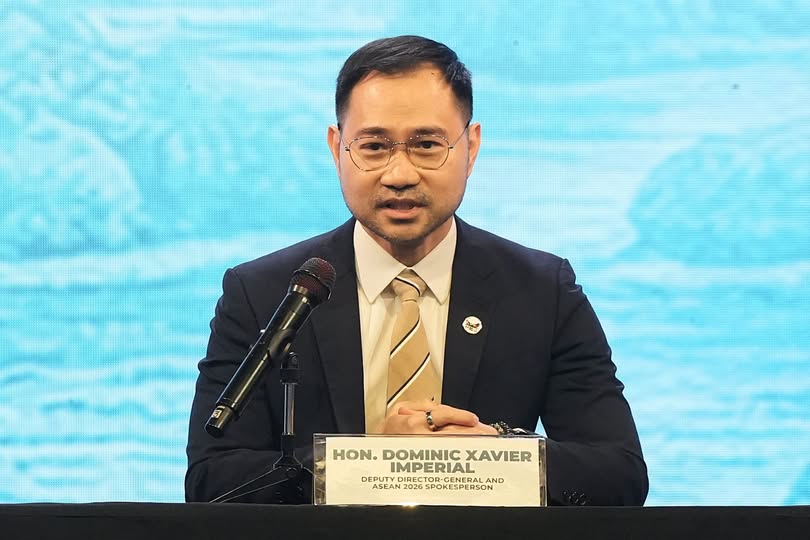
DFA spokesperson for ASEAN Affairs Dax Imperial said negotiators are continuing discussions to address outstanding provisions, including elements that require further clarification and refinement.
Imperial said there is no confirmed schedule for the next round of negotiations, but the proposed agreement will be among the topics discussed during the ASEAN ministerial meetings on November 14 and the 49th ASEAN Summit.
“I am unable to definitively say when it will be concluded or will it be finalized within the year or not. But what I can say is all are committed to continue with discussions even at this time,” Imperial said.
He noted that while negotiations have reached 70 percent completion, the remaining provisions will depend on further discussions among participating countries.
“At the moment, we’re seeing a 70 percent completion of the negotiations, so we are at that stage at the moment. Looking at the 30 percent, that would be up to our negotiators on how they will be able to complete that,” he added.
President Ferdinand Marcos Jr.’s administration has been pushing for the completion of the agreement before the end of 2026.
However, Imperial emphasized that the Philippines is prioritizing the inclusion of provisions that protect its national interests and establish clear rules governing the conduct of countries operating in the disputed waters.
“From the Philippines’ side, what we want to ensure is that the COC will guide the behavior of all parties in the South China Sea. We are also pushing for the rights of third parties to be respected even if they’re not part of the negotiations,” he said.
Four major issues remain central to the discussions: the relationship between the proposed COC and the existing non-binding Declaration on the Conduct of Parties in the South China Sea (DOC), whether the agreement will be legally binding, its geographical coverage, and the definition of key principles such as self-restraint.
The negotiations involve ASEAN member states and China, which have been working for years to establish a framework aimed at managing maritime disputes and preventing tensions from escalating.
The proposed agreement is intended to establish guidelines for the conduct of parties in the South China Sea, where overlapping territorial and maritime claims have fueled longstanding disputes.
For the Philippines, the outcome of the negotiations carries particular significance amid continuing tensions in the West Philippine Sea.
While the DFA acknowledged progress in the talks, Imperial stressed that completing the remaining provisions must not come at the expense of the Philippines’ position and the safeguards it seeks in the final agreement.