Deputy Speaker and National Unity Party (NUP) chairperson Ronaldo Puno has called for a Constitutional Convention (ConCon) to undertake a comprehensive review of the 1987 Constitution, aiming to address “enduring ambiguities” and deficiencies that weaken its legal foundations and undermine its reliability as the country’s supreme law.
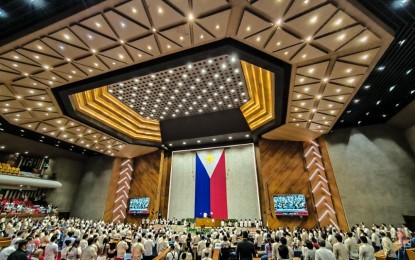
In a privilege speech delivered on Monday, the Antipolo First District congressman described the ConCon as “the most prudent, transparent, and participatory mechanism” to rectify vague provisions and implement necessary reforms in the 1987 Charter.
“Today, I submit to this august chamber that while the provisions of our constitution are noble in aspiration, certain provisions are marked by ambiguity and procedural deficiency. These deficiencies do not merely complicate interpretation; they obstruct reform, hinder effective governance, and erode public trust,” Puno stated.
He clarified that his proposal “is not a call to discard the Constitution. It is a call to complete and correct it.” Puno emphasized that a ConCon would empower the people, through their chosen delegates, to amend textual deficiencies, reconcile contradictions, eliminate ambiguities, institutionalize essential reforms, and ensure that the foundational law of the land meets the needs of a dynamic and democratic society.
Puno argued that pursuing a ConCon, rather than a constituent assembly, would ensure “singularity of purpose,” allowing delegates to focus solely on constitutional amendments without being distracted by lawmaking, oversight functions, or impeachment concerns. “Conflict of interest would be avoided, broader representation guaranteed, and the risk of political expediency is reduced,” he added.
He highlighted several instances where ambiguous provisions and textual flaws have weakened the Charter’s legal foundations. One recent example he cited is the interpretation of the word “forthwith” in Article XI, Section 3(4) regarding impeachment. This term, which was intended to serve as a procedural safeguard against delays, has instead become a source of deadlock and controversy.
“This case alone shows how a single ambiguous word can become the justification for legislative inaction, procedural manipulation, or worse, the loss of accountability itself,” Puno remarked. He noted that such constitutional vagueness creates loopholes, leads to political crises and institutional paralysis, undermines the rule of law, and erodes public trust, leaving citizens disillusioned and alienated from the institutions meant to serve them.
“Mr. Speaker, I do not stand before this Chamber to prescribe solutions to these complex legal dilemmas. But I do contend, with deep conviction, that the Filipino people deserve a constitution that speaks plainly and very clearly,” Puno asserted. He concluded by emphasizing that as the supreme law of the land, the Constitution must communicate with clarity and force, ensuring its provisions are comprehensible not only to courts and legislators but also to the citizens whose rights it enshrines.