
The Department of Agriculture–National Fisheries Research and Development Institute (DA-NFRDI) presented science-based strategies to strengthen climate resilience, improve aquaculture productivity and promote sustainable fisheries management in Zambales.
The findings were drawn from the Climate Risk Vulnerability Assessment (CRVA) and Carrying Capacity (CarCap) studies conducted under the Philippine Fisheries and Coastal Resiliency (FISHCORE) Project.
The research results were presented during the Aquaculture Development and Management Plan orientation and planning workshop held from November 25 to 26, 2026, at the Subic Bay Metropolitan Authority in Zambales.
Organized by the Bureau of Fisheries and Aquatic Resources (BFAR) Region 3, the workshop brought together government agencies, local government units and fisheries stakeholders to discuss sustainable aquaculture development strategies in Zambales and Pampanga.
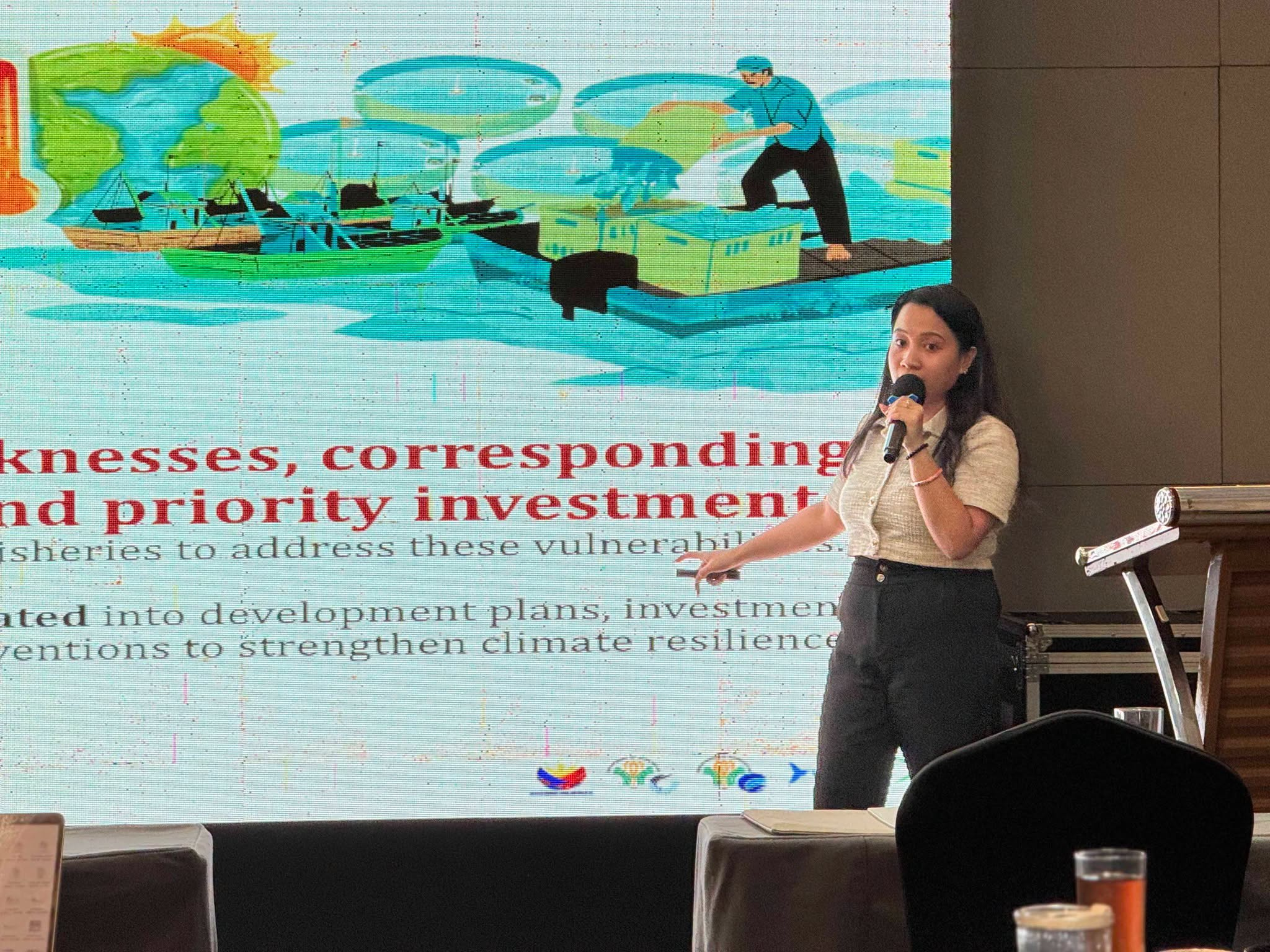
Senior Science Research Specialist Vanessa Mae Escaño presented the climate risk assessment covering seven local government units in Zambales, identifying vulnerabilities affecting five priority aquaculture commodities: milkfish, whiteleg shrimp, tiger prawn, tilapia and mangrove crab.
The assessment identified recommended climate adaptation measures and their potential economic benefits, providing local governments with scientific information to prioritize interventions that could minimize production risks and strengthen the resilience of aquaculture operations.
Meanwhile, researchers Jerony Bruto and Myleen Magistrado presented the carrying capacity assessment of the Masinloc and Palauig mariculture areas.
The study examined organic waste accumulation, water movement and sediment conditions to determine sustainable aquaculture production levels while minimizing adverse environmental impacts.
Researchers recommended improved feeding practices, appropriate stocking densities, proper fish cage arrangements and regular environmental monitoring to maintain productivity within the ecological limits of the mariculture areas.
The combined findings will serve as scientific inputs in developing the Aquaculture Development and Management Plan, which seeks to balance fisheries production, environmental protection and climate adaptation.
The workshop also facilitated the presentation of initial aquafarm inventory results and the harmonization of fisheries data with local government units to support more effective planning and resource management.
Through the FISHCORE Project, the DA-NFRDI and BFAR continue to promote research-driven interventions to strengthen fisheries governance, protect aquatic ecosystems and safeguard the livelihoods of coastal communities.
The initiative is expected to help aquaculture producers adapt to climate-related challenges while ensuring the long-term sustainability of the country’s fisheries resources.