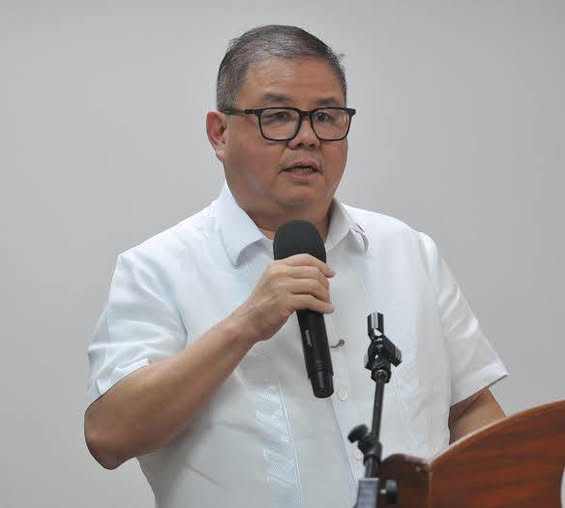

MANILA – Agriculture Secretary Francisco Tiu Laurel Jr. favored donating the 12,480 metric tons of seized Vietnamese rice to the Department of Social Welfare and Development (DSWD), instead of auctioning it.
In a news release Friday, the Department of Agriculture said Tiu Laurel questioned the proposal to auction the rice, which was seized after authorities flagged irregularities in its importation, warning that selling these shipments could actually allow those behind its questionable importation to profit from the shipment.
“I am not in favor of auctioning this,” he said, expressing concern that the rice could just land in the hands of those who wanted to profit from the 5 percent broken DT8 or Dai Thom 8.
The rice is a highly marketable Vietnamese DT8 variety with 5 percent broken grains.
Tiu Laurel said the government could destroy the rice, but he would rather see it distributed to families in need, through the DSWD, if it passes safety requirements, as destroying means wasting food.
He also opposed turning over the shipment to the National Food Authority (NFA), saying the DA, including its attached agencies, should not handle it.
“Better not give it to us. Otherwise, people might think we are in cahoots with whoever tried to bring this rice even after the import permit’s cancellation,” Tiu Laurel said.
The DA canceled its sanitary and phytosanitary import clearance after receiving adverse information about the cargo, which was carried by MV Tay Son 2 under an import permit covering 12,480 metric tons.
The vessel arrived at the Port of Davao on Sept. 14, but its captain refused to submit the shipment for inspection by the Bureau of Plant Industry (BPI).
It left the port three days later while the Bureau of Customs (BOC) was determining how to properly dispose of the rice shipment.
The Philippine Navy intercepted the vessel off Sarangani and brought it to the Port of General Santos City, and later ordered its return to Davao, where authorities continued processing the case.
The BPI recommended returning the rice to Vietnam, while the BOC was tasked with deciding its final disposition under applicable rules.
The DA said that agricultural products imported without valid permits may be seized and destroyed, returned to their country of origin or shipped to a third country.
The BOC also considered auctioning the rice to prevent it from deteriorating while in government custody, but Tiu Laurel warned that a sale could put the shipment in the hands of people seeking to profit from it.
He cited the handling of confiscated fish that were distributed to beneficiaries after rigorous safety testing as an example of how seized food could still help needy families.

