
(Photo courtesy of PNA)
The Department of Agriculture (DA) has assured farmers and consumers that measures are in place to cushion the impact of a potentially severe El Niño, following a 5 percent decline in agricultural and fisheries production during the third quarter of 2026.
Data from the Philippine Statistics Authority (PSA) showed that the value of agricultural and fisheries output fell to Php 389.42 billion from July to September, weighed down by rising production costs and unfavorable weather conditions.
Agriculture Secretary Francisco Tiu Laurel Jr. said the government has prepared a Php 62-billion response plan to protect agricultural production and support farmers as the country braces for prolonged dry conditions.
“We have mapped out a PHP62-billion El Niño response plan that will leverage new technologies, innovations, targeted interventions, and collaboration with various government agencies to mitigate the impact of the climate risk on agriculture,” Tiu Laurel said.
The DA said the plan will prioritize measures to strengthen agricultural resilience, improve water availability and minimize potential losses caused by drought.
Rice, corn production post sharp declines
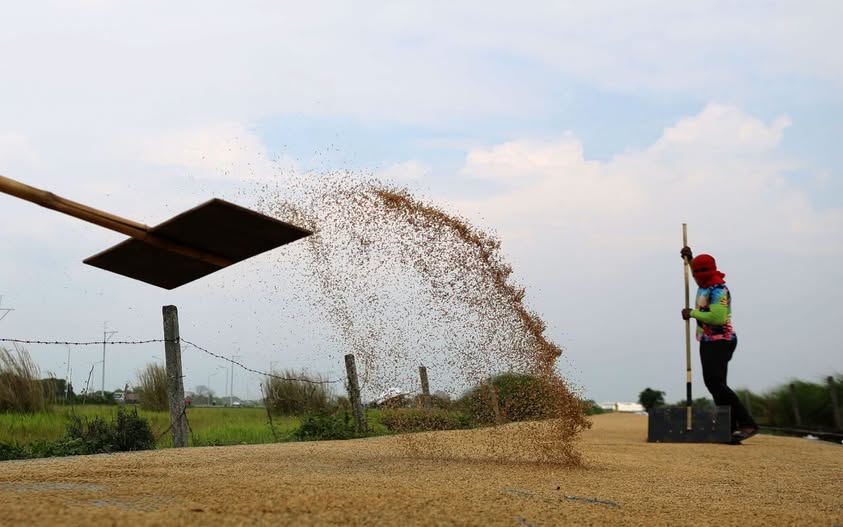
The PSA reported that crop production, which accounted for 51 percent of the country’s total agricultural and fisheries output, recorded significant losses during the quarter.
Palay or unhusked rice production declined by 18 percent to 3.08 million metric tons, while corn output dropped by 17 percent to approximately 2 million metric tons.
The declines were attributed partly to adjustments in farmers’ planting decisions amid rising fertilizer prices and other production expenses.
Flooding caused by the southwest monsoon also affected agricultural activities and contributed to lower harvests.
The DA acknowledged that the combination of unfavorable weather and higher input costs continues to pose challenges to domestic food production.
Water infrastructure among priorities
DA Undersecretary Christopher Morales, who oversees the Rice Industry Development Program, emphasized the importance of investing in water management infrastructure to protect farms from extreme weather.
“Water management infrastructure will not only help us cope with droughts but also allow us to store excess water during La Niña episodes,” Morales said.
Among the proposed interventions are water impounding dams and solar-powered irrigation systems, which could help farmers maintain agricultural operations during periods of limited rainfall.
The DA said improving irrigation and water storage capacity is essential to sustaining crop production as the country faces increasingly unpredictable weather conditions.
Poultry, livestock provide support to farm sector
Despite the overall decline in agricultural output, the livestock and poultry subsectors recorded positive growth during the third quarter.
Poultry production increased by 4.9 percent to Php 79.67 billion, making it the strongest-performing agricultural subsector during the period.
Livestock production also expanded by 1.1 percent, reaching Php 61.17 billion.
Together, the two subsectors accounted for nearly 37 percent of total agricultural and fisheries production, helping offset some of the losses recorded in crops and fisheries.
Tiu Laurel said the stronger performance of livestock and poultry provides a “foundation for recovery” as the government prepares for the anticipated effects of a very strong El Niño.
The DA emphasized the need to sustain these gains while implementing measures to protect farmers’ incomes, maintain domestic food supplies and keep essential agricultural commodities affordable.
Government agencies to coordinate El Niño response
Tiu Laurel said the response plan will involve coordination among various government agencies to ensure that resources and interventions reach vulnerable farming communities.
“And the DA will not do this alone. This El Niño plan will be carried through a whole-of-government approach,” he said.
The agriculture chief stressed that strengthening climate resilience and supporting agricultural productivity remain priorities as extreme weather conditions threaten food production.
The DA said its interventions will focus on reducing potential agricultural losses, improving farmers’ access to essential resources and protecting the country’s food supply against weather-related disruptions.