
(Photo from DA-11)
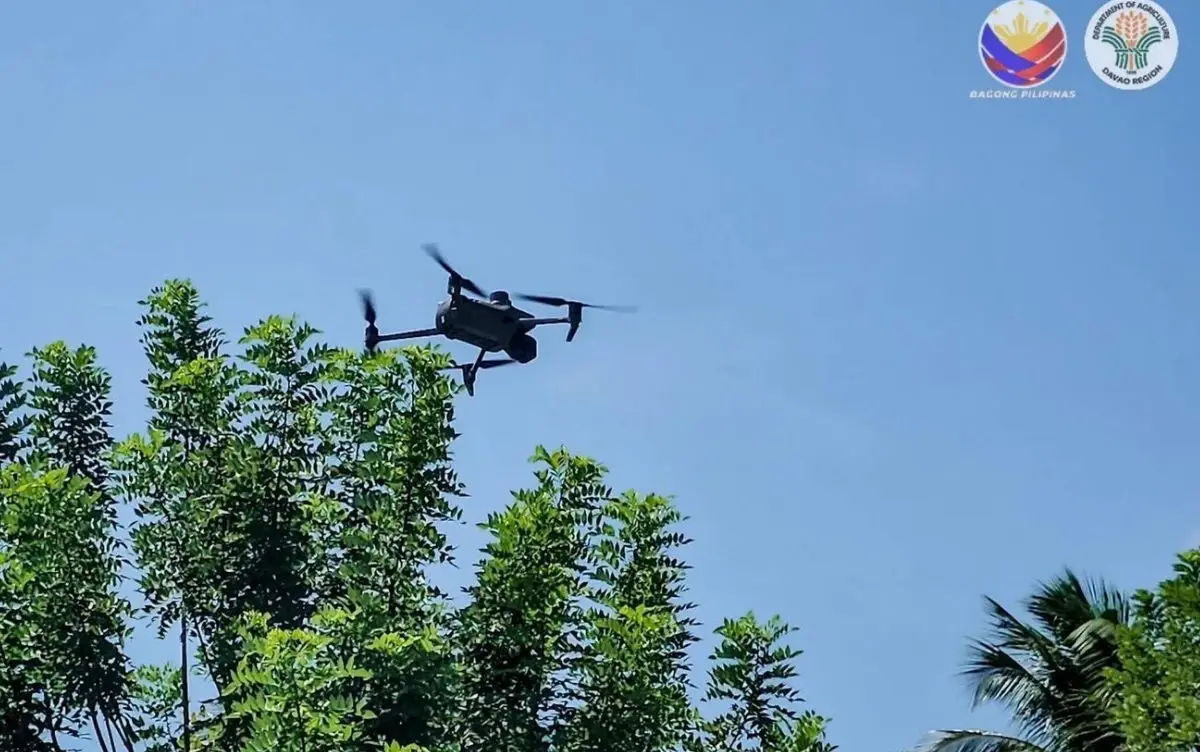
DAVAO CITY – The Department of Agriculture in Davao Region (DA-11) reported promising preliminary results from its Drone Imaging and AI Analysis Project, with accuracy rates ranging from 96 to 99 percent in monitoring banana plantations and detecting Fusarium wilt.
DA-11 Regional Technical Director for Operations Marie Ann Constantino said Wednesday that project partners presented significant progress during a November 24 meeting, highlighting the potential of precision agriculture technologies in improving plantation management and disease surveillance.
The findings covered artificial intelligence (AI)-assisted plant counting and drone-based spectral analysis for detecting Fusarium wilt, based on monthly assessments conducted across participating banana plantations.
“The technical contributions and expertise of everyone involved in developing and evaluating this technology are important. Through our collaboration, we can ensure that this initiative responds to the actual needs of our banana growers,” Constantino said.
The project is being implemented under a preliminary memorandum of understanding among DA-11, E-SUPPORTLINK Ltd. (ESL), the Department of Science and Technology in Davao Region (DOST-11), and participating banana growers.
It aims to determine the technical and economic feasibility of integrating drone imaging and AI analytics into banana production systems across the region.
Dr. Hiru Fukatsu of ESL said project partners would continue refining drone-based spectral analysis to improve early detection of Fusarium wilt and strengthen disease monitoring capabilities.
Fusarium wilt remains one of the most serious threats to the Philippine banana industry, affecting approximately 15,500 hectares of plantations in the Davao Region, according to the Department of Agriculture.
Researchers are working to identify potential infections before visible symptoms emerge, allowing growers to implement more proactive disease management measures.
The initiative also emphasized the importance of continuous AI model training to improve plant-counting accuracy and refine disease detection techniques.
Field interviews conducted with local banana producer groups in October 2026 revealed strong interest in adopting the technology.
During the meeting, DA and DOST representatives recommended standardizing accuracy measurements, documenting drone flight conditions, comparing AI model performance, and conducting repeated trials to improve the reliability of the findings.
Project partners also discussed long-term operational arrangements, service costs, pricing mechanisms, and potential funding support to make the technology more accessible to banana farmers.
Scheduled to run until March 2027, the project will continue field validation, AI model refinement, and technology testing while exploring potential applications in other agricultural crops.
Constantino said the initiative seeks to demonstrate how emerging technologies can improve farm monitoring, strengthen disease surveillance, and help build a more resilient, efficient, and data-driven Philippine banana industry.