
(Photo courtesy of PNA)
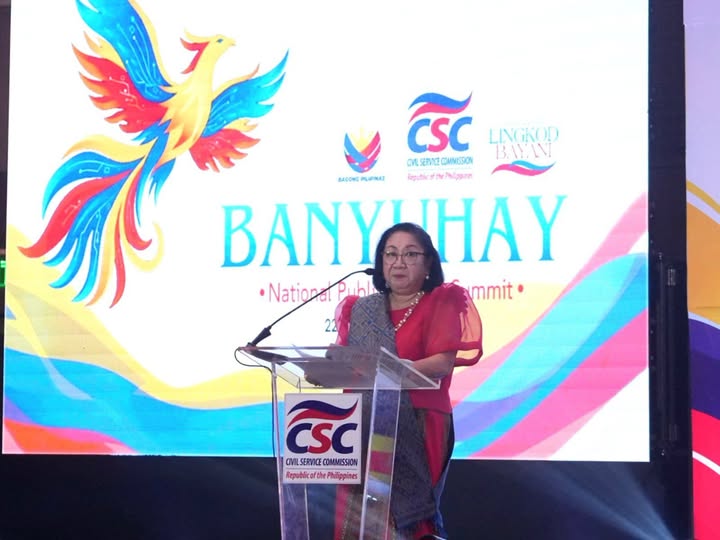
MANILA, Philippines – Civil Service Commission (CSC) Chairperson Marilyn Barua-Yap on Thursday, October 22, emphasized that holding corrupt officials accountable must be accompanied by institutional reforms to address systemic weaknesses and restore public trust in government.
Speaking at the opening of the two-day BANYUHAY: National Public Service Summit, Yap said prosecuting and imprisoning corrupt officials would not be enough to prevent corruption from recurring.
“Dahil ang pandarambong, pagnanakaw at katiwalian sa pamahalaan, sa aking pananaw, ay sintomas lamang,” Yap said, describing corruption, theft and plunder as symptoms of deeper institutional problems.
She pointed to weaknesses in government systems and the declining sense of public duty as factors contributing to corruption.
Yap also warned that the misuse of public funds deprives Filipinos of essential services, including education, housing and disaster-resilient infrastructure.
She noted that the misconduct of some officials damages the reputation of honest public servants who continue to perform their duties responsibly.
The CSC chief stressed that government reforms should strengthen accountability while improving the delivery of basic services and opportunities for Filipinos.
“Government needs to learn more and better ways of doing to remain relevant to the daily lives of our people and worthy of the public trust,” she said.
The BANYUHAY summit forms part of the Philippine Civil Service Modernization Program, bringing together government leaders, policymakers and experts to identify priorities for improving public institutions.
Discussions focus on Filipino identity and public service leadership, merit-based recruitment and qualifications, institutional frameworks, and the use of technology to improve government operations.
Yap emphasized that civil service modernization should extend beyond digital transformation to include ethical leadership, competent personnel and transparent government systems.
She also called for a review of existing civil service standards to ensure that government employees possess the qualifications, skills and values necessary to serve the public effectively.
“Walang kinikilingan, hindi tiwali at hindi makasarili,” Yap said, underscoring the importance of impartiality, integrity and selflessness among public servants.
Meanwhile, Yap raised the possibility of introducing a new Civil Service Code and reviewing existing anti-corruption laws.
Among the measures she identified for review were the Anti-Graft and Corrupt Practices Act, the Code of Conduct and Ethical Standards for Public Officials and Employees, and the law against plunder.
The CSC chief urged government workers to take collective responsibility for reforms aimed at building a more efficient, accountable and trustworthy public service.
The summit is expected to generate policy recommendations and reform proposals covering meritocracy, institutional improvements, public service values and technology.
However, the CSC clarified that the proposals have not yet been adopted as official policies and will undergo further review, validation and appropriate approval procedures.