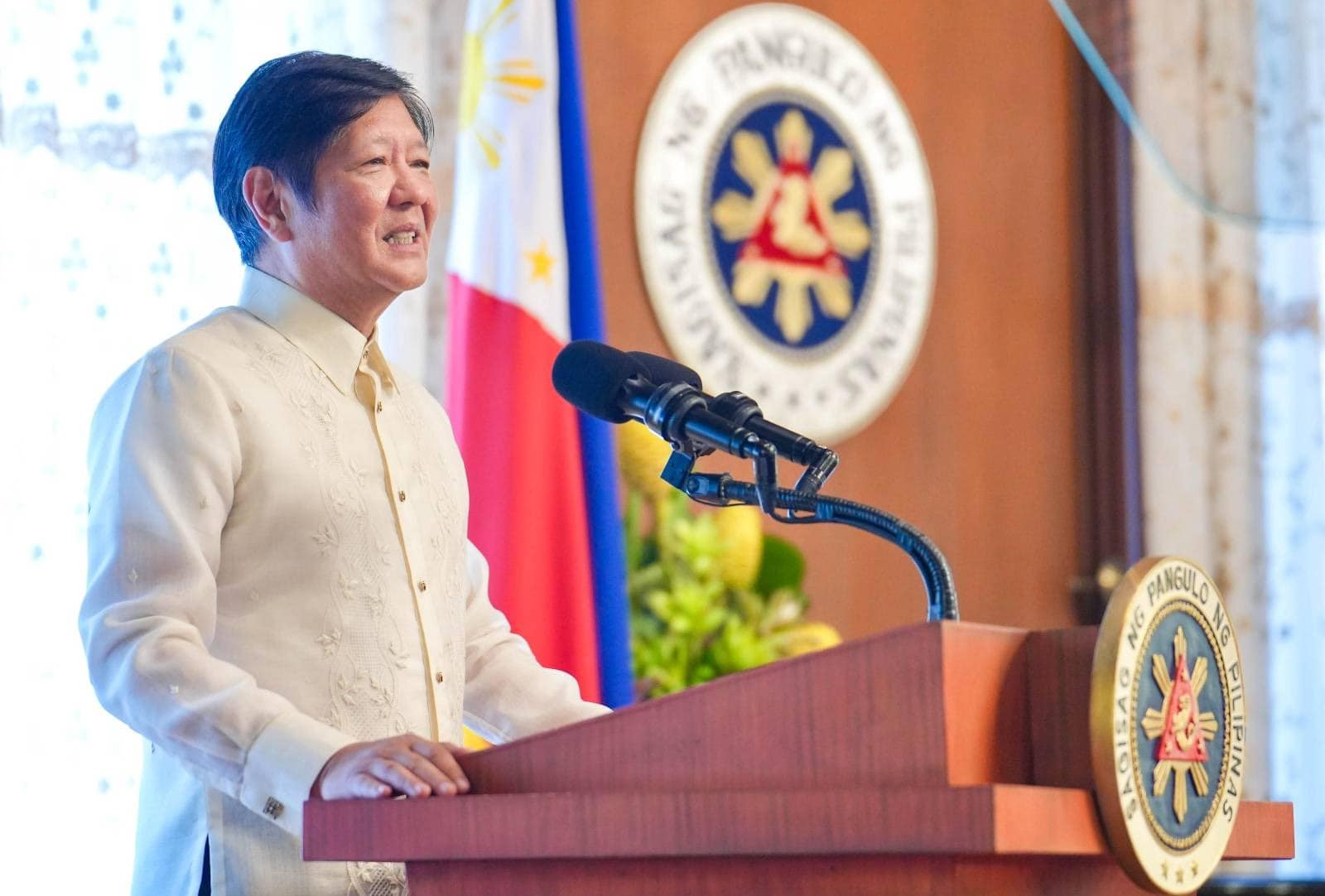

President Ferdinand “Bongbong” Marcos Jr. has cited systemic corruption and rampant rice smuggling as key reasons why his signature campaign promise—affordable rice at ₱20 per kilo—has taken nearly three years to move from slogan to slow-rollout.
In the premiere episode of his new BBM Podcast, the president opened up about the hurdles behind one of his most anticipated but heavily scrutinized policy goals. Asked directly about the delay, Marcos pointed fingers at what he described as “spoiled” officials and unchecked importation practices that have distorted rice pricing and undermined local production.
“There’s a culture among some government officials that prioritizes imports over farmers. Whether it’s legal or not, this endless importation floods the market, devalues local harvests, and enables smugglers to dictate price trends,” Marcos said in Filipino.
Rice price control undermined by black market
According to the president, smuggled rice has played a hidden but powerful role in shaping domestic prices, making it harder for government to enforce any meaningful price control.
“What we thought were normal price drops were actually driven by smuggled rice,” he explained. “It creates an artificial supply, encourages hoarding, and leaves our farmers struggling.”
Marcos also said that his administration focused on rebuilding the agricultural foundation—starting with irrigation, dam construction, and modern farming tools—rather than relying solely on imports to meet demand.
“By 2023, we had achieved a record-breaking rice harvest, and 2024 surpassed even that,” he said, emphasizing that long-term food security begins at home.
Enforcement and reform on the rise
To counter illegal importation, authorities have ramped up raids on unauthorized rice warehouses. Marcos took aim at officials complicit in these schemes.
“They don’t care about the impact on local farmers or the economy. All they care about is profit. That has to change,” he said.
The president also admitted that deeper reform is needed, noting that existing laws are outdated and some individuals in key positions must be replaced for the system to function effectively.
Three-phase rollout in progress
Despite the setbacks, the administration has launched the initial phase of the P20-rice program in select provinces, mostly in the Visayas and parts of Luzon, including Negros Oriental, Leyte, Cebu, and Mindoro.
Agriculture Secretary Francisco Tiu Laurel Jr. confirmed that the second phase will kick off in July, extending to regions like Zamboanga del Norte, Cotabato City, Sorsogon, and several parts of Mindanao.
This strategic rollout is part of a broader food security plan, which Marcos says is now finally gaining momentum.
A promise in progress
While critics remain skeptical about whether the ₱20 per kilo target can be sustained nationwide, Marcos insists that the initiative is no longer a campaign fantasy.
“This is the first time we’re approaching rice pricing comprehensively—from field to market, from farmer to table,” he said.
The president’s remarks offer a rare behind-the-scenes glimpse into the tug-of-war between policy ambition and political resistance—and why, in the Philippines, even the price of rice is never just about food.