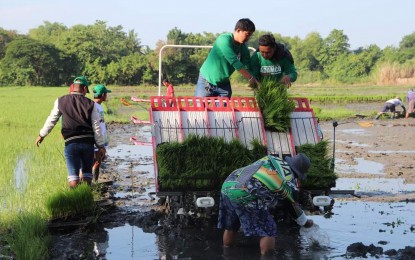
The provincial government’s corporate farming program continues to make strides in boosting agricultural productivity, with an average yield increase of 13.6% and lower production costs, according to program consultant Rody Castro.
Since its pilot during the 2022–2023 dry season, the program has expanded from just 4 cooperative associations and 101 farmers cultivating 66.03 hectares, to now include 54 associations, 1,448 farmers, and 1,272.48 hectares as of the 2024 wet season cropping.
The initiative resulted in an average yield rise from 4.55 to 5.17 metric tons per hectare (MT/ha) between 2022 and 2024. The dry season yield saw a 12% increase in 2022–2023 and a 14% increase in 2023–2024, while the wet season cropping posted 16% and 13% increases, respectively, over the same period.
Beyond yield improvements, average production cost dropped by 8.46%, from ₱68,295/ha to ₱62,514/ha, effectively lowering the cost per kilogram of palay from ₱15 to ₱12.09.
“While these gains are promising, we’re working to bring costs down even more to help farmers earn better,” Castro said. He also noted that weather disturbances during last year’s wet season slightly impacted output, though the province hopes to achieve 9 to 10 MT/ha moving forward—weather permitting.
The program teaches farmers the science of modern agriculture, including proper fertilizer application and the use of technology like drones and laser-guided leveling. The province has also requested soil testing services from the Department of Agriculture (DA).
Governor Ramon Guico III said the program is designed to turn farming into a cost-efficient and profitable enterprise. “Higher yields and lower production costs—that’s the core of corporate farming,” Guico said.
Corporate farming is a flagship program of the Guico administration and part of a convergence approach involving farmer cooperatives, LGUs, national government agencies, the private sector, and financial institutions, supporting the national food sufficiency drive.