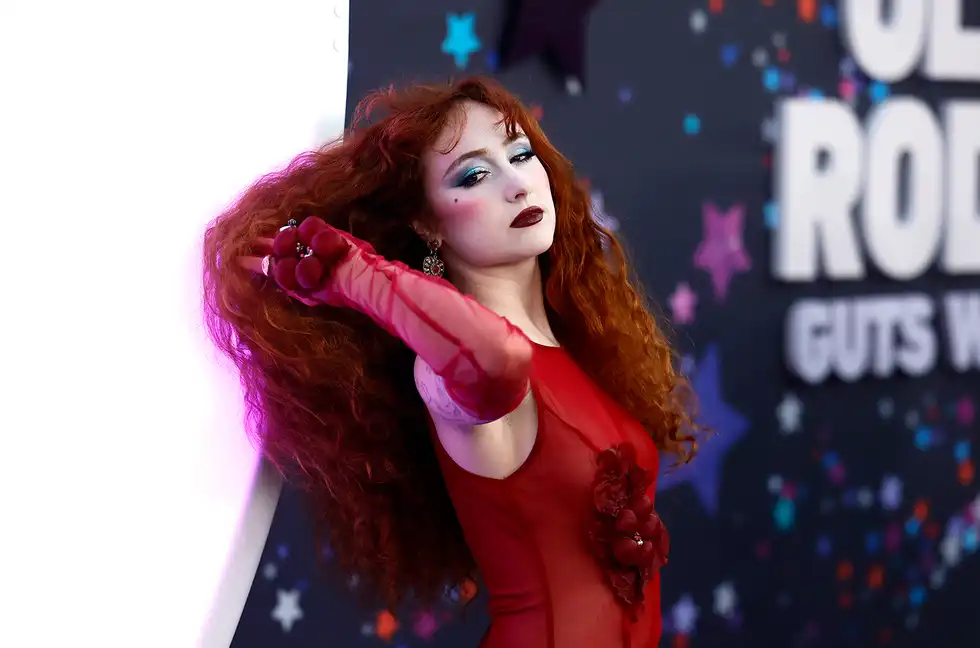

Hollywood’s velvet rope just got yanked.
Breakout pop provocateur Chappell Roan has detonated a quiet but explosive career move—walking away from powerhouse agency Wasserman after its CEO’s name surfaced in documents released under the Epstein Files Transparency Act.
The decision, announced in a sharply worded Instagram post, lands like a thunderclap in an industry still reeling from the ripple effects of newly unsealed files tied to disgraced financier Jeffrey Epstein.
Roan, 27, did not name names. She didn’t have to.
“No artist, agent or employee should be expected to defend or overlook actions that conflict so deeply with our own moral values,” she wrote, adding that artists “deserve representation that aligns with their values.”
That was it. No hashtags. No drama emojis. Just a line in the sand.
But the subtext? Deafening.
Wasserman is not just any agency. It is one of the most powerful talent firms in entertainment, representing A-list actors, elite athletes, and Grammy-winning musicians. Its chief executive, Casey Wasserman, also chairs the organizing committee for the 2028 Los Angeles Olympics—placing him at the intersection of entertainment, sports, and global politics.
Last month, Wasserman acknowledged that he exchanged flirtatious emails in 2003 with Ghislaine Maxwell, who is currently serving a 20-year prison sentence for helping Epstein sexually exploit underage girls. Wasserman has not been accused of any criminal wrongdoing.
Still, in a post-#MeToo era obsessed with institutional accountability, optics are everything.
Roan’s exit is being read as more than a contract dispute. It is a cultural statement.
The files released by the Department of Justice under the transparency law have fueled global fascination—and fury—over who was in Epstein’s orbit. While mere mention in documents does not equate to guilt, the entertainment world is scrambling to contain reputational fallout.
Roan appears unwilling to gamble hers.
Industry insiders whisper that her move could trigger a quiet exodus among younger artists wary of being entangled—however indirectly—in the Epstein shadow. In an age when fans dissect every alliance and scrutinize every business tie, proximity alone can be radioactive.
The timing is also strategic. Roan is riding a career high following her Grammy appearance at the 68th Annual Awards in Los Angeles. Walking away from a major agency at this peak suggests confidence—and perhaps leverage.
Critics argue she may be virtue-signaling. Supporters counter that she is doing what few rising stars dare: prioritizing values over power.
There is also a generational undertone to the drama. Gen Z artists, raised in the glare of social media transparency and cancellation culture, often demand alignment between branding and belief. For them, silence can be complicity. Roan’s message speaks directly to that ethos.
Meanwhile, Wasserman remains under no formal investigation related to Epstein. His statement last month framed the email exchanges as inappropriate but not illegal, emphasizing that he had no knowledge of criminal activity.
That distinction, however, may not be enough in an industry where perception shapes narrative.
Roan did not mention Epstein directly. She didn’t reference Maxwell. She didn’t cite specific documents.
But she didn’t need to.
In today’s celebrity economy, distancing can be as loud as accusation.
Whether this marks the beginning of a broader Hollywood reckoning—or simply a calculated rebrand—remains to be seen. What is certain is this: a rising pop star has just challenged one of the most powerful agencies in the business, and she did it without shouting.
Sometimes the most controversial move is the one made quietly.
And Hollywood heard it.